Join or Sign In
Sign in to customize your TV listings
By joining TV Guide, you agree to our Terms of Use and acknowledge the data practices in our Privacy Policy.
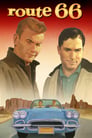
Route 66
Only fiction series written and shot all over North America. Two young adventurers in a Corvette explore early 60's social problems and changing mores, looking for the right place to settle down while seeking themselves. Debuting 3 years after "On the Road" transformed modern literature, while such newly available fast cars dominated the new teenage culture, Tod, an Ivy Leaguer, and Buz, an orphan from Hell's Kitchen, cruise the U.S.A. coping with shifting relationships and lifestyles. The FCC's Newton Minow characterized U.S. TV as a "vast wasteland," in 1961, but "Route 66" found important, compelling stories all over. Stirling Silliphant who won an Oscar for writing "In the Heat of the Night," traveled around the U.S. and Canada scouting locales, while writing ¾ of the very dark, literate show's episodes - a feat only Rod Serling matched with The Twilight Zone. Soon, a crew of 50 arrived at the location. Shows were filmed in 40 States. Tod, from a once-wealthy family, inherited only a Corvette when his father died, so he and Buz (suddenly jobless because he worked for Tod's father's company) strike out across North America, especially along the iconic Route 66 from Chicago to L.A. which the Okies traveled. Tod and Buz take local jobs (such as shrimping, shipbuilding, oil rigging) to support their wanderings. The 2 socially conscious knights of the road, encourage, champion, and learn from oppressed and troubled people they encounter. 1962 guest star Ethel Waters was the first African-American woman nominated for an Emmy Award. The CBS show doubled Corvette sales its first season. Tod and Buz's beige Corvette's 2 seats meant "sans souci" and constant movement, so shows were shot in 6 days, in a new city almost every week. The two drifters reject the post-war American Dream of the suburbs, while exploring a disappearing North America with very diverse local culture, not yet dominated by international franchises and cookie-cutter suburbs. The shows' vibrate with the new dreams for a Great Society and the fears of the Cold War. The volatile Buz Murdock was cast quickly, while Martin Milner beat out Robert Redford for the Tod Stiles role. Due to hepatitis, Maharis did not appear in the series' last 1 ½ seasons. The show grew from a pilot on creator Silliphant and Route 66 producer Herbert B. Leonard's "Naked City," also shot on location. Naked City and Route 66 bridged the widely varied anthologies and live plays of the 1950's Golden Age of Television, to the much cheaper, 1 hour dramatic, set-character based series, which continue to rule prime-time. Nelson Riddle's atmospheric Theme from Route 66, and his episode scores factored heavily in the show's allure. The breezy song Route 66, written by Bobby Troup (of the 1970's TV series "Emergency !"), a 1946 Nat King Cole hit, wasn't used for the series. A sequel to Route 66 appeared in 1993, but lasted only 4 episodes.
Loading. Please wait...
Cast & Crew See All


Season 4 Episode Guide See All
Episode 1
Two Strangers and an Old Enemy
Fri, Sep 27, 196350 mins
Tod and Linc, in Cape Coral, Florida working for an air service, search for the owner-missing with his plane in swampland. As the story unfolds it is revealed that the owner, a WWII air ace, was never able to adjust to non-hero civilian life. The unhappy saga includes the man's ex-wife and one-time enemy.
Awards
- 1962 - Primetime Emmy - Outstanding Single Performance by an Actress in a Leading Role - nominated
- 1962 - Primetime Emmy - Outstanding Continued Performance by an Actor in a Series (Lead) - nominated
- 1963 - WGA Award (TV) - Episodic Drama - nominated
- 1964 - WGA Award (TV) - Episodic Drama - winner
You May Also Like See All


Popular Shows See all shows

FBI

Marshals

NCIS
Lonesome Dove

CIA