Join or Sign In
Sign in to customize your TV listings
By joining TV Guide, you agree to our Terms of Use and acknowledge the data practices in our Privacy Policy.
Nova Season 48 Episodes
Season 48 Episode Guide
26 Episodes 2021 - 2022
Episode 1
Secrets in Our DNA
Wed, Jan 13, 202153 mins
Some 30 million Americans have sent their DNA to be analyzed by companies like 23andMe and AncestryDNA, hoping to obtain clues to family origins and forecasts of their future health. Some users have found family members and discovered lurking genetic risks. But what happens once the sample is in the hands of testing companies? What are they looking at and how accurate are their results? NOVA explores the power of this information and the unintended consequences that can arise from sharing our data with these rapidly growing online databases. DNA results that offer estimates of health risks can be misleading, and the discovery of intimate family secrets can tear relationships apart. Meanwhile, law enforcement is increasingly turning to the DNA-sharing website GEDmatch as an extraordinarily powerful tool for cracking cold cases, as demonstrated by the 2018 arrest of California's notorious Golden State Killer after 42 years at large. What is the peril and promise of consumer DNA testing?

Episode 2
Beyond the Elements: Reactions
Wed, Feb 3, 202153 mins
The chemical reactions that transform the world, from explosions to photosynthesis.

Episode 3
Beyond the Elements: Indestructible
Wed, Feb 10, 2021
The potential environmental impact of virtually indestructible versions of glass, rubber and plastic.
Episode 4
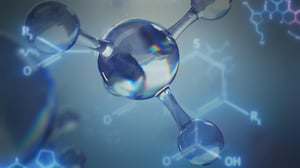
Beyond the Elements: Life
Wed, Feb 17, 2021
The molecules that allowed life on Earth to begin and thrive; how scientists use evolution in chemistry.

Episode 5
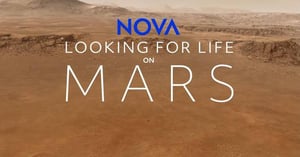
Looking for Life on Mars
Wed, Feb 24, 202154 mins
Follow along as NASA launches the Mars 2020 mission, perhaps the most ambitious hunt yet for signs of ancient life on Mars.
Episode 6
Picture a Scientist
Wed, Apr 14, 202193 mins
Women make up less than one-quarter of the amount of people employed in STEM, and the number is even smaller for women of color.

Episode 7
Reef Rescue
Wed, Apr 21, 2021
Marine biologists from the Bahamas to Christmas Island to Australia fight against the clock to save the coral reefs from extinction.

Episode 8
Fighting for Fertility
Wed, May 12, 2021
Explores barriers to fertility, from the social to the biological, and the state of assisted reproductive technologies.

Episode 9
Hindenburg: The New Evidence
Wed, May 19, 2021
On May 6, 1937, the Hindenburg, the world's largest airship, ignited in a giant fireball as it prepared to land at Lakehurst, New Jersey-a disaster immortalized by searing newsreel footage and Herbert Morrison's unforgettable "Oh, the humanity!" commentary. The chain of events that ignited Hindenburg's hydrogen remains one of the biggest mysteries in aviation history. Theories range from deliberate sabotage to sparks generated by static electricity or stormy weather conditions. Now, more than 80 years later, new footage has surfaced: an amateur 8mm film that shows the airship's final seconds from a fresh angle and in unrivaled clarity. Taking clues from the footage and other sources, a leading CalTech chemical engineer walks NOVA viewers through a novel set of experiments designed to test the likeliest scenarios that led to the Hindenburg's ignition-some never tried before and others staged with a meticulous attention to authenticity. The result is a gripping, authoritative new investigation of one of history's most iconic disasters.

Episode 10
Great Electric Airplane Race
Wed, May 26, 2021
The race to develop a practical and economically-viable electrically-powered airplane.

Episode 11
The Ship That Changed the World
Wed, Jun 2, 2021
A newly discovered 500-year-old wreck offers vital clues to the evolution in ship design that made long-distance voyages practical.

Episode 12
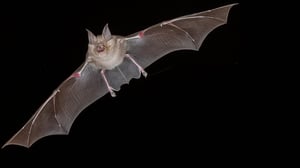
Bat Superpowers
Wed, Sep 15, 2021
Understanding bats, their long life spans and why they are resistant to the very diseases they carry such as Ebola and MERS, as well as other diseases like cancer.
Episode 13
The Cannabis Question
Wed, Sep 29, 2021
As state-legalized cannabis spreads, NOVA explores its little-known risks and benefits.

Episode 14
Particles Unknown
Wed, Oct 6, 202154 mins
An international team studies the neutrino, the most common yet least understood particle in the universe.
Episode 15
Arctic Drift
Wed, Oct 13, 2021
Scientists on a daring polar voyage to uncover the Arctic's climate secrets.
Episode 16
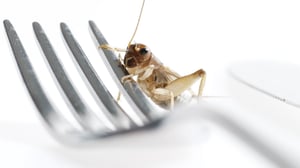
Edible Insects
Wed, Oct 20, 2021
Takes a tasty look at insect foods that could benefit our health and our warming planet.
Episode 17
Universe Revealed: Age of Stars
Wed, Oct 27, 202156 mins
The Hubble Space Telescope and a heat-resistant solar probe reveal new clues about the sun's 5-billion-year history.

Episode 18
Universe Revealed: Milky Way
Wed, Nov 3, 202156 mins
The Milky Way reminds us of our place in the galaxy we call home. But what shaped this giant spiral of stars and what will be its destiny? NOVA travels back in time to unlock the turbulent story of our cosmic neighborhood.

Episode 19
Universe Revealed: Alien Worlds
Wed, Nov 10, 202156 mins
New science and discoveries made possible by ultra sensitive telescopes and detective work transform the search for alien planets from science fiction into fact.

Episode 20
Universe Revealed: Black Holes
Wed, Nov 17, 202156 mins
Take a seat on the ultimate thrill ride to explore nature's strangest and most powerful objects. Black holes can reshape entire galaxies, warp the fabric of space and time, and may even be the key to unlocking the ultimate nature of reality. A new generation of high-energy telescopes is bringing these invisible voids to light, showing that "supermassives" millions or billions of times larger than our sun lurk at the center of nearly every galaxy, including our own.

Episode 21
Universe Revealed: Big Bang
Wed, Nov 24, 202156 mins
New research and theories offer clues about the Big Bang and what may have existed before the universe's birth.

Episode 22
High-Risk High-Rise
Wed, Jan 5, 2022
The science behind the risks of sky-high buildings, from structural limits to threats presented by wind, fire and earthquakes.

Episode 23
Butterfly Blueprints
Wed, Jan 12, 202254 mins
Among the 160,000 kinds of butterflies and moths, many have evolved to produce materials that can be adapted to uses for humans. At the same time, some of them are endangered because of climate change and loss of habitat. Delbert André Green II, a researcher at the University of Michigan, explains how the monarch butterfly, with its 3000-mile migration, acts as a sentinel species for how we are doing in sustaining Planet Earth. Jessica Ware, an entomologist at the American Museum of Natural History, discusses bio-inspired designs of silk from the Bombyx silk moths. In the Silklab at Tufts School of Engineering, Fiorenzo Omenetto utilizes the silk protein fibroin to fashion films for releasing medicines or implanting for reconstructive surgery. In liquid form, it can be used to produce inks that change color in the presence of chemical or viral hazards. Serge Berthier, a research physicist at the Paris Institute of Nanosciences, has studied how the nanostructure of scales on morpho butterfly wings generates its iconic vivid blues and water repellency. Chunlei Guo at the University of Rochester Institute of Optics employs an infrared laser to sculpt nanoscale structures on the surface of metals. The colors they impart can improve solar cell efficiency by 130%. The nanostructures also lend surfaces extreme hydrophobicity, the ability to stay dry. Guo has paired his etched metal surfaces into a layered assembly that is unsinkable. This has obvious applications to ship hulls but also suggests platforms on which floating cities could be built. Researchers at the Karlsruhe Institute of Technology examine nanostructures in transparent glasswing butterflies to generate new transparent materials. At Caltech, Radwanul Hasan Siddique uses this structure along with super hydrophobic materials to constantly monitor glaucoma conditions inside the human eye yet avoid fouling by microorganisms. Light concentration by cabbage white butterflies has lets Katie Shanks at the University of Exeter improve the power-to-weight ratio in solar cells by 17 times. The sensilla olfactory organs in male silk moths have inspired hypersensitive chemical detectors for explosives and toxic gases. Valerie Kéller at the University of Strasbourg grows artificial sensilla as titanium oxide nanotubes that can be flown on drones. Cocoonase enzymes from silk moths may help dissolve blood clots.

Episode 24
Alaskan Dinosaurs
Wed, Jan 19, 2022
Paleontologists discover that dinosaurs thrived in unlikely places such as the cold and dark Arctic Circle.

Episode 25
Ancient Maya Metropolis
Wed, Jan 26, 202253 mins
The ancient Mayans thrived in large advanced cities across Central America for centuries. Why, around 750 CE, were many of their major cities abandoned? Archaeologists investigate evidence of droughts and instability.

Episode 101
Search Engine Breakdown
Wed, Apr 14, 202121 mins
Two leading researchers investigate racial bias built into widely used search engines.
