Join or Sign In
Sign in to customize your TV listings
By joining TV Guide, you agree to our Terms of Use and acknowledge the data practices in our Privacy Policy.
Nova Season 40 Episodes
Season 40 Episode Guide
24 Episodes 2013 - 2013
Episode 1
Doomsday Volcanoes
Wed, Jan 2, 201353 mins
Iceland is a ticking time bomb: When it blows, the consequences will be global. What can we do to prepare for the coming disaster?

Episode 2
Decoding Neanderthals
Wed, Jan 9, 201353 mins
What happened when the first modern humans encountered the Neanderthals? Did they make love or war?
Episode 3
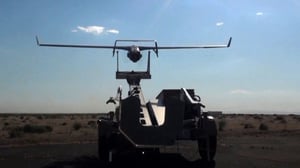
Rise of the Drones
Wed, Jan 23, 201353 mins
Discover the cutting-edge technologies that are propelling us toward a new chapter in aviation history.
Episode 4
Who Killed Lindbergh's Baby?
Wed, Jan 30, 201353 mins
NOVA is reopening one of the most confounding crime mysteries of all time as a team of expert investigators employs state-of-the-art forensic and behavioral science techniques in an effort to determine what really happened to Charles Lindbergh's baby... and why.

Episode 5
Building Pharaoh's Chariot
Wed, Feb 6, 201353 mins
A team of archaeologists, engineers, woodworkers, and horse trainers join forces to build and test two highly accurate replicas of Egyptian royal chariots.

Episode 6
Earth from Space
Wed, Feb 13, 2013113 mins
EARTH FROM SPACE is a groundbreaking two-hour special that reveals a spectacular new space-based vision of our planet.
Episode 7
Mind of a Rampage Killer
Wed, Feb 20, 201352 mins
Can science help us understand these crimes?

Episode 8
Meteor Strike
Wed, Mar 27, 201353 mins
Scientist relish the wealth of data available from the Chelyabinsk meteor impact to determine, for the first time, the physical details of a large meteor strike.

Episode 9
Ancient Computer
Wed, Apr 3, 201353 mins
The arms and faces of ancient statuary litter the seabed at the site of a shipwreck off the coast of Greece. But that's not the most interesting find. Encrusted with over 2,000 years of mineral deposits are highly engineered gears clearly visible as part of a mysterious device dating back to about 50 BCE. Using X-ray technology and working off of the realization that the gears' teeth are prime numbers relating to astronomy, the device is revealed to be the earliest known computer used for predicting eclipses and demonstrating planetary motion.
Episode 10
Australia's First 4 Billion Years: Awakening
Wed, Apr 10, 201354 mins
This four part series describes the origins and diversification of life on earth with Australia as a microcosm. This episode describes the history of Earth from its initial formation through the Cambrian explosion using Australian geological formations as examples.

Episode 11
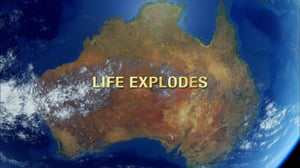
Australia's First 4 Billion Years: Life Explodes
Wed, Apr 17, 201354 mins
In the early Paleozoic Australia is a coastal region of the super-continent Gondwana making it the scene of life's invasion of the land. But not all the action was on land as fish began to dominate the oceans and Australia has a wealth of superb fossils of early fish and other sea creatures.
Episode 12
Australia's First 4 Billion Years: Monsters
Wed, Apr 24, 201354 mins
Until recently there were very few known dinosaur fossils in Australia. But there are highways full of footprints which along with the recently found skeletal fossils tell uniquely Australian stories of plants, mammals, dinosaurs and other creatures.
Episode 13
Australia's First 4 Billion Years: Strange Creatures
Wed, May 1, 201354 mins
The Paleogene opens with the dinosaurs extinct and much of the world's water freezing out in Antarctica as Australia breaks free of Gondwana to chart it's own course. As in the rest of the world mammals, birds and grasses rise to prominence but with an uniquely Australian flavor. Then the first placental mammals arrive.

Episode 14
Oklahoma's Deadliest Tornadoes
Wed, May 29, 201354 mins
On May 20th 2013, a ferocious F5 tornado over a mile wide tore through Moore, Oklahoma, inflicting 24 deaths and obliterating entire neighborhoods. It was the third time an exceptionally violent tornado had struck the city in 14 years. Yet predicting when and where these killer storms will hit still poses a huge challenge.
Episode 15
Manhunt: Boston Bombers
Wed, May 29, 201354 mins
How did investigators transform the chaos of the Boston Marathon Bombing into a coherent trail of clues, pointing to the accused killers?

Episode 16
Ground Zero Supertower
Wed, Sep 11, 201353 mins
From PBS - NOVA returns to Ground Zero to witness the completion of One World Trade Center.

Episode 17
Megastorm Aftermath
Wed, Oct 9, 201353 mins
From PBS - In October 2012, Superstorm Sandy cut a path of devastation across the Caribbean and the East Coast of the United States, killing hundreds and causing tens of billions of dollars in damage. One year after Sandy's deadly strike, NOVA investigates the critical question raised by this historic storm: What can we do to prepare ourselves for the next Sandy?

Episode 18
Making Stuff Faster
Sun, Oct 13, 201353 mins
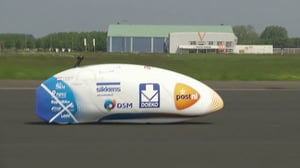
From PBS and NOVA: Are there physical limits to how fast humans can go? David Pogue wants to find out how much we can tweak physiology and engineering to move humans and machines even faster. He investigates everything from lightning-fast electric muscle cars to ultra-sleek sailboats to ultra-fast cameras and quantum teleportation. But faster is also about efficiency and the science of optimization: getting things done in less time. From the floor of the New York Stock Exchange to UPS headquarters and inside a packed 737, Pogue's quest for ultimate speed limits takes him to unexpected places where he comes face-to-face with the final frontiers of speed. NOVA also explores important questions: Is it possible to go too fast? Have we hit a point where innovation outpaces our ability to keep up?
Episode 19
Making Stuff Wilder
Wed, Oct 23, 201353 mins
From PBS and NOVA: What happens when engineers open up nature's toolbox? David Pogue explores bold innovations inspired by the Earth's greatest inventor, life itself. From underwater wi-fi based on dolphin communication, to robotic "mules" and "cheetahs" for the military, to swarms of robotic bees, Pogue travels the world seeing the "wildest" ideas put into action in new inventions and technologies. It is a journey that sees today's bacteria turned into tomorrow's metallurgists, viruses building batteries, and even DNA, the Code of Life, put to work in "living" computers. Will the stuff of the future take on a life of its own?
Episode 20
Making Stuff Colder
Wed, Oct 30, 201353 mins
From PBS and NOVA: Cold. For centuries we've fought it, shunned it and huddled against it. Cold has always been the enemy of life, but now it may hold the key to a new generation of science and technology that will improve our lives. David Pogue explores the frontiers of cold science, from saving the lives of severe trauma patients and cooling a warming planet to ultracold physics, where bizarre new properties of matter are the norm and the basis of new technologies like levitating trains and quantum computers. In this brave new world, cold isn't to be avoided. Cold is the new hot.
Episode 21
Making Stuff Safer
Wed, Nov 6, 201353 mins
From PBS and NOVA: Is it possible to engineer an absolutely safe world for ourselves? Host David Pogue explores the extent to which science and technology can protect us from monumental forces of nature such as earthquakes and epidemics. He challenges researchers to save us from dangers of our own making, such as traffic accidents and contact sports. Our increasing reliance on the internet makes us vulnerable to new risks: Pogue delves into cyber security, where computer experts work to shield us from attacks from hackers and terrorists. Risk is all around us -- but we can be smart about it.
Episode 22
Cold Case JFK
Wed, Nov 13, 201353 mins
From PBS and NOVA: Cold Case JFK. For decades, the assassination of John F. Kennedy has fueled dark rumors of conspiracies and mishandled evidence. Now, fifty years later, NOVA asks: Could modern investigators do better? We'll see how state-of-the art forensic tools would be applied to the investigation were it to happen today. At the same time, NOVA takes a critical look at contemporary cases, like the murders of Nicole Brown Simpson and Ronald Goldman, to reveal how charges of evidence mishandling and human error can mar even scientifically sophisticated detective work. Will forensics ever be truly foolproof, or does modern technology just give a scientific sheen to a practice that will always be more art than science?

Episode 23
At the Edge of Space
Wed, Nov 20, 201353 mins
Between the blue sky above and the infinite blackness beyond lies a frontier that scientists have only just begun to investigate. In "At the Edge of Space," NOVA takes viewers on a spectacular exploration of the Earth-space boundary that's home to some of nature's most puzzling and alluring phenomena: the shimmering aurora, streaking meteors, and fleeting flashes that shoot upwards from thunderclouds, known as sprites.

Episode 24
Asteroid: Doomsday or Payday?
Wed, Nov 20, 201354 mins
The asteroid that exploded over Siberia--injuring more than 1,000 and damaging buildings in six cities--was a shocking reminder that Earth is a target in a cosmic shooting range. From the width of a football field to the size of a small city, these space rocks have the potential to be killers. In a collision with Earth, they could set off deadly blast waves, raging fires and colossal tidal waves.
