Join or Sign In
Sign in to customize your TV listings
By joining TV Guide, you agree to our Terms of Use and acknowledge the data practices in our Privacy Policy.
American Experience Season 21 Episodes
Season 21 Episode Guide
10 Episodes 2009 - 2009
Episode 1
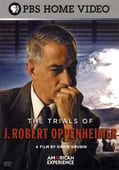
The Trials of J. Robert Oppenheimer
Mon, Jan 26, 2009111 mins
This biography presents a complex and revealing portrait of one of America's most influential scientists.
Episode 2
The Polio Crusade
Mon, Feb 2, 200954 mins
This film interweaves the personal accounts of polio survivors with the story of an ardent crusader who tirelessly fought on their behalf while scientists raced to eradicate this dreaded disease

Episode 3
The Assassination of Abraham Lincoln
Mon, Feb 9, 200990 mins

Episode 4
A Class Apart
Mon, Feb 23, 2009

Episode 5
We Shall Remain: Part I - After the Mayflower
Mon, Apr 13, 200977 mins
In March of 1621 in what is now southeastern Massachusetts, Massasoit (actor Marcos Akiaten, Chiricauha Apache), the leading sachem of the Wampanoag, sat down to negotiate with a ragged group of English colonists. Hungry, dirty, and sick, the pale-skinned foreigners were struggling to stay alive; they were in desperate need of native help. Massasoit faced problems of his own. His people had lately been decimated by unexplained sickness, leaving them vulnerable to the rival Narragansett to the west. The Wampanoag sachem calculated that a tactical alliance with the foreigners would provide a way to protect his people and hold his native enemies at bay. He agreed to give the English the help they needed. A half-century later, as a brutal war flared between the English colonists and a confederation of New England Indians, the wisdom of Massasoit's diplomatic gamble seemed less clear. Five decades of English immigration, mistreatment, lethal epidemics, and widespread environmental degradation had brought the Indians and their way of life to the brink of disaster. Led by Metacom, Massasoit's son (actor Annowon Weeden, Mashpee Wampanoag), the Wampanoag and their native allies fought back against the English, nearly pushing them into the sea.

Episode 6
We Shall Remain: Part II - Tecumseh's Vision
Mon, Apr 20, 200986 mins
From the award-winning PBS series American Experience comes We Shall Remain, the most ambitious primetime television series and media project on Native history ever produced. We Shall Remain will present a multifaceted story of Native ingenuity and perseverance that spans more than three hundred years. The tale of European settlement of North America has been told countless times, but never before from the perspective of the land's original inhabitants. At the heart of the project is a five-part television series that shows how Native peoples adapted and fought back-from the Wampanoags of New England in the 1600s who used their alliance with the English to weaken rival tribes, to the bold new leaders of the 1970s who harnessed the momentum of the civil rights movement to forge a Pan-Indian identity. Each historical episode of We Shall Remain will be paired with a short, contemporary story showing how the past resonates in Native American lives today.
Episode 7
We Shall Remain: Part III - Trail of Tears
Mon, Apr 27, 200976 mins
The Cherokee would call it Nu-No-Du-Na Tlo-Hi-Lu, "The Trail Where They Cried." On May 26, 1838, federal troops forced thousands of Cherokee from their homes in the Southeastern United States, driving them toward Indian Territory in Eastern Oklahoma. More than 4,000 died of disease and starvation along the way. For years the Cherokee had resisted removal from their land in every way they knew. Convinced that white America rejected Native Americans because they were "savages," Cherokee leaders established a republic with a European-style legislature and legal system. Many Cherokee became Christian and adopted westernized education for their children. Their visionary principal chief, John Ross, would even take the Cherokee case to the Supreme Court, where he won a crucial recognition of tribal sovereignty that still resonates. The Supreme Court ruling proved no deterrent to President Andrew Jackson's demands that the Cherokee leave their ancestral lands. A complex debate divided the Cherokee Nation, with Chief Ross urging the Cherokee to stay, and Major Ridge, a respected tribal leader, urging the tribe to move West and rebuild, going so far as to sign a removal treaty himself without the authority to do so. Though in the end the Cherokee embrace of "civilization" and their landmark legal victory proved no match for white land hunger and military power, the Cherokee people were able, with characteristic ingenuity, to build a new life in Oklahoma, far from the land that had sustained them for generations.
Episode 8
We Shall Remain: Part IV - Geronimo
Mon, May 4, 200978 mins
In February of 1909, the indomitable Chiricahua Apache warrior and war shaman Geronimo lay on his deathbed. He summoned his nephew to his side, whispering, "I should never have surrendered. I should have fought until I was the last man alive." It was an admission of regret from a man whose insistent pursuit of military resistance in the face of overwhelming odds confounded not only his Mexican and American enemies, but many of his fellow Apaches as well. Born around 1820, Geronimo grew into a leading warrior and healer. But after his tribe was relocated to an Arizona reservation in 1872, he became a focus of the fury of terrified white settlers, and of the growing tensions that divided Apaches struggling to survive under almost unendurable pressures. To angry whites, Geronimo became the archfiend, perpetrator of unspeakable savage cruelties. To his supporters, he remained the embodiment of proud resistance, the upholder of the old Chiricahua ways. To other Apaches, especially those who had come to see the white man's path as the only viable road, Geronimo was a stubborn troublemaker, unbalanced by his unquenchable thirst for vengeance, whose actions needlessly brought the enemy's wrath down on his own people. At a time when surrender to the reservation and acceptance of the white man's civilization seemed to be the Indians' only realistic options, Geronimo and his tiny band of Chiricahuas fought on. The final holdouts, they became the last Native American fighting force to capitulate formally to the government of the United States.

Episode 9
We Shall Remain: Part V - Wounded Knee
Mon, May 11, 200990 mins
On the night of February 27, 1973, fifty-four cars, horns blaring, rolled into a small hamlet on the Pine Ridge Indian Reservation. Within hours, some 200 Oglala Lakota and American Indian Movement activists had seized the few major buildings in town and police had cordoned off the area. The occupation of Wounded Knee had begun. The protesters were demanding redress for grievances-some going back more than 100 years-and the expulsion of Pine Ridge tribal leader Dick Wilson, who governed the reservation through corruption and intimidation. In Wounded Knee, the gripping and controversial story of the armed standoff between American Indian activists and the federal government that captured the world's attention for 71 suspenseful days is brought to life.

Episode 10
The Kennedys
Mon, May 18, 2009
The chronicle, which features home movies, and photos, includes patriarch Joseph Kennedy's business and political dealings, his 1960 presidential election and the tragic 1968 campaign, as well as Edward M. Kennedy's failed 1980 bid.