Join or Sign In
Sign in to customize your TV listings
By joining TV Guide, you agree to our Terms of Use and acknowledge the data practices in our Privacy Policy.
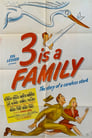
Three Is a Family
Producer Sol Lesser's picturization of John Golden's stage play about confusions, complications and consternations occasioned by the housing shortage at the point where it collides with a skyrocketing birth rate held a press audience of some 200 men and women audibly and sometimes boisterously entertained when previewed last week at the Ambassador Hotel theatre. If it be true that a press audience is harder to entertain than a lay gathering it would seem to follow that the film will panic the paying customers and prosper accordingly. To get people into a theater to be panicked exhibitors have the names of Marjorie Reynolds, Charles Ruggles, Fay Bainter, Helen Broderick, Hattie McDaniel, Arthur Lake and other dependables to work with, as well as a group of four players from the "Stage Door Canteen" cast. But it's the word-of-mouth thing, the talking-about that the film appears destined to receive that promises to push gross figures up and up as the run progresses. The comedy, of which there are several kinds, derives primarily from shortage of living quarters in New York and secondarily from the fact that just about everybody who comes to live in a certain apartment, which is the principal scene of the film, brings along some babies or starts in immediately to give birth to some. Before the script by Harry Chandlee and Marjorie L. Pfaelzer winds up the affairs of the characters whose discomfitures constitute the comedy, the apartment has all the attributes of a maternity ward except orderliness. To get the laughs which make the film a success of the kind it is, such matters as pregnancy, childbirth and maternity are dealt with off-handedly and for purposes of comedy unrestrained, and a doctor's virtual blindness is utilized as the butt of many gags and the pivot of many comic situations. The press audience wholly composed of adults took this in stride. Some other kinds of audiences might not. Subject matter and treatment suggests limiting exhibition to the mature. To Edward Ludwig goes a particular kind of credit for maintaining movement and momentum in a story which virtually never gets out of a single setting.
Loading. Please wait...
Cast & Crew See All


Awards
- 1946 - Oscar - Best Sound, Recording - nominated
You May Also Like See All


Popular Movies See all movies

History of the World: Part I

14 and Under

The Quiet Man

Hoppers

Solo Mio
