Join or Sign In
Sign in to customize your TV listings
By joining TV Guide, you agree to our Terms of Use and acknowledge the data practices in our Privacy Policy.
The Universe Season 4 Episodes
Season 4 Episode Guide
12 Episodes 2009 - 2009
Episode 1
Death Stars
Tue, Aug 18, 200945 mins
For most, it's the deadly centerpiece of the film Star Wars. But in truth, real death stars are in the final stage of life before they explode into supernovae and, occasionally, the biggest blast in the universe--the gamma ray burst (GRB).

Episode 2
The Day the Moon Was Gone
Tue, Aug 25, 200945 mins
The many benefits of the earth's large moon are explained and the consequences if we did not have a moon.

Episode 3
It Fell from Space
Tue, Sep 1, 200945 mins
Every year, thousands of objects both natural and manmade plummet through our atmosphere and crash into the Earth. These menacing messengers from the sky provide scientists with amazing insights into the natural, and not so natural, phenomena.

Episode 4
Biggest Blasts
Tue, Sep 8, 200946 mins
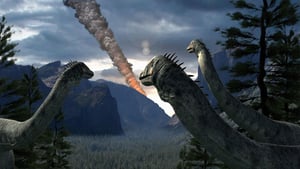
The Universe is full of explosions that both create and destroy. The Chicxulub impact on the Yucatan peninsula, which may have wiped out the dinosaurs 65 million years ago, was two million times more powerful than the largest nuclear bomb ever detonated.
Episode 5
The Hunt for Ringed Planets
Tue, Sep 15, 200946 mins
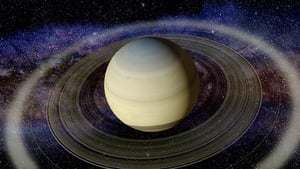
This program traces the history of the discoveries of planetary rings. The composition and the physics of the formation and stabilization of rings are explained.
Episode 6
10 Ways to Destroy the Earth
Tue, Sep 22, 200946 mins
Scientists discuss 10 different ways of destroying the Earth; including Venus to Earth impact, the Big Burn, Stop the Spin, Black Holes, Turn off the Gravity, Anti-Matter Annihilation, Parallel Worlds Collide.

Episode 7
The Search for Cosmic Clusters
Tue, Sep 29, 200946 mins
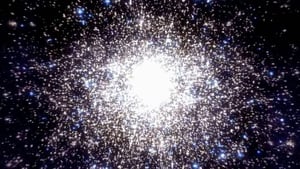
They are the one-stop-shopping places for learning all about the nature and variety of stars in the Universe. They're unique, because in clusters, all the stars were born at about the same time.
Episode 8
Space Wars
Tue, Oct 6, 200946 mins
Scientist speculate on future space weaponry and battle tactics.

Episode 9
Liquid Universe
Tue, Oct 20, 200945 mins
On alien planets, they rain from the sky as scalding iron. On distant moons, even at hundreds of degrees below zero, they slosh around in pristine lakes of methane. They can cover entire planets in miles-deep oceans of electrified hydrogen metal.

Episode 10
Pulsars & Quasars
Tue, Oct 27, 200946 mins
They sort of sound like the same phenomenon, but Pulsars and Quasars are very different. Pulsars are tiny--only a few miles across--but they spin as fast as a kitchen blender.

Episode 11
Science Fiction, Science Fact
Tue, Nov 3, 200945 mins
Is science-fiction rooted in science? Has science caught up to science-fiction, past and present? Is there any scientific technology that has surpassed science-fiction? This episode explores these questions and more.

Episode 12
Extreme Energy
Tue, Nov 10, 200946 mins
Ours is a universe of energy, from powerful jets ejected from black holes to the raw nuclear fury of our Sun. But, the total amount of energy in the universe maintains perfect equilibrium--no more can be added or taken away.