Join or Sign In
Sign in to customize your TV listings
By joining TV Guide, you agree to our Terms of Use and acknowledge the data practices in our Privacy Policy.
The Universe Season 2 Episodes
Season 2 Episode Guide
19 Episodes 0 - 2008
Episode 1
Alien Planets
Tue, Nov 27, 200745 mins
Astronomers who search for extrasolar planets were once thought of as crack-pots but are now at the forefront of astronomical research. The various methods used to locate and research these planets and the unexpected diversity of these bodies are described.
Episode 2
Cosmic Holes
Tue, Dec 4, 200745 mins
Black holes, white holes and worm holes are all consistent with Einstein's theory of General Relativity. Of the three, actual evidence exists only for black holes. Their behavior is explained. Scientists speculate on on whether white holes and worm holes exist and how they would behave.
Episode 3
Mysteries of the Moon
Tue, Dec 11, 200745 mins
Various phenomenon observed on earth, both real and perceived, are linked to the moon. Explanations for these phenomenon are presented.
Episode 4
The Milky Way
Tue, Dec 18, 200745 mins
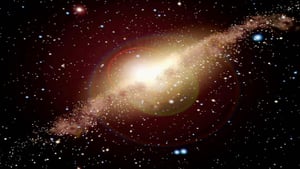
Our home galaxy, the Milky Way, consists of more than stars and planets. The wide variety of other celestial objects that call the Milk Way home are described. And the Milky Way is not alone but has some nearby companions.
Episode 5
Alien Moons
Tue, Jan 8, 200845 mins
The number of known moons of the outer planets have exploded in recent years. Each has it own story to tell regarding its composition, geological activity and origin.

Episode 6
Dark Matter
Tue, Jan 15, 200845 mins
Scientists hunt for dark matter in the strangest of places. They know where it is, what it does and can sort of see it if they look in the right way. They just can't quite figure out what it is or how to get their hands on it even though it's everywhere. But it is well understood compared to dark energy which is an even bigger mystery.
Episode 7
Astrobiology
Tue, Jan 29, 200845 mins
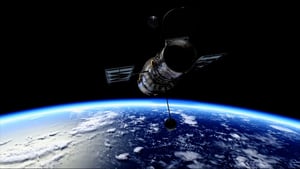
Scientists speculate on how life originated on earth based on the range of conditions where life survives today and the conditions that existed on the early earth. They then look for those conditions, past or present, that may exist on other planets or moons.

Episode 8
Space Travel
Tue, Feb 5, 200845 mins
The many and various hazards to space travel are explained. But solving that problem better propulsion systems are need to travel anywhere beyond the moon. Some possibilities, both realistic and speculative, are described.
Episode 9
Supernovas
Tue, Feb 12, 200845 mins
Although supernovas are associated with the death of stars they also seed the universe with heavy elements that comprise rocky planets like Earth and living creatures. Due to their extraordinary brightness supernovas have a recorded history dating back 2,000 years. Although closely studied for decades their infrequency has permitted only a general understanding of their behavior until very recently. New computer models can model the major details of the explosion while new exploratory techniques reveal many more events including some truly super supernovas.
Episode 10
Constellations
Tue, Feb 19, 200845 mins
In this program the constellations serve as a backdrop for the diversity of stellar objects and for a few very special stars that serve as navigation aids for sailors, seasonal markers for farmers or distance milestones for astronomers.
Episode 11
Unexplained Mysteries
Tue, Feb 26, 200845 mins
A few of the astronomical mysteries that bother scientists and the progress toward understanding them are described.

Episode 12
Cosmic Collisions
Tue, Mar 4, 200845 mins
Collisions between relatively minor bodies in the solar system can have far reaching effects. Astronomers are trying to trace meteors that caused mass extinctions back to the event that cause them to cross Earth's path in case they have relatives waiting to pay a visit.

Episode 13
Colonizing Space
Tue, Mar 11, 200845 mins
Many considerations come to the forefront when planning space travel beyond the moon. Scientists are currently working on overcoming the many challenges and testing their solutions.

Episode 14
Nebulas
Tue, Apr 1, 200844 mins
They are the crown jewels of the galaxy. Neither stars, planets, moons or asteroids, they are the mysterious clouds of gas we call NEBULAS. Nearly invisible to the naked eye, astronomers use the most sophisticated techniques to tease images of these fascinating phenomena from the dark sky. When revealed in their full glory, they glow, reflect or obscure the galaxy's light.

Episode 15
Wildest Weather in the Cosmos
Tue, Apr 8, 200845 mins
If a planet has an atmosphere it has weather. And where there is weather there are storms. Our solar system is chock full of them. And the bigger the temperature extreme the bigger the storm. Which makes Earth hurricanes and thunderstorms seem rather uninteresting.

Episode 16
Biggest Things in the Universe
Tue, Apr 15, 200845 mins
Compared to the largest things in the universe galaxies are trifles compared to super clusters, voids, lyman alpha blobs, and the cosmic web. But even among the smaller objects such as stars and planets, some are mind boggling by human standards.

Episode 17
Gravity
Tue, Apr 22, 200844 mins
Program presents scientists current understanding of gravity and some of the phenomenon it causes.

Episode 18
Cosmic Apocalypse
Tue, Apr 29, 200845 mins
Program examines the possible ways the universe could come to an end. The most likely scenario, eternal expansion, is expected to be rather eventful in the long term.
Episode 19
Backyard Astronomers