Join or Sign In
Sign in to customize your TV listings
By joining TV Guide, you agree to our Terms of Use and acknowledge the data practices in our Privacy Policy.
The Sky at Night Season 40 Episodes
Season 40 Episode Guide
14 Episodes 1996 - 1996
Episode 1
The Night Sky in Winter
A tour of the winter night sky, with Patrick Moore.

Episode 2
What's the Matter Between the Stars?
A look at the thinly spread material that lies between stars with Patrick Moore.
Episode 3
News from Space
News from Space. Patrick Moore is joined by Dr. Paul Murdin to discuss this year's new developments. Including the results of the Galileo mission to Jupiter and the discovery of a new comet.
Episode 4
The March Comet
Comet Hyakutake should be visible in the evenings at the end of the month, with Patrick Moore.
Episode 5
Exploding Stars
Prof Michael Bode joins Patrick Moore to discuss supernovas.
Episode 6
The End of the Universe
The End of the Universe. How might the universe die? With Patrick Moore.
Episode 7
The Lives of the Galaxies
How much do galaxies change as they grow older? Patrick Moore finds out.
Episode 8
Hydrogen Hunters
A new all-sky radio survey is to be started by the Jodrell Bank Telescope in England and the Parkes Observatory in Australia. Dr Alan Wright joins Patrick Moore to explain what it hopes to achieve.

Episode 9
A Tale of Three Planets
Small telescopes have revealed hitherto-unknown details of the surfaces of giant planets Jupiter and Saturn. Also featured are maps of Pluto obtained from observations by the Hubble Space Telescope.

Episode 10
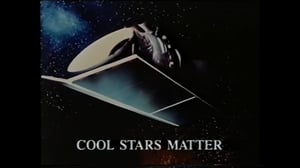
Cool Stars Matter
IRAS (Infrared Astronomical Satellite), which operated for much of 1983, provided information on the presence of cool, possibly planet forming, material around stars like Vega. ISO (Infrared Space Observatory) is now performing well.
Episode 11
Hunt the Planet
Patrick Moore tells the story of the "race" to discover Neptune, 150 years ago.

Episode 12
Star Remains
Dr. Chris Kitchin of the University of Hertfordshire Observatory and Patrick Moore discuss supernovas.

Episode 13
Target the Red Planet
Recent meteorite findings in Antarctica, thought to have come from Mars, contained possible traces of primitive life forms. Dr Peter Cattermole, NASA scientist, helps describe the latest findings.

Episode 14
Galileo at Jupiter
Professor Garry Hunt joins Patrick Moore to discuss the latest findings of the spacecraft Galileo, which is now orbiting the giant planet Jupiter and surveying its four very different satellite worlds, the Galileans.
