Join or Sign In
Sign in to customize your TV listings
By joining TV Guide, you agree to our Terms of Use and acknowledge the data practices in our Privacy Policy.
The Sky at Night Season 24 Episodes
Season 24 Episode Guide
13 Episodes 1980 - 1980
Episode 1
Mapping the Sky
Patrick Moore talks about sky maps, and explains how astronomers have worked out their own equivalent of latitude and longitude.
Episode 2
Saturn: The Disappearing Rings
Paul Doherty, an enthusiastic observer of Saturn, joins Patrick Moore to talk about the interesting features of Saturn which can be seen when the rings are almost invisible.
Episode 3
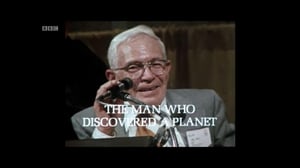
The Man Who Discovered a Planet
On 18 February 1930 Pluto was discovered by a young research student named Clyde Tombaugh. Since that time Pluto has set puzzle after puzzle. It is smaller than expected, it has an unusual path and it has a moon, Charon, which is one third its size. Today, at the age of 77, Clyde Tombaugh is one of America's most respected astronomers. For this programme, Patrick Moore flew to Arizona to meet Professor Tombaugh and to ask him what he now thought about the curious planet he discovered half a century ago. But first we join Clyde Tombaugh in Las Cruces, New Mexico, exactly 50 years to the day of his discovery, at a banquet to honour the only living man who has discovered a new planet.
Episode 4
The Multiple-Mirror Telescope
Atop Mount Hopkins, in Arizona, is the world's most revolutionary observatory. Instead of one great mirror, there are six all working together and controlled by a laser beam. Patrick Moore visits and looks at this remarkable new telescope.
Episode 5
Journey to the Centre of the Galaxy
What lies at the centre of our galaxy? Are there masses of brilliant stars, or something even more significant, such as a Black Hole swallowing up any stars which move too close to it? Patrick Moore and Heather Couper explore this mystery.
Episode 6
Kitt Peak Observatory: The Solar Telescope
Patrick Moore visits Kitt Peak National Observatory and meets Dr Geoffrey Burbidge, its director.
Episode 7
Quasars
What are the quasars? Patrick Moore talks to Professor Alec Boksenberg about these strange, super-luminous objects which have set astronomers so many problems since they were first identified less than 20 years ago.
Episode 8
The Mapping of Venus
In December 1978 America's Pioneer Venus I reached its target. Since then it has been orbiting Venus, and mapping the planet's surface by means of radar. Dr. Garry Hunt joins Patrick Moore to describe the new findings.
Episode 9
Meteor Crater
In Arizona there is a vast hole in the desert, almost a mile across and 600 feet deep, known as Meteor Crater. It was blasted out in prehistoric times by a huge iron meteorite, and is the most perfectly preserved impact area known on Earth
Episode 10
The Autumn Equinox
Patrick Moore , with the aid of a sundial at his Selsey home, explains why equinoxes occur, and shows how the seasons of the year vary, due to the tilt of the Earth's axis.
Episode 11
The Scintars
In the constellation of Aquila, the Eagle, there is a faint star known as SS433. It seems to be a star accompanied by a tiny object expelling jets of gas. This new kind of supernova remnant object has been termed a scintar.
Episode 12
Voyager I Reaches Saturn
Patrick Moore discusses the by-pass of Voyager 1, and Saturn and its satellites, with the American scientists at the Jet Propulsion Laboratory in Pasadena who are responsible for the mission.
Episode 13
The Quadrantids
Several times during the year meteor showers occur. One, known as the Quadrantid shower, will be at its maximum on 3 January and could provide an impressive display of cosmic fire-works. Patrick talks about this interesting phenomenon.