Join or Sign In
Sign in to customize your TV listings
By joining TV Guide, you agree to our Terms of Use and acknowledge the data practices in our Privacy Policy.
The Roosevelts: An Intimate History Season 1 Episodes
Season 1 Episode Guide
7 Episodes 2014 - 2014
Episode 1
Get Action
Sun, Sep 14, 2014112 mins
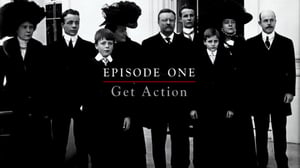
The Roosevelt family originally migrated from Holland in the 17th century. They eventually became one of New York's most prominent families with a dedication to public service. Teddy Roosevelt was the second of four children and suffered from ill-health in his youth. Teddy's father was a philanthropist who dedicated half of his time to charitable organizations. The senior Roosevelt's wife, a Southerner, begged him not to enlist in the Union Army during the Civil War and he obliged, something Teddy never forgave him for and for which he tried to make amends in his own career. He studied at Harvard and met his future wife Alice there, the sister of a classmate. He was first elected to the New York state assembly at age 26 but lost his wife Alice, who died in childbirth. He became a rancher and later a New York City police commissioner. He was Under-Secretary of the Navy when the Spanish-American war broke out and at 39 years of age formed his own troop to fight in Cuba. His exploits there made him a household name and he was elected Governor of New York. He was elected vice president and on president McKinley's death from an assassins bullet in 1901, he became president at the age of 42. Meanwhile, Franklin Delano Roosevelt was born at his father's country estate near the town of Hyde Park. Like his more famous cousin, Franklin went to Harvard and as he grew older, developed a keen interest in politics.
Episode 2
In The Arena
Mon, Sep 15, 2014114 mins
Having boundless energy Teddy Roosevelt proved to be a president like no other. He set out to shift power from the Congress, which dominated at the time, to the executive branch of government. He went after combines and trusts and then focused on completing the Panama canal, purchasing shares owned by France. When the Columbian Senate refused to pass a deal he had negotiated with them, he threw his support behind Panamanian rebels. He faced re-election in 1904 and won easily but he also committed what is considered to be the gravest error of his political career: he promised not to run again. For brokering a deal between Russia and Japan, he was awarded the Nobel Peace Prize. Meanwhile, TR's favorite niece Eleanor was living an unhappy childhood. An orphan by the age of 10, she was sent to live with her maternal grandmother. She constantly felt like a fish out of water with little or no self-esteem and few friends she could call her own. The happiest time in her young life was likely the three years she spent at a private girls school just outside London. Franklin took an interest in her and proposed. They were married in 1905 with TR giving the bride away.

Episode 3
The Fire of Life
Tue, Sep 16, 2014115 mins
FDR, now 28 years old, first sought and won elected office in 1910 when he ran for a seat in the New York state senate. He ran and won as a Democrat and his party did well in these midterm elections. In Albany, he proved to be a force to be reckoned with and led a group of senators opposing the governor's nominee to the U,S. Senate. He was reelected in 1912 but accepted the post of Assistant Secretary of the Navy in the Wilson administration. Teddy Roosevelt decided as early as 1910 that he would again seek the Republican nomination for president. The party bosses however had other plans forcing TR to run as a third party candidate. His campaign was poorly organized and while campaigning in Milwaukee he was shot in the chest, forcing him to suspend his campaign. In the end, he split the vote leading to the election of Woodrow Wilson. His last hurrah was his expedition down the amazon, a grueling trip that almost killed him. With the advent of World War I, both Franklin and Teddy sided with Britain and felt the U.S. should assist them but President Wilson and his Secretary of State William Jennings Bryan felt otherwise. Only when German submarines sank three American merchant vessels in 1917 did the president act. Both TR and FDR wanted to enlist but neither were allowed to do so. On January 6, 1919 Teddy Roosevelt died in his sleep.

Episode 4
The Storm
Wed, Sep 17, 2014115 mins
Franklin Roosevelt was nominated as the vice presidential candidate for the 1920 election. He campaigned vigorously and was joined by Eleanor who, along with all other women, were going to vote for the first time. Although the Republican Warren G, Harding won the election, FDR was seen to have done well and was well placed to gain the presidential nomination in 1924. In August 1921 however, FDR fell ill while at his summer retreat on Campobello island in Canada. Doctors had great difficulty determining the exact nature of the disease - he suffered from high fevers and had lost the use of his legs - but eventually realized he had polio. His medical treatment was painful and any progress was very slow in coming. Eleanor wrote that that winter was the most trying of her life. Eleanor took on a more important public role in 1922 and Franklin returned to work on October 1922 - but having fallen trying to the into the elevator didn't return for months. At the 1924 Democratic convention he nominated of Al Smith, governor of New York, but Smith was unsuccessful. Afterwards he discovered Warm Springs, where he would spend a good deal of his time and money creating a place where polio victims could benefit from the warm waters. At the 1928 Democratic convention he again nominated Al Smith to be their candidate for president. Although Smith lost, FDR ran for governor of New York and won. With the Wall Street crash of 1929, the great depression set in.
Episode 5
The Rising Road
Thu, Sep 18, 2014115 mins
By the time Franklin was inaugurated in March 1933, 5000 banks had failed and 9 million bank accounts were wiped out. He declared a 3 day bank holiday and went on the radio urging people to show faith in the system by depositing funds when they re-opened. It worked. His cabinet included the first woman, Frances Perkins as Secretary of Labor. The first 100 days saw 15 major bills passed including deposit insurance, home ownership loans and major public works projects. The National Recovery Administration was his most ambitious program, setting prices and wages in 541 industries. Eleanor was an active first Lady - holding her own weekly press conferences, writing a syndicated newspaper column and also had her own weekly radio show. Eleanor's close friend, Lorena Hickok went to work for Harry Hopkins, head of Federal Emergency Relief Administration, as his chief investigator. Eleanor's was active at this time, particularly with the Arthurdale project, an ideal community that included a progressive high school. She attended the graduation there every year. The biggest threat to FDR's reelection in 1936 was in the south and primarily from Huey Long. After the Supreme Court ruled that the NRA was unconstitutional, FDR proposed new taxes, an improved Federal Reserve and two pieces of momentous legislation - creation of the National Labor Relations Board, guaranteeing the rights of union to organize and bargain collectively and the Social Security Act which would pay retirement benefits to all Americans at age 65. He was reelected in a landslide winning 46 of 48 States and just over 60% of the popular vote. To deal with the Supreme Court, he tried to pack it with additional nominees, something of a political error and unpopular. Thinking they had won the battle against the depression, they cut back on expenditures leading to what was called the Roosevelt recession of 1937. They reversed course after 9 months. Meanwhile, the situation in Europe continued to deteriorate with Germany invading Poland. Americans however were dead set against involvement in another European war.

Episode 6
The Common Cause
Fri, Sep 19, 2014113 mins
After the German invasion of Poland in September 1939 Franklin Roosevelt assured the nation that the USA would remain neutral. The public generally agreed. He did ask Congress to authorize additional funding for the military, which was small and poorly armed, and for industry to build 50,000 airplanes which was 10 times their current annual capacity. The main political question remained whether FDR would run for a third term in office. He advised the Democratic convention that he would not run but they nominated him anyway and he agreed. He defeated Wendell Wilkie in the election and appointed two Republicans to key posts: Henry Stimson as Secretary of War and Frank Knox as Secretary of the Navy. The first peacetime draft was instituted, something opposed by the newly created America First committee, whose membership included such luminaries as Charles Lindbergh. In a deft political move, he introduced lend lease as a way of helping the British. Eleanor for her part could see on the horizon the issues of race and poverty. and FDR issued Executive Order 8802 banning discrimination in defense industries. FDR's beloved mother Sara died on September 7, 1941 and Eleanor's younger brother Paul died later that month. After the attack on Pearl Harbor all 4 of the president's sons volunteered for military service as did Teddy Roosevelt's 3 surviving sons and 6 grandsons.
Episode 7
A Strong and Active Faith
Sat, Sep 20, 2014110 mins
The war - and the resulting levels of work and security - had kept Franklin Roosevelt out of public sight. By the spring of 1944 however, he was seriously ill with bronchitis. This information was kept from the public with his doctor issuing far more positive medical reports. The event most had been waiting for finally occurred on June 6, 1944 when Allied forces landed in France. Among those going ashore was FDR's cousin and longtime political foe Theodore Roosevelt Jr., a Brigadier General who led his men in the attack at Utah beach. Less than a month later however, Theodore Jr. died of a massive heart attack. He was awarded the Medal of Honor for his D-Day heroism. FDR's failing health was hidden from the public but apparent to all those he met including Stalin and Churchill. After his death, Eleanor continued with her own causes at one point saying that now felt free to speak her own mind for the first time in her life. She died in November 1962.