Join or Sign In
Sign in to customize your TV listings
By joining TV Guide, you agree to our Terms of Use and acknowledge the data practices in our Privacy Policy.
The Nature of Things Season 1 Episodes
Season 1 Episode Guide
15 Episodes 1960 - 2018
Episode 1
Why is It So
This first episode shows what The Nature of Things plan to show what science is about.
Episode 2
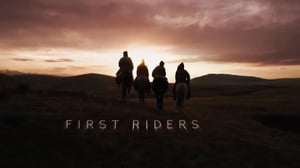
Equus: The Story of the Horse - First Riders
The story of the first time a humans tamed a wild horse and the impacts it made on history.
Episode 3
Equus: Story of the Horse - Chasing the Wind
We built the world around us with horsepower. But what is it that makes humans and horses so perfect for each other? And how have we transformed the wild horse we tamed 6,000 years ago into over 400 specialized breeds today? To answer these questions, anthropologist turned filmmaker Niobe Thompson takes viewers on an epic journey across eleven countries on three continents and back in time to the mysterious beginnings of the horse-human relationship. Over three spectacular hours of cutting-edge science and gripping adventure, Thompson explores the evolution of horsepower, discovers how our ancestors tamed the horse and learns fascinating new insights into the body and mind of this unique animal. Thompson goes on a global adventure of discovery, living and riding with horse nomads in Arabia, Siberia and Mongolia, travelling into the field with archeologists, geneticists, and horse psychologists, and above all, getting friendly with horses everywhere he goes. In the final Episode 3, Chasing the Wind, Thompson takes viewers to meet some of the most fascinating and unlikely of the world's 400 horse breeds. He meets the Yakutian, at home in the coldest inhabited place on Earth (Siberia). He meets the Arab, a spirited horse at home on the scorching sands of the Arabian Desert. And he encounters the most valuable horses on Earth: elite Thoroughbreds, a breed of super-specialized sprinters, descended from one of three 18th-century stallions.

Episode 14
Hibernation
Sun, Feb 5, 1961
An examination of phemonena of winter hibernation and how its study may assist those with heart defects.
Episode 15
Man And His Environment
Sun, Feb 12, 1961
An examination of how man adapts to various environments on earth - arctic, tropics, desert - and what consequences are for man and for other living organisms sharing his environment.
Episode 16
Eclipse
Sun, Feb 19, 1961
A special half-hour Eurovision program from United Kingdom, France, Italy and Yugoslavia.
Episode 17
Animal Communication
Sun, Feb 26, 1961
An examination of various forms and modes of animal communication. Sound, color, odour, pattern, and movement together or separately can tell animals much about their enemies, source of food and mood of a prospective mate.
Episode 18
The Speed Of Light
Sun, Mar 5, 1961
This program shows how speed of light is measured and what it means. Although light's speed in a vacuum seems a universal absolute, research now suggests presence of varieties of light move.
Episode 19
Monotony
Sun, Mar 12, 1961
Dr John Zubec of University of Manitoba explains some of his experiments and studies on boredom and its effects on human mind.
Episode 20
The Chemical Senses
Sun, Mar 19, 1961
Dr R. Wright of British Columbia Research Council discusses his theory of how our senses of taste and smell work, and how they serve biological system.
Episode 21
The Mohole: Earth'S Crust
Sun, Apr 2, 1961
Dr J. Tuzo Wilson, University of Toronto, talks with host Dr Donald Ivey about nature of earth's core beneath its crust and ways scientists have of finding out about it.
Episode 22
Laws Of Conservation
Sun, Apr 16, 1961
Hosts Dr Patterson Hume and Dr Donald Ivey of University of Toronto explain laws of conservation of matter and energy.
Episode 23
Photosynthesis
Sun, Apr 23, 1961
How plants live is classic problems confronting biochemists. Guest Professor RGS. Bidwell, Department of Zoology, University of Toronto, demonstrates way.
Episode 24
Physics Of Clouds
Sun, Apr 30, 1961
Drs. Stewart Marshall and WF Hitschfield of Stormy Weather Group at McGill University explain what clouds are and how they form.
Episode 25
The Sources Of Science
Fri, Apr 7, 1961
What is science and where does it come from? Through a study of oldest scientific societies in world, Hoyal Society of London.