Join or Sign In
Sign in to customize your TV listings
By joining TV Guide, you agree to our Terms of Use and acknowledge the data practices in our Privacy Policy.
Seven Worlds One Planet Season 1 Episodes
Season 1 Episode Guide
8 Episodes 2019 - 2020
Episode 1
Antarctica
59 mins
The snowy shores and icy waters of Antarctica are home to some of the most amazing and unusual wildlife in the world. However, even here, many species face extinction due to rapid climate change and overhunting.
Episode 2
Asia
59 mins
Asia is the largest and most extreme continent on our planet, stretching from the Arctic Circle in the north to the tropical forests on the equator. The animals here face the hottest deserts, tallest jungles and highest mountains found anywhere on Earth. But the continent has not always looked like this. These extreme worlds were created when India collided with the rest of Asia 30 million years ago, shaping the continent as we know it today. Animals here have adapted to the extreme environments in almost unbelievable ways. In the frozen lands of the Kamchatka peninsula in Russia, bears seek out active volcanoes - despite the dangers. And on the Siberian coast, a remarkable spectacle appears for a few weeks during the summer - tens of thousands of walruses haul themselves on to a beach in one of the largest gatherings of mammals seen anywhere in the world. In China, mysterious blue-faced monkeys walk upright through some of the least-explored forests on Earth, whilst the baking deserts of Iran are home to what has to be the world's most bizarre snake. On the barren plateaus of India, garishly coloured lizards fight like miniature kung fu masters as they try to find a mate before they die. The south of the continent couldn't be more different. When India collided with Asia, the Himalayas were formed. These mountains blocked clouds, helping to create the monsoon. Heavy rains fell and tropical forests, full of life, developed to the south. Here, baby orangutans learn to climb the tallest jungle trees on the planet and a female Sumatran rhino - one of the rainforest's rarest inhabitants - sings a mournful and haunting song. Will anyone return her call? These forests - home to thousands of incredible species - are in danger of being lost forever. Under threat from deforestation and human development, today the largest continent on Earth is running out of space for its wildlife.

Episode 3
South America
58 mins
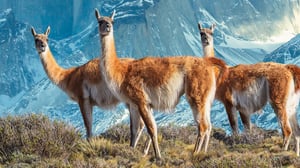
South America - the most species-rich continent on earth. From the volcanoes of the Andes to the world's largest rainforest, animals here must specialise to carve out a niche.
Episode 4
Australia
60 mins
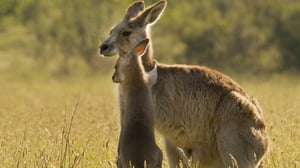
Australia, a land cast adrift at the time of the dinosaurs. Isolated for millions of years, the weird and wonderful animals marooned here are like nowhere else on Earth.

Episode 5
Europe
58 mins
Sir David Attenborough explores the continent of Europe - a crowded continent transformed by mankind. From the rare and elusive wolves to the almost-extinct Iberian lynx, this continent needs protection to ensure a future for its wildlife.

Episode 6
North America
58 mins
More than any other continent, North America is defined by extreme weather and seasonal change. For animals that live here this poses great challenges, but for those with a pioneering spirit it can also offer great rewards. In Canada's Yukon, winter can be brutal - up to six feet of snow can fall in a single day. But lynx have found a way to survive where others cannot, pushing farther north than any other cat species on earth. To catch a meal, they must outsmart quicker and more nimble prey, the aptly named snowshoe hair. With no east-west mountain range crossing North America, Arctic air can flow unimpeded as far south as the southern swamps, locking alligators into a blanket of ice and forcing manatees to flee in search of warmer water. Spring arrives rapidly, covering the Rocky Mountains in a riot of wildflowers and turning frozen creeks into raging torrents. In the streams of Tennessee, male chub fish go to great lengths to attract a mate, moving thousands of stones to build rock pyramids over a metre high. When temperatures are just right, the forests of Mississippi come alive with the spectacular glow of millions of fireflies illuminating the night. On the central prairies, summer brings formidable weather. Warm air from the Gulf of Mexico meets Arctic air head-on, resulting in tornados. Spinning across the Great Plains at speeds of 300 miles per hour, these are the fastest winds on earth. Prairie dogs take evasive action, and it's not just tornados they're avoiding. American badgers slink through the long summer grass on the hunt for burrowing owls and unsuspecting prairie dog pups.

Episode 7
Africa
58 mins
Africa, home to the greatest wildlife gatherings on earth. But even in this land of plenty, wildlife faces huge challenges.

Episode 8
Continents of Wonder
Highlights from the series.