Join or Sign In
Sign in to customize your TV listings
By joining TV Guide, you agree to our Terms of Use and acknowledge the data practices in our Privacy Policy.
Nature Season 34 Episodes
Season 34 Episode Guide
16 Episodes 2015 - 2016
Episode 1
Nature's Miracle Orphans: Second Chances
Wed, Sep 23, 201554 mins
Growing up wild is hard - even harder when you've lost your mom. But for some orphans, there are havens, rescue centers where dedicated individuals are helping them to make it on their own. It's a demanding job, as many require long-term, round-the-clock care. Yet the caregivers persevere, and not just because they believe every animal deserves a chance at a wild life. Forming supportive bonds with these helpless, tiny creatures, providing them with carefully monitored feedings and medical attention, as well as greatly needed affection, training, security and comfort, clearly brings rewards beyond measure to each of them in turn. In this captivating two-part mini-series, fall in love with baby koala Danny, tiny wallaby Neil, baby sloth Newbie, young kangaroo Harry and baby fruit bat Bugsy, and with their caring foster mothers, who give so much of themselves to help these little orphans find their way back to the wild.

Episode 2
Nature's Miracle Orphans: Wild Lessons
Wed, Sep 30, 201554 mins
Growing up wild is hard - even harder when you've lost your mom. But for some orphans, there are havens, rescue centers where dedicated individuals are helping them to make it on their own. It's a demanding job, as many require long-term, round-the-clock care. Yet the caregivers persevere, and not just because they believe every animal deserves a chance at a wild life. Forming supportive bonds with these helpless, tiny creatures, providing them with carefully monitored feedings and medical attention, as well as greatly needed affection, training, security and comfort, clearly brings rewards beyond measure to each of them in turn. In this captivating two-part mini-series, fall in love with baby koala Danny, tiny wallaby Neil, baby sloth Newbie, young kangaroo Harry and baby fruit bat Bugsy, and with their caring foster mothers, who give so much of themselves to help these little orphans find their way back to the wild.
Episode 3
Big Birds Can't Fly
Wed, Oct 7, 201553 mins
Of all the birds he's filmed over the years, David Attenborough finds these big birds the most comical. They are the Flintstones of the bird world - a group whose lineage can be traced back to when dinosaurs walked the earth. The ostrich, the emu, and the rhea - together with the kiwi and the cassowary - are essentially the court jesters of the avian world, because they can't do the one thing that birds are famous for doing. They can't fly. But exactly how - and why - did these birds abandon flight? It's been one of the natural world's great mysteries. And now DNA is promising to give us the answer. Among their number is the fastest bird on land, whose chicks hatch ready to run. One has dagger-sharp talons; another, killer thighs. One is a bird that is heard, but seldom seen, and only in the pitch black dead of night, does it call. So you could say these groups of birds are real oddballs. But they're a family with a remarkable success story...despite having never flown a day in their lives.
Episode 4
Soul of the Elephant
Wed, Oct 14, 201553 mins
Ironically, every dead elephant with its ivory intact is a reason to celebrate. It means an elephant died of natural causes, not bullets, snares or poison, and a soul was allowed to be celebrated and mourned by its herd. Award-winning filmmakers, Dereck and Beverly Joubert start with the remains of two bull elephants and through a series of key flashbacks, look at the lives they would have led, the dramas they may have seen, their great migrations for water with their families, and their encounters with lions and hyenas. This film, shot over two years, is an intimate look at elephants through the lens of perhaps the greatest storytellers of natural history.
Episode 5
Pets: Wild At Heart: Playful Creatures
Wed, Oct 21, 2015
Our pets may seem familiar but they exist alongside us in a secret world of wild behavior and natural abilities that we hardly recognize.

Episode 6
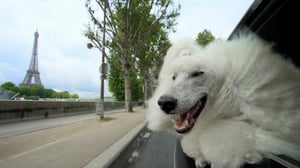
Pets: Wild At Heart: Secretive Creatures
Wed, Oct 28, 2015
Our pets may seem familiar but they exist alongside us in a secret world of wild behavior and natural abilities that we hardly recognize.
Episode 7
Natural Born Hustlers: Staying Alive
Wed, Jan 13, 201653 mins
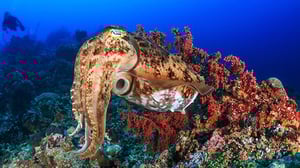
The first episode, Staying Alive, offers stories about unusual survival techniques. Cuttlefish, for example, elude their many predators with a kind of invisibility cloak. They completely transform themselves to match the colors and patterns of their surroundings. But what is truly remarkable is that they do this despite being color-blind. The secret to how they do it is hidden in their skin, which can sense and possibly even "see" color using a protein usually found only in eyes. And these great illusionists have another trick that no other animal can do. Their skin can also morph from a flat surface to a three dimensional one in order to complete the camouflage. Other ruses revealed include: why burrowing owls, who live underground, mimic the sounds of rattlesnakes; how imitation may not just be the sincerest form of flattery, it can also save your life; and what deception the regal horned lizard employs as a last resort to keep a menacing coachwhip snake at bay.
Episode 8
Natural Born Hustlers: The Hunger Hustlers
Wed, Jan 20, 201653 mins
The duplicitous ways in which animals try to secure their next meal is the subject of the second episode, The Hunger Hustle. Singled out is the devious drongo, a South African bird. In winter, he has to rely on grubs and insects that live underground, but other animals are far better equipped to dig them up, so the drongo devises a con. He serves as lookout while vulnerable social weaver birds are on the ground digging up food. If a predator is spotted, he sends out an alarm call and the weavers head for safety until they get an all clear call from him. But the drongo also issues fake alarm calls, allowing him to eat food the weavers have dug up before issuing an all clear to return. Among other segments: the orchid mantis, which attracts insects by mimicking a flower and why it is even more successful than the real thing; how killer whales use sound to manipulate the behavior of herring to their advantage; and how and why gray squirrels practice sleight of hand to protect the nuts they've gathered to get them through the winter.
Episode 9
Natural Born Hustlers: Sex, Lies, & Dirty Tricks
Wed, Jan 27, 201653 mins
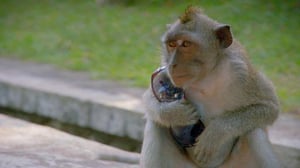
The series concludes with Sex, Lies and Dirty Tricks, which explores sneaky mating techniques. For example, a lusty low-ranking male in a mob of red kangaroos considers possible plan A and plan B options when only the alpha male has the right to mate with the females in the group. A male marsh harrier's solution to avoid conflict with a dominant resident male during breeding season is to grow feathers that make him look like female. He fools the resident male, but is able to woo a real female and settle down to raise a family. The final hour also exposes the dark ways brood parasites avoid parental duties, and how their chicks go even further to get the full attention of their foster parents. It's a tough world out there, so it's not surprising that crafty animals turn to disguise, illusion, duplicity and mimicry to beat the odds and live another day.

Episode 10
Moose: Life of a Twig Eater
Wed, Feb 10, 201653 mins
Moose populations across many parts of North America are in steep decline and scientists believe one of the reasons is that fewer moose calves are surviving their first year. This stunningly intimate nature documentary, filmed over 13 months in the spectacular wilds of Jasper National Park, takes viewers deep inside the world of moose to experience a mother's love and a calf's first year of life up close and personal.

Episode 11
Raising the Dinosaur Giant
Wed, Feb 17, 201653 mins
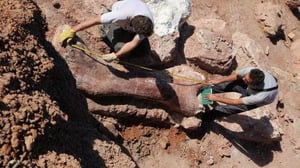
Have scientists discovered the biggest animal to have ever walked the planet? Deep in a South American desert, a giant is being awakened after 101 million years of sleep. As the bones are found in different sediment layers there could be up to seven individuals - so are they all the same species? With a complete skeleton averaging 275 bones - how many of these bones belong to one giant? What bones are missing and why? And how will they fill in the gaps? And the ultimate question - is this the largest animal that ever walked on earth? All these questions and more will be answered as the team pieces together the evidence.
Episode 12
Snow Chick
Wed, Feb 24, 2016
A chronicle of the birth and development of one penguin chick, born later and smaller than any of its fellow toddlers.

Episode 13
Animal Reunions
Wed, Mar 30, 201653 mins
Animal Reunions have captured the imaginations of millions of people worldwide. YouTube is full of animal reunion stories - moments that illustrate and capture genuine affection and emotion between and among species. These rare moments provide a fleeting window into the emotional capacities of animals and their ability to form bonds with humans. But can wild animals really feel joy, devotion and love? Most animal lovers are convinced that they do, and now scientists are beginning to agree as we discover the stories that bring those animal emotions to life. We meet orphaned elephants in Kenya who have learned to trust their nursery keepers even after they lost their families at the hand of man - and witness a deep bond revealed as the head keeper travels to the National Park to see if his fully grown elephants remember him. We meet Damian Aspinall, the first man to release a captive-bred family of gorillas back to the wild, and see his reunion with one of those gorillas, proving a bond that may last a lifetime. We also meet Jane Goodall, the legendary chimpanzee researcher who was once heavily criticized for her claims about animal emotions; and Rebeca Atencia, the veterinarian who runs a Congolese chimp sanctuary set up by Goodall, as she travels to find the orphan chimpanzee she raised and released back into the wild. Through these incredible stories about human-animal relationships, illuminated by interviews with some of the world's most eminent ethologists and academics, this film sets out to question not only the emotional intelligence of animals but the so-called divide between us and them.

Episode 14
India's Wandering Lions
Wed, Apr 13, 2016
Once facing extinction, Asia's last wild lions live dangerously close to India's villages.

Episode 15
Nature's Perfect Partners
Wed, May 11, 201653 mins
Across the planet, animals are joining forces. They are doing so in surprising and diverse ways, whether it is to hunt, build a home, or solve complex problems. Partnerships were once thought rare in the animal kingdom, but now more and more are being discovered. Some are what we might expect from animals of the same species - elephant matriarchs helping a baby elephant, a pod of killer whales hunting as a team, or a troop of capuchin monkeys scheming together to steal a meal from a snake. What's really astonishing is that often completely unrelated species such as the finch and the tortoise, the lizard and lions, and the raven and the wolverine become unlikely collaborators. Such teamwork involves considerable brainpower, revealing just what animals are really capable of. By teaming up, animals can achieve incredible things, becoming greater than the sum of their parts.

Episode 16
Jungle Animal Hospital
Wed, May 18, 201653 mins
In the day-to-day drama taking place at one of the world's wildest hospitals, a jungle veterinarian named Alejandro Morales, his zoologist girlfriend Anna Bryant, and their team of dedicated staff and volunteers take on dangerous and exciting challenges as they care for a cast of iconic endangered animals. In this vivid and compelling film, we follow the couple and their team through a year at ARCAS, a rescue center deep in the Guatemalan jungle, where on any given day they could be bottle-feeding a baby monkey, stitching up an injured rare potoo chick, or wrestling a crocodile. The jungle hospital is home to spider and howler monkeys, jaguars, armadillos, crocs, gray foxes, and a huge variety of colorful birds. Some animals arrive at the hospital lost and helpless - from malnourished baby parrots rescued from pet trade smugglers to baby monkeys in diapers, who all need mothering and care to teach them how to be wild until they can be released. Other creatures have been injured or saved from harm. Some stay for a month, others for a day, and some, sadly, never return to the forest at all. But every animal deserves a fighting chance to be wild.
