Join or Sign In
Sign in to customize your TV listings
By joining TV Guide, you agree to our Terms of Use and acknowledge the data practices in our Privacy Policy.
Nature Season 33 Episodes
Season 33 Episode Guide
17 Episodes 2014 - 2015
Episode 1
Penguins: Spy in the Huddle: The Journey
Wed, Sep 24, 2014
Emperor penguins cross a treacherous frozen sea to reach their breeding grounds. Rockhoppers brave the world's stormiest seas only to come ashore and face a daunting assault up a 300-foot cliff, hopping most of the way up. Tropical Humboldt penguins negotiate predatory sea lions and vampire bats to reach their desert nests. The hard work for all the penguins finally pays off when their tiny, vulnerable chicks begin to hatch.

Episode 2
Penguins: Spy in the Huddle: First Steps
Wed, Oct 1, 2014
Watched by spycams, newborn emperor penguins in Antarctica are caught walking on their mothers' feet and taking their own first unsteady steps. On the Falklands, rockhopper chicks meet their unruly and predatory neighbors while eggcams provide unique views of the colony. In Peru, Humboldt chicks take on fur seals and take aim at gulls.
Episode 3
Penguins: Spy in the Huddle: Growing Up
Wed, Oct 8, 2014
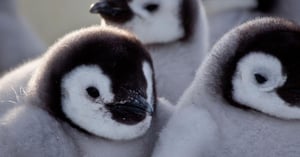
As their chicks become increasingly independent, emperor and rockhopper parents place them in a crèche and go fishing. Humboldt chicks are left in their burrows as the adults head for the beach. As the young grow bigger and preen out baby fluff they sport punk hairdos. Emperor chicks go skating while rockhopper chicks practice jumping skills. Eventually, all the chicks leave for the sea, tackling the same hazards as their parents before them, from sea lions to predatory birds, high cliffs to glaciers.

Episode 4
Animal Misfits
Wed, Oct 15, 201456 mins
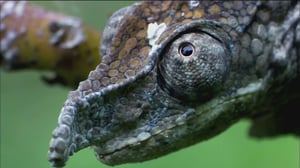
A collection of animals that differ from the normal evolutionary adaptations from the mainstream biome is presented in this fast-paced and very engaging offering. They examine in a rapid-fire manner the special niches these strange and wonderful creatures have carved out for themselves in order to survive in what would initially seem to be very unlikely ways for sometimes millions of years.
Episode 5
A Sloth Named Velcro
Wed, Nov 5, 201454 mins
Sloths, once largely ignored, have become a hot topic of scientific researchers. Sanctuaries and rehabilitation centers are also springing up, as development often displaces these gentle creatures. Filmed in Panama, Costa Rica and Colombia, this is a story of friendship between a journalist and the sloth she named Velcro and a network of people working to learn more about sloths in order to protect them.

Episode 6
Invasion of the Killer Whales
Wed, Nov 19, 201456 mins
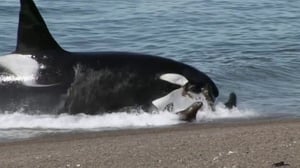
As the ice shrinks in the Arctic, polar bears are struggling to survive in a fast melting world. Although classified a marine mammal, the polar bear is not adapted to hunting in the water. And it is certainly no match for the world's greatest aquatic hunter -- the killer whale. In the last few years, scientists have noted an ever-growing number of killer whales in Arctic waters in the summer months. More and more have been attracted to these hunting grounds by the growing expanse of open water. They attack the same prey as the polar bears: seals, narwhal, belugas and bowhead whales.
Episode 7
Best of Birds
Wed, Dec 10, 2014
A compilation of the most compelling, emotional and even humorous stories about bird intelligence, behavior, relationships and flight drawn from the series' extensive archives.

Episode 8
Wild France
Wed, Jan 7, 2015
Deep in the French countryside, it is possible for the adventurous to spot brown bears, wild boar, griffon vultures or wolves.

Episode 9
Penguin Post Office
Wed, Jan 28, 201554 mins
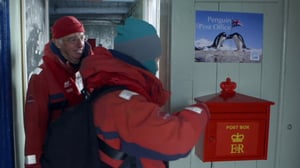
In the heart of the Antarctic Peninsula there's a unique British post office staffed by a dedicated team and surrounded by jaw-dropping scenery that includes 3,000 gentoo penguins. Every summer, this particular colony of penguins returns from an intensive spell of deep sea fishing to its breeding grounds alongside the post office, trekking nearly two miles across sea ice and snow to get there when the weather is especially bad. They rush to find a partner, build a nest, lay eggs and protect those eggs from predators, and then finally get down to the task of raising their young. We see their four-month drama unfold against the backdrop of their lives - primarily, the comings and goings of cruise ships, bringing enthusiastic tourists to photograph the penguins and their chicks, and to buy postcards to send to friends and family around the world - from the Penguin Post Office.
Episode 10
Owl Power
Wed, Feb 18, 201556 mins
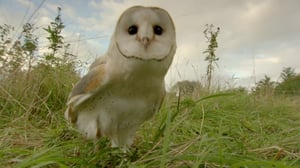
For centuries, the mysterious nighttime lives and uncanny hunting skills of owls have made them fascinating hallmarks of children's stories and folk tales the world over. But what actually makes owls so special? Bird trainers Lloyd and Rose Buck and their very special family of owls, eagles, falcons, geese, pigeons, and two newly-hatched barn owls - Luna and Lily - provide a rare opportunity to learn more about these unique birds. Using the latest in camera technology, computer graphics, x-rays and super-sensitive microphones, we can take a brand new look at owls in more detail than ever before. The real stories behind how they hunt, how their vision and hearing works, and how they fly so silently are influencing 21st century technology and design.
Episode 11
The Last Orangutan Eden
Wed, Feb 25, 201554 mins
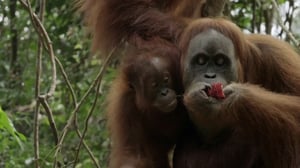
Ecologist Chris Morgan (Bears of the Last Frontier) travels to the jungles of Northern Sumatra to document the work being done to save its population of wild orangutans, quickly dwindling due to deforestation. Morgan spends time with orphaned orangs at a rehabilitation center, observing the process of teaching them the skills they'll need to be released back into the wild. But to truly understand the complexity of wild orangutan society and learn exactly what the young orangs would have learned from their mothers in the wild, Morgan must go farther. He joins a team of experienced researchers in Suaq Balimbing, a remote peat swamp forest protected as part of a World Heritage Site. The scientists are there to study and document a unique social band of wild orangutans who use tools, share food, forage together, and create their own distinct culture. For the first time, advanced cameras follow the orangs throughout the canopy to provide an intimate, clear picture of how these arboreal apes spend their days and nights and interact with one another. At the conclusion of his journey, Morgan accompanies one special orphan orangutan as he is transported to a remote nature reserve to become part of a new community of former orphans now prepared to be wild once more.
Episode 12
Animal Homes: The Nest
Wed, Apr 8, 201553 mins
Bird nests come in all shapes and sizes, crafted from a diversity of materials, including fur, grasses, leaves, mosses, sticks and twigs, bones, wool, mud and spider silk. Quite a few contain man-made materials -- twine, bits of wire, even plastic bags. Each is a work of art, built with just a beak! All over the world, birds in the wild arrive at diverse nesting grounds to collect, compete for, reject, steal and begin to build with carefully selected materials, crafting homes for the task of protecting their eggs and raising their young.
Episode 13
Animal Homes: Location, Location, Location
Wed, Apr 15, 201553 mins
Finding a good base of operations is key to successfully raising a family. One must find the right stream or tree, the right building materials, neighbors and sometimes tenants. In the wild, every home is a unique DIY project, every head of household a designer and engineer. Cameras chart the building plans and progress of beavers, tortoises, hummingbirds and woodrats, examining layouts and cross sections, evaluating the technical specs of their structures, documenting their problem-solving skills. Animal architecture provides insights into animal consciousness, creativity and innovation.
Episode 14
Animal Homes: Animal Cities
Wed, Apr 22, 201553 mins
For some animals, living in the midst of huge colonies of their own kind is the most secure and rewarding housing arrangement. Icelandic puffins form nesting colonies of more than a million, providing shared information about food sources and reducing the odds of attacks on individual birds. But colonies are useful for predators, too. Social spiders in Ecuador work together to capture prey 20 times the size an individual might subdue on its own. For others, communal living provides multi-generational care-giving options or the opportunity to build enormous cities like the acre-wide multi-million-citizen colonies built by leaf cutter ants in Costa Rica, or Australia's Great Barrier Reef, built entirely by tiny corals.
Episode 15
Mystery Monkeys of Shangri-La
Wed, Apr 29, 201553 mins
This is the true story of a family of Yunnan snub-nosed monkeys living in the highest forests in the world. Only recently discovered, snub-nosed monkeys are hauntingly beautiful primates, gentler than others of their kind. Elfin-like, they seem both childlike and wise beyond their years. The family is led by a formidable fighter and his fighting force who guard a troop of 8-10 families. The survival of this unique monkey society, formed in response to the hardships of the Himalayas, depends on strong defensive strategies and the cooperation and interdependence of them all.

Episode 16
Animal Childhood
Wed, May 13, 201556 mins
In every animal's life, there comes a time when it must stand on its own, and face the world alone. For a few, this happens just moments after birth, others have the advantage of home schooling under the watchful eye. But growing up is never easy, and finding food, avoiding predators and making friends does not always come naturally. These are the trials of young animals all over the world, as they prepare to leave home.
Episode 17
The Sagebrush Sea
54 mins
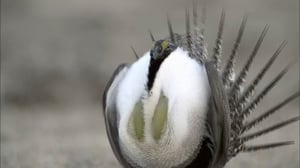
One of the most overlooked ecosystems in the America West is a massive sea of sagebrush that stretches across 11 states. This spartan landscape supports more than 170 species of birds and mammals. Among those that have adapted to survive here are the Greater Sage-Grouse. Today, they must contend with wells and pipelines tapping the resources buried deep below. The sagebrush and the grouse carry on, but they're losing ground.