Join or Sign In
Sign in to customize your TV listings
By joining TV Guide, you agree to our Terms of Use and acknowledge the data practices in our Privacy Policy.
Nature Season 27 Episodes
Season 27 Episode Guide
13 Episodes 2008 - 2009
Episode 1
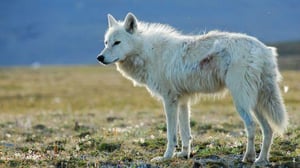
White Falcon, White Wolf
Sun, Oct 26, 2008
The film follows the perilous parenthood of two species - white gyrfalcons and Arctic wolves - on Canada's remote Ellesmere Island, where winter lasts nine months and raising young in such a hostile environment is a daily struggle.
Episode 2
Clever Monkeys
Sun, Nov 9, 2008
Who are the cleverest monkeys? And how much of human experience do they really share?

Episode 3
American Eagle
Sun, Nov 16, 200853 mins
Everything about them is big. They are one of nature's largest raptors, with wings that can span eight feet, and nests that can weigh up to a ton. Unique to North America, the bald eagle is the continent's most recognizable aerial predator, with a shocking white head, electric yellow beak and penetrating eyes. Yet most people know little about it beyond its striking appearance. In the 1960s, the bald eagle was on the brink of extinction caused by the pesticide DDT and other human pressures. Following their protection as an endangered species, bald eagles have come roaring back. But even in the best of times, life in the wild for these birds is a surprisingly tough struggle. From the pristine wilderness of Alaska to the Upper Mississippi River Valley, American Eagle goes behind the scenes and into the nest to provide the ultimate bird's eye view into the private life of an American icon.

Episode 4
The Wolf That Changed America
Sun, Nov 23, 200851 mins
Ernest Thompson Seton's tale about an encounter with a wolf led to the establishment of the National Park system and the Boy Scout movement in America.

Episode 5
The Dragon Chronicles
Sun, Jan 11, 2009
Conservationist Romulus Whitaker uses documented science and contemporary reports to determine whether dragons were real.

Episode 6
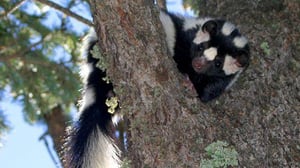
Is That Skunk?
Sun, Jan 25, 2009
An in-depth look into the life of a skunk. Explores far more than their ability to make a stink.
Episode 7
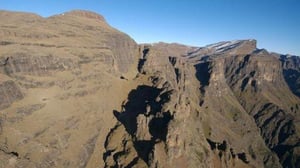
Drakensberg: Barrier of Spears
Sun, Feb 8, 200954 mins
Rising sharply from the South African landscape, cliffs like spines form the majestic Drakensberg Mountains. Born of Jurassic molten lava, they span more than 600 miles and tower more than 10,000 feet.
Episode 8
Why We Love Cats and Dogs
Sun, Feb 15, 2009
Americans own 73 million dogs and 90 million cats. They become best friends, soul mates, family members, and even surrogate children. Relationships with cats and dogs are some of the longest and most intimate of our lives. Why are we so attached? Animal behavior experts, evolutionary biologists, veterinarians, and pet owners share insights and observations about these animals and their impact on us.

Episode 9
Kilauea: Mountain of Fire
Sun, Mar 29, 2009
Kilauea, on Hawaii's Big Island, is the world's most active volcano. Its last eruption began in 1983 and hasn't stopped since. Few have ever filmed the cataclysmic meeting of 2,000-degree lava and 75-degree ocean water.

Episode 10
Frogs: The Thin Green Line
Sun, Apr 5, 2009
It is the greatest mass extinction since the dinosaurs. Population by population, species by species, amphibians are vanishing off the face of the Earth. Despite international alarm and a decade and a half of scientists scrambling for answers, the steady hemorrhaging of amphibians continues like a leaky faucet that cannot be fixed or a wound that will not heal. Large scale die-offs of frogs around the world have prompted scientists to take desperate measures to try to save those frogs they can, even bathing frogs in Clorox solutions and keeping them in Tupperware boxes under carefully controlled conditions to prevent the spread of a deadly fungus. Will it ever be safe to return the frogs back to the ecosystem from which they were taken?

Episode 11
The Loneliest Animals
Sun, Apr 19, 2009
Around the globe, unique and fascinating species face extinction from hunting and habitat destruction, which affects vulnerable animals in every kind of environment. Biologists, conservationists, wildlife preservation centers and zoological parks work to breed and shelter rare and critically endangered animals when and where they can, but many species are down to the last few individuals and face an increasingly uncertain future. For some, however, the future is all too clear. Lonesome George, a Pinta Island tortoise from the Galapagos Islands, is the very last of his kind. For centuries, until they were believed to be extinct, his species kept sailors and pirates well-fed on the high seas. George alone survived. But when George dies, millions of years of evolution will come to an end. Other species, like Spix's macaws, lemurs, Iberian lynxes, rhinos, black-footed ferrets and Chinese rafetus turtles, were well on their way to joining George as the loneliest animals in the world until help arrived, providing hope for a better outcome. Each species in trouble presents unique challenges, including inbreeding and lack of genetic diversity, sibling rivalry on an extreme scale, and individuals who may never have seen another of their kind. There are some successes with captive breeding. For example, the black-footed ferret, once thought to be entirely extinct, is now being reintroduced to its natural home on the American plains after an incredible intervention by scientists. But rebounding in artificial settings doesn't put endangered animals in the clear - populations may grow, but without successful action to preserve and maintain their wild habitats, they may be confined to laboratories and sanctuaries forever. The Loneliest Animals follows the plight of these incredible, charismatic creatures and the struggles of the dedicated conservationists who fight for them.

Episode 12
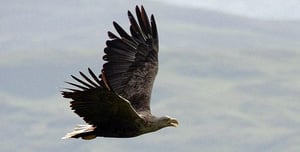
Eagles of Mull
Sun, May 3, 2009
They say 'There's no place like home' and for wildlife filmmaker Gordon Buchanan, it takes more than growing up in a place to truly appreciate its beauty. It takes coming home again.
Episode 13
Victoria Falls
Sun, May 17, 200954 mins
Victoria Falls, between the borders of Zambia and Zimbabwe, is over a mile wide. Many birds, reptiles, fish, and mammals call this area home.
