Join or Sign In
Sign in to customize your TV listings
By joining TV Guide, you agree to our Terms of Use and acknowledge the data practices in our Privacy Policy.
Nature Season 25 Episodes
Season 25 Episode Guide
14 Episodes 2006 - 2007
Episode 1
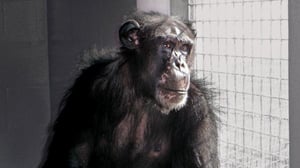
Chimpanzees: An Unnatural History
Sun, Nov 5, 2006
Individuals care for a population of once-captive chimpanzees that scientists used for research.
Episode 2
Penguins of the Antarctic
Sun, Nov 12, 2006
Emperors and kings, chinstraps and Adélies - NATURE follows the penguins' difficult journey through the cycle of seasons and explores how a changing climate is affecting their habitat and survival.

Episode 3
Christmas in Yellowstone
Sun, Nov 19, 2006
As snow falls and Christmas lights glow in Jackson Hole, a holiday season of a different sort settles in just beyond the town.

Episode 4
The Best of Nature: 25 Years
Sun, Jan 14, 2007
"Nature" celebrates 25 years on public television.

Episode 5
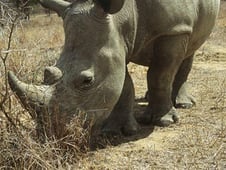
Rhinoceros
Sun, Jan 28, 200754 mins
During the past century, the rhinos of Africa and Asia have been pushed out of their habitats and hunted nearly to extinction for their horns. Now, thanks to the efforts of conservationists and scientists, the rhinos are on their way back.
Episode 6
Supersize Crocs
Sun, Feb 11, 2007
Gigantic crocodiles - some known to exceed 20 feet - are very, very rare, but still out there in the wild, with a few held in captivity. Renowned herpetologist Romulus Whitaker attempts to ensure the future of the last of these leviathans.

Episode 7
Raptor Force
Sun, Feb 18, 2007
Take flight on an exhilarating ride with elite winged predators. Humans have had a unique relationship with raptors, nature's aerial killing machines, for more than four thousand years, first through the ancient sport of falconry, and, more recently, as scientists and engineers have turned to these mighty birds for inspiration for the latest in aircraft design.

Episode 8
Andes: The Dragon's Back
Sun, Feb 25, 200751 mins
Once the realm of the ancient Incan Empire, this place of myth and legend also has a rich, intriguing natural history going back to the Jurassic period, marked by an event of monumental portion-the formation of the Central American land bridge 3 million years ago. The creatures of the Andes set this land apart from all other places on earth. The Andes are home to the zorro, a "false fox" with adaptations that make it a successful inhabitant of the Andes. The flamingo, too, has developed utterly unique and specialized adaptations in order to thrive in an environment that doesn't even seem livable-a salt pan. Only a mountain range of extremes could harbor such a rich and diverse variety of life forms. Here you will find some of the highest, saltiest, wettest and driest terrains on the planet. Penguins, opossums, hummingbirds, llamas, pumas, foxes, condors, spectacled bears and many more have all managed to carve out an existence somewhere in one of the many worlds that we call the Andes.

Episode 9
Unforgettable Elephants
Sun, Apr 1, 2007
We have seen them dressed in costumes and dancing at circuses, living solitary lives at zoos or giving our children a thrill with a ride on their back. But the largest land animals live a life that is completely foreign to us when left to their own in the wild -- one complete with battles and births, kidnappings and camaraderie. More than fifteen years ago, Martyn Colbeck began to document in film and photos the lives of African elephants. For the better part of two decades, he has grown particularly close to the elephant matriarch, Echo, and her close-knit family, who have never failed to astonish, amuse, and inspire him. The family seems to accept Colbeck into their world, and perhaps even considers him one of their own. The result is that he can record unimpeded the gentle love, and tight bonds that elephants feel for each other. Colbeck's film gives us a glimpse into the complex world of elephant society. We meet Echo and begin to understand the importance of such a majestic matriarch to her devoted clan. He shows us their language and ways of communication. And he captures remarkable scenes such as the rare birth of a crippled calf that the family desperately and collectively tries to help to its feet. The film causes us to question if this could be about more than simply survival. Is there a deeper emotion we have just been privileged enough to witness through Colbeck's lens? In scene after moving scene, Colbeck makes us fall in love with Echo, Erin, Enid, Ely, and the rest of this loving family. He conveys through his film and in a special interview with NATURE what complicated, powerful, tender, funny -- and, yes, unforgettable -- creatures elephants are.

Episode 10
Voyage of the Lonely Turtle
Sun, Apr 15, 2007
Explore the massive Pacific Ocean through the eyes of a 30-year-old sea turtle as she embarks on an extraordinary 9,000-mile migration to breed and lay eggs on the beach where she was born. Instinct will guide her along one of the longest journeys undertaken by any animal on land or sea, and she will make it all alone. From the west coast of Mexico to a small stretch of beach in Japan, this ancient traveler will encounter hammerhead sharks, face terrifying typhoons, pass exotic kingdoms of the sea, and risk man-made death traps in the form of fishing nets and hooks. Discover what researchers and turtle enthusiasts have learned about how this curious creature can navigate this astounding trip.

Episode 11
Dogs That Changed the World: The Rise of the Dog
Sun, Apr 22, 200758 mins
Learn how the domestication of dogs might have taken place, including the theory of biologist Raymond Coppinger that it was the animals themselves - and human trash - that inspired the transformation. The genetic analysis of Peter Savolainen of the Royal Institute of Technology in Sweden has placed the origins of domesticated dogs - and those of the first dog - in East Asia. You'll also discover 14 dog breeds that controversial genetic studies show are the most ancient - and the best living representatives of the ancestors to all living dogs.

Episode 12
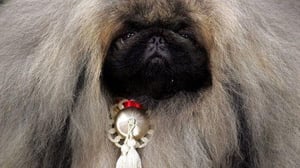
Dogs That Changed the World: Dogs by Design
Sun, Apr 29, 200758 mins
Over 400 breeds of dog are recognized around the world, each unique for its personality, habits, and form. Most of these breeds exploded onto the scene over the past 150 years, spurred by the Victorian-era passion for the "dog fancy" - the selective breeding of dogs to enhance particular characteristics. By tinkering with its genetics, humans made the dog the most varied animal species on the planet - and also created a host of hereditary health problems.
Episode 13
Sharkland
Sun, May 6, 2007
A special band of muscle running along its side helps the great white hunt fur seals.

Episode 14
Superpride
Sun, May 13, 2007