Join or Sign In
Sign in to customize your TV listings
By joining TV Guide, you agree to our Terms of Use and acknowledge the data practices in our Privacy Policy.
MGM Parade Season 1 Episodes
Season 1 Episode Guide
34 Episodes 1955 - 1956
Episode 1
Episode #1.1
Wed, Sep 14, 195526 mins
Host George Murphy compares archival air footage of MGM Studios during its first days in the silent era and currently. Props used by various studio stars are supplemented by interviews with production chief Dore Schary and musical star Cyd Charisse. Clips from Schary's film "Broadway Melody of 1940" with Murphy, Fred Astaure, and Judy Garland ("Dear Mr. Gable") are shown as well as number with Charisse from "It's Always Fair Weather." Leland Stanford's groundbreaking experiment with photographing the movement of a racehorse from an MGM Miniature is edited in also.
Episode 2
Episode #1.2
Wed, Sep 21, 195530 mins
In recapping the presentation of the "If I Only Had the Nerve/We're Off To See The Wizard" musical number, host George Murphy hopes that it will bring back fond memories for adults who have seen The Wizard of Oz (1939), and will encourage children who haven't seen the movie to see it. He is appropriately in the MGM trophy room to introduce the short The Story of Alfred Nobel (1939). He is visited by young Leo, who wants George to showcase his friends Screwball Squirrel and Meathhead as they duke it out in animated short Screwball Squirrel (1944). And he visits with Gene Kelly and Cyd Charisse on the set of It's Always Fair Weather (1955). Gene is featured in the "I Like Myself" roller skating musical number from the movie.
Episode 3
Episode #1.3
Wed, Sep 28, 195530 mins
After thanking the viewing audience for their positive reception to the show, host George Murphy introduces from the MGM vaults the classic movie A Free Soul (1931), showing a clip featuring the Academy Award winning performance by Lionel Barrymore. Next, he shows a short film, One Against the World (1939), which chronicles the career of Dr. Ephraim McDowall, who was the first person ever to perform internal surgery, which was before then considered sacrilegious and was therefore unheard of. Then he shows Guest Pests (1945), which demonstrates the different kinds of house guests that can be an annoyance. And in the coming attraction, he shows a few scenes from Trial (1955), based on the Harper Award winning novel of the same name by Don Mankiewicz, who adapted his novel for the big screen.
Episode 4
Episode #1.4
Wed, Oct 5, 195526 mins
Stating that almost anything can be accomplished at a movie studio, host George Murphy takes the viewer on a tour of MGM Studios, most specifically the area known as Lake Metro, where a man made lake is created for outdoor water scenes and where many vessels used for movies such as Show Boat (1951), Tugboat Annie (1933) and Mutiny on the Bounty (1935) are housed. This nautical setting segues into a presentation of The Ship That Died (1938), a short film on the mystery of the Mary Celeste, a merchant ship found abandoned - the crew and passengers' whereabouts never discovered - but whose cargo was virtually untouched. He then presents the animated short Batty Baseball (1944), and "The French Lesson" musical number from Good News (1947). The coming attraction is the movie Trial (1955).
Episode 5
Episode #1.5
Wed, Oct 12, 195530 mins
Host George Murphy talks about masks as his introduction to the short film, The Face Behind the Mask (1938), which tells the true story of Louis XIV of France and the unknown man he imprisoned behind an iron mask. He then introduces one of the late Robert Benchley's classic comic "how to" shorts, How to Train a Dog (1936). Murphy next introduces the MGM hall of fame movie of the week, Till the Clouds Roll By (1946), which is about composer, Jerome Kern. In the film clip shown, Tony Martin sings "All the Things You Are" written by Kern. Murphy lastly receives a visit from actor John Hodiak, who talks about his latest movie, Trial (1955).
Episode 6
Episode #1.6
Wed, Oct 19, 195530 mins
While leafing through the MGM family photo album, host George Murphy reminisces about the film career of the incomparable Greta Garbo and introduces the movie in which her voice was first heard, Anna Christie (1930). The next book he leafs through is an autograph book, which introduces the next movie, The Amazing Mr. Nordill (1947), who was a special kind of autograph seeker, namely a counterfeiter. Murphy then introduces producer Pete Smith, who takes the viewer on a comical guided tour of the studio. Murphy then introduces actor Robert Taylor, who talks about his soon to be released movie, Quentin Durward (1955).
Episode 7
Episode #1.7
Wed, Oct 26, 1955
Host George Murphy, an ex-dancer, admits his love of dance numbers in musicals as he excitedly introduces one of his favorite dance numbers by Ray Bolger from The Great Ziegfeld (1936). He then introduces the short film Changed Identity (1941) which deals with a man who wants to change his identity, and who comes across who he believes is the perfect person with whom to do so: his estranged twin brother. With the help of Leo the Lion, George then introduces the animated short The Early Bird Dood It! (1942), which tries to answer the age old question: does the early bird really get the worm? Then Debbie Reynolds stops by for a social visit to talk about her new film with Frank Sinatra called The Tender Trap (1955).
Episode 8
Episode #1.8
Wed, Nov 2, 195530 mins
Host George Murphy introduces one of MGM's most popular movies, The Philadelphia Story (1940), which has just been reissued in theaters. It's the eve of press shy socialite Tracy Lord's second wedding, which is taking place at the Lord family mansion in Philadelphia. Three uninvited guests arrive: Macaulay Connor and Elizabeth Imbrie, an undercover reporter and photographer for Spy Magazine, they whose undercover status to Tracy is not as they believe; and C.K. Dexter Haven, Tracy's first husband. Murphy then introduces the "Pay the $2" sketch from Ziegfeld Follies (1945), where a client wants his lawyer to help pay a $2 fine for a minor offense, but the lawyer who has his own ideas. He then introduces the title tune scene from the new motion picture The Tender Trap (1955).
Episode 9
Episode #1.9
Wed, Nov 9, 195530 mins
After reading some fan mail, host George Murphy introduces Ann Sothern singing "The Last Time I Saw Paris" from Lady Be Good (1941). He then introduces the short film Portrait of a Genius (1943), which deals with the inventor's side of Leonardo Da Vinci and how most of his inventions were before their time. Little Leo then tries to prove that the way to any woman's heart is through a song as witnessed in the animated short, Little 'Tinker (1948). And as Murph steps out to retrieve a roll of film from the new feature Guys and Dolls (1955), Marlon Brando unexpectedly stops by with the roll of film himself.
Episode 10
Episode #1.10
Wed, Nov 16, 195530 mins
Host George Murphy introduces this week's feature A Guy Named Joe (1943), which tells the story of deceased WWII fighter pilot Pete Sandidge, whose ghost returns to Earth to help an old friend and his old girlfriend live their lives in happiness, at the expense of his own Earthly memories. He then introduces the short You Can't Win (1948), where a man is put in a series of situations where he just can't seem to win as hard as he tries. He then introduces the short film A Door Will Open (1940) which tells another story of help from the afterlife. In the "new in theaters" segment, Murphy introduces scenes from the musical movie Guys and Dolls (1955) which showcases Marlon Brando and Jean Simmons in their first ever singing and dancing roles.
Episode 11
Episode #1.11
Wed, Nov 23, 195530 mins
Host George Murphy introduces the title number from For Me and My Gal (1942), which was Gene Kelly's first starring role in a motion picture. He then introduces the short film Strange Testament (1941) which tells the story of why $1,100 is bequeathed to every young bride in West Baton Rouge, Louisiana. Next, he introduces Let's Talk Turkey (1939), which demonstrates the right and wrong ways to carve a Thanksgiving turkey at the dinner table. And he receives a visit from Susan Hayward, who talks about her new motion picture I'll Cry Tomorrow (1955), which tells the story of singer Lillian Roth, whose career was threatened by her alcoholism.
Episode 12
Episode #1.12
Wed, Nov 23, 195530 mins
Host George Murphy introduces a scene from Thirty Seconds Over Tokyo (1944), a movie that has just gone into re-release. He then introduces the short film Home Movies (1940), where the movie's hero shows how to, or more precisely not to film and show home movies. He then introduces the short film Master Will Shakespeare (1936), which looks into the personal life of the Bard associated with his writing. The final offering of the week deals with another writer, this one a fictitious one named Hajj of ancient Persia, he who is the lead in the movie Kismet (1955). George visits the set, where the movie's creative and technical teams are filming the musical number "Rahadlakum" featuring Dolores Gray and Howard Keel.
Episode 13
Episode #1.13
Wed, Dec 7, 195530 mins
Host George Murphy introduces the musical number "Tales from the Vienna Woods" from The Great Waltz (1938). Next, he introduces the short film The Miracle of Salt Lake (1938), which describes the struggles of Brigham Young and his Mormon followers during the mid-nineteenth century to establish a settlement free from persecution, and why there is today a monument in Salt Lake City dedicated to the seagull. He then introduces The Cristiani Family, the title stars of the short film Equestrian Acrobats (1937). The final selection for the week is Susan Hayward's first movie singing role as Lillian Roth, singing the song "Happiness Is Just a Thing Called Joe" in I'll Cry Tomorrow (1955).
Episode 14
Episode #1.14
Wed, Dec 14, 195530 mins
Host George Murphy introduces segments from two MGM productions, the feature length movie Mutiny on the Bounty (1935) and the short film The Greatest Gift (1942). He then presents a few common pet peeves, dramatized by an unfortunate man, who must wait to use the only pay telephone booth around which is occupied by a very talkative woman; as a shopkeeper, who is waiting on a customer who doesn't seem to want to spend any money but causes calamity in the store; who slips on a loose rug at the top of a flight of stairs; who battles a stuck ice cube tray in a freezer; and who needs to find the burnt out bulb on a string of Christmas tree lights. Murphy then meets with actor/singer Howard Keel, who is to appear in the upcoming MGM musical Kismet (1955).
Episode 15
Episode #1.15
Wed, Dec 21, 195530 mins
Host George Murphy is celebrating Christmas with three Christmas-themed segments, showcasing individual Christmas related scenes from general movies or entire Christmas movies themselves. The first is Judy Garland singing "Have Yourself a Merry Little Christmas" from Meet Me in St. Louis (1944). The second is several scenes from MGM's adaptation of the Charles Dickens seasonal classic A Christmas Carol (1938). The third, building on the issue of faith and Christmas, is a scene from the new MGM release Kismet (1955) - which means faith - where Ann Blyth and Vic Damone profess their love while singing "Stranger in Paradise".
Episode 16
Episode #1.16
Wed, Dec 28, 195530 mins
Host George Murphy introduces the musical number "Czaritza" from the movie, Maytime (1937), sung by one of the most enduring set of screen sweethearts, Jeanette MacDonald and Nelson Eddy. He then introduces the short film That Inferior Feeling (1940), where everyman Joe Doakes provides examples of how men can feel inferior and, thus, make themselves look more inferior than they are. Next, Murphy introduces a short movie about a non-inferior man, Matthew Fontaine Maury, who is credited with creating the first maritime wind and currents charts. That movie is Prophet Without Honor (1939). And finally, Murphy presents a few scenes from I'll Cry Tomorrow (1955), where real-life singer Lillian Roth, portrayed by Susan Hayward, admits her alcoholism.
Episode 17
Episode #1.17
Fri, Jan 23, 202630 mins
Host George Murphy, who has been told that most Latin dances are flirtation set to music, presents one of the most flirtatious ever put on screen, from The Kissing Bandit (1948), featuring Ricardo Montalban, Cyd Charisse and Ann Miller. He then presents two shorts: The Forgotten Step (1938) in which a man recently hit hard by the stock market crash, tries to regain his fortune through committing what he considers the perfect crime; and The Story of 'The Jonker Diamond' (1936) which tells the story of the the discovery and post-discovery journey of one of the most famous jewels in the world. And finally, he introduces a scene from the new movie Diane (1956), where Marisa Pavan plays Henry VIII's current wife, Catherine de Medici, and Lana Turner plays Diane de Poitiers, the Countess de Breze, the woman that Catherine suspects Henry truly loves.
Episode 18
Episode #1.18
Wed, Jan 11, 195630 mins
Host George Murphy, in the hall of fame segment, introduces a scene with two of the screen's greatest stars, Greta Garbo and John Barrymore, from Grand Hotel (1932), that scene which contains one of Garbo's most famous on-screen quotes. He then presents the short film The Man on the Rock (1938) which questions what are the historically recorded facts surrounding Napoleon Bonaparte's death. Next, one can witness what it would be like to have lion cubs as pets in Lions on the Loose (1941). And Murph makes a visit to the set of Diane (1956) to speak with one of the movie's stars, Roger Moore who portrays King Henri II of France and who presents a scene from the movie.
Episode 19
Episode #1.19
Wed, Jan 18, 195630 mins
Host George Murphy first introduces the song and dance number "The Babbit and the Bromide" performed by Fred Astaire and Gene Kelly in Ziegfeld Follies (1945), that number which satirizes clichéd social niceties. Next, several serial cartoonists are shown at work in the short film People on Paper (1945). Murph then introduces another short film, Ghost Treasure (1941), which details the treacherous search for gold in the inhospitable Death Valley. And in the coming attractions segment, he introduces Ransom! (1956), the clip shown which highlights the pros and cons of paying ransom in a kidnapping situation.
Episode 20
Episode #1.20
Fri, Jan 23, 202630 mins
In the family album segment, host George Murphy introduces the water ballet performed by Esther Williams in Ziegfeld Follies (1945). Next, he introduces the short film Our Old Car (1946), which presents the various automobiles owned by one family over the years and generations. The transportation/travel theme is continued with the next short film, What Do You Think?: Tupapaoo (1938), which describes the first encounter between a South Pacific island's inhabitants and the first non-native to land on the island. Finally, Murphy pays a visit to actress Donna Reed, who talks about her intense role in the soon to be released film, Ransom! (1956), from which a scene is shown.
Episode 21
Episode #1.21
Fri, Jan 23, 202630 mins
In the MGM trophy room, host George Murphy is proud to display the latest award for the studio, specifically Redbook Magazine's annual movie award to Dore Schary. In the hall of fame segment, Murph introduces a scene from The Champ (1931), where the character portrayed by Wallace Berry, who won a Best Actor Oscar for this performance, announces from his prison cell his long term future plans for his adoring son, Dink. Next, he introduces the short film The Lady or the Tiger? (1942), which posits whether a cold hearted woman would rather send her lover to death or into the arms of another woman. He then introduces the "Number Please" skit from the movie revue, Ziegfeld Follies (1945), where an exasperated man is having problems getting through to his friend Louis on the telephone though of no fault of his own. Finally, he chats with Russ Tamblyn about his latest movie, The Last Hunt (1956).
Episode 22
Episode #1.22
Fri, Jan 23, 202625 mins
Jeanette MacDonald and Nelson Eddy sing "Sweetheart" from Maytime (1937); Chic Sale plays Abraham Lincoln in The Perfect Tribute (1935); Lena Horne sings "Love" in Ziegfeld Follies (1945); Desi Arnaz and Lucille Ball introduce a scene featuring themselves in Forever, Darling (1956).
Episode 23
Episode #1.23
Fri, Jan 23, 202630 mins
Host George Murphy, in the MGM family album segment, introduces a number from Anchors Aweigh (1945) featuring Gene Kelly performing with Jerry the Mouse as the King of Cartoonland. This was the first number on the big screen where a live human and an animated character sang and danced together. Another King, or more precisely one that never was, is presented in The King Without a Crown (1937), which provides an account of a Christian missionary name Eleazar Williams living in Green Bay, Wisconsin, who actually could have been King Louis XVII of France. Murphy then introduces producer Dore Schary and writer/director Richard Brooks, who, collaborating on The Last Hunt (1956), documented the filming of the final buffalo stampede scene. They wanted the scene to be as realistic as possible, and, therefore, shot on location in the Black Hills of South Dakota, where they used an existing herd of two thousand wild buffalo in their natural environs, but which needed to be controlled for the shoot of the stampede.
Episode 24
Episode #1.24
Fri, Jan 23, 202630 mins
Host George Murphy introduces long clips from Strike Up the Band (1940) featuring Mickey Rooney and Judy Garland in "Our Love Affair" number, the farewell scene with John Gilbert and Renée Adorée from The Big Parade (1925), and documentary footage on Thomas A. Edison in his Menlo Park laboratory from the documentary Servant of Mankind (1940). He also shows shorter clips of Allan Jones and Jeanette MacDonald in "The Donkey Song" number from The Firefly (1937) and a comedic exchange between Jean Harlow and Wallace Beery from Dinner at Eight (1933). A promotional dramatic clip from The Last Hunt (1956) with Robert Taylor and Stewart Granger is also previewed.
Episode 25
Episode #1.25
Mon, Feb 28, 195530 mins
Host George Murphy, in the musical section, introduces "The Donkey Serenade" number from The Firefly (1937), the number which takes an unusual approach in a love song: by having the protagonist (portrayed by Allan Jones) use a third party to profess his love, namely though his donkey. In the "Hall of Fame" segment, Murphy shows a scene from Dinner at Eight (1933) featuring Wallace Beery and Jean Harlow, both of whom carved out a unique niche in Hollywood. Murphy then shows the short film Inca Gold (1943), which tells the story of the lost Inca gold of El Dorado. In the Upcoming Feature segment, the host then introduces Dan Dailey who, in turn, introduces his young Japanese co-star Mitsuko Sawamura. They talk about their new movie Meet Me in Las Vegas (1956) and how non-English speaking Mitsuko learned the English lyrics for their song "My Lucky Charm".
Episode 26
Episode #1.26
Fri, Jan 23, 202625 mins
Host George Murphy introduces the Judy Garland showcased musical number "On the Atcheson, Topeka and the Santa Fe" from the movie The Harvey Girls (1946). The next feature is of the short movie The Man in the Barn (1937), which provides an alternate view of the death of Lincoln assassin John Wilkes Booth. A clip of the family movie The Yearling (1946) is shown, followed by one from the upcoming movie Meet Me in Las Vegas (1956) featuring Dan Dailey and Cyd Charisse. As Murphy will be traveling for the next few weeks, he lets the viewer know of his temporary replacement and the movie which he will feature on the next show.
Episode 27
Episode #1.27
Wed, Mar 28, 195630 mins
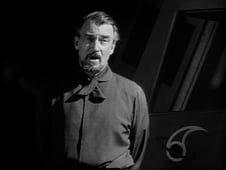
Host Walter Pidgeon introduces the movie Captains Courageous (1937). Based on a novel by Rudyard Kipling, it is the first MGM feature film ever to be shown on network television. It tells the story of a spoiled boy who falls overboard of a luxury liner. He's picked up by a fishing boat. He has to endure life on the boat until they dock in two weeks, but it's more like the fishing crew have to put up with his spoiled ways. Pidgeon then introduces his latest starring role, that in the movie Forbidden Planet (1956). The segments shown from both movies are only the first installments, with future installments shown in weeks to come.
Episode 28
Episode #1.28
Fri, Jan 23, 202630 mins
Host Walter Pidgeon continues with the second of three installments of the movie Captains Courageous (1937) and the second and final installment of the preview of his new movie Forbidden Planet (1956). With the former, Pidgeon discusses a little of the source material - a novel by Rudyard Kipling - before continuing on with the story of the movie, where spoiled Harvey Cheyne has transformed into a responsible young man wanting to please his new friend, fisherman Manuel Fidello. With the latter, Pidgeon introduces one of his key co-stars in the movie, namely Robby the Robot. As his movie's character, Dr. Edward Morbius, Pidgeon ponders Robby's true artificial intelligence.

Episode 29
Episode #1.29
Fri, Jan 23, 202630 mins
Host Walter Pidgeon continues with the third and final installment of the movie Captains Courageous (1937), which he shows after he talks of the origin of the movie's title. This last installment has a now responsible Harvey Cheyne dreading the eventuality of reuniting with his father as Harvey would like to stay with Manuel Fidello aboard the boat and become a real fisherman. Before they reach their intended port of Gloucester, those aboard the ship face some obstacles associated with life at sea, with Manuel making a difficult decision in large part for Harvey's sake. Pidgeon then shows scenes from a new movie, Tribute to a Bad Man (1956), a tale of ranching, horse rustling and vigilante justice. In his stated final act as temporary host, Pidgeon introduces next week's show, which will be a tribute to Greta Garbo. (However, Pidgeon continued to host the show until its end.)
Episode 30
Episode #1.30
Wed, Apr 4, 195630 mins
Host Walter Pidgeon admits that he made himself available to host this episode if only to be able to discuss the film career of the legendary Greta Garbo. He mentions her short stint of making movies in Europe before coming to the United States, where, in American movies, she became an instant star in silent films in the mid-1920s. She was arguably the biggest movie star in the world by the end of the silent era. There was some speculation on whether she could sustain that stardom into the talkies, especially as she had a strong Swedish accent, but those fears were laid to rest with her memorable screen entrance in her first talkie, Anna Christie (1930). Pidgeon takes her film retrospective up to the mid-1930s, when her stardom was brighter than ever. Film newcomer Irene Papas discusses filming the movie Tribute to a Bad Man (1956) starring James Cagney. Next week's show will conclude the retrospective on Garbo's film career, and will have as a guest another European transplant to American movies, Leslie Caron.
Episode 31
Episode #1.31
Wed, Apr 11, 195630 mins
Host Walter Pidgeon continues with the film career retrospective of Greta Garbo, stating that this and the last show were the most highly anticipated ever since they were announced. The retrospective continues from the mid 1930s and the remake of Anna Karenina (1935) (There was an earlier silent version which also starred Garbo.) to her comedy success in Ninotchka (1939). Director George Cukor, who directed Garbo in Camille (1936), provides his insight into her as an actress and person. Pidgeon ends the retrospective with a fan letter writing campaign to encourage Garbo to return to making movies. As an upcoming feature, Pidgeon discusses the new movie Gaby (1956), starring Leslie Caron and John Kerr. And he provides a preview of upcoming episodes, which will feature scenes from The Pirate (1948) and The Swan (1956).
Episode 32
Episode #1.32
Fri, Jan 23, 202630 mins
Host Walter Pidgeon and his two female helpers are relaxing in a West Indies setting to discuss this week's feature presentation of the movie The Pirate (1948) starring Gene Kelly and Judy Garland. This week's discussion will be the first of three parts. In part one, a young woman named Manuela dreams of a pirate named Macoco, but who is betrothed to the mean spirited mayor Don Pedro. While Manuela visits a nearby town, a traveling theater troupe arrives and one of its performers, Serafin, falls in love with Manuela at first sight. He is hoping that she secretly loves him, but under hypnosis, admits to him that she dreams of Macoco instead. Pidgeon then introduces the coming attraction, The Swan (1956), starring Grace Kelly, Alec Guinness, and Louis Jourdan.
Episode 33
Episode #1.33
Fri, Jan 23, 2026
Host Walter Pidgeon and his female guests continue with part two of their presentation of the movie The Pirate (1948) starring Judy Garland as Manuela and Gene Kelly as Serafin. Despite Manuela's growing attraction to Serafin, she is still determined to go through with her marriage to Don Pedro. But Serafin tries to use what knowledge he has of Don Pedro's true identity to twist it to his own advantage in wooing Manuela. But Serafin's plan may backfire on him. Pidgeon and his guests then introduce the new feature, Gaby (1956), starring Leslie Caron and John Kerr.
Episode 34
Episode #1.34
Fri, Jan 23, 2026
Host Walter Pidgeon and his two female assistants, Luana Lee and Janet Lake conclude their presentation of the movie The Pirate (1948) starring Gene Kelly and Judy Garland. Don Pedro is about to have Serafin hanged for being the pirate Macoco, which he knows is not the case since Don Pedro himself is Macoco. Manuela, who now realizes that she loves Serafin and not Macoco, tries to save him. Being an actor, Serafin does his own improvisation to try and save himself. Pidgeon and his assistants then move on to the week's upcoming attraction, The Swan (1956), starring Alec Guinness, Grace Kelly and Louis Jourdan whose characters are matched in a royal love triangle.