Join or Sign In
Sign in to customize your TV listings
By joining TV Guide, you agree to our Terms of Use and acknowledge the data practices in our Privacy Policy.
Jackie Robinson Season 1 Episodes
Season 1 Episode Guide
2 Episodes 2016 - 2016
Episode 1
Jackie Robinson: Part One
Mon, Apr 11, 2016115 mins
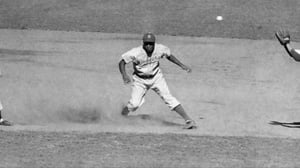
Jackie Robinson's early life from humble beginnings to his rookie season in Major League Baseball. Robinson born to sharecropper farmers in rural Georgia, and was raised by his single mother in Pasadena, California. Robinson became a four sport star and met his future wife, Rachel Islum while attending UCLA. He was drafted into the army and became a second lieutenant in a tank battalion during World War 2. He faced court martial over a dispute arising from defending himself from discrimination but was honorably discharged. After the war, he played in the Negro leagues and soon attracted the attention of the Brooklyn Dodgers' Branch Rickey. A season with the Dodgers minor league affiliate, the Montreal Royals followed and Robinson broke the color barrier on April 15, 1947. In his first season he was subjected to racial slurs, abuse and threats but endured the onslaught to help his team win the pennant and win Rookie of the Year honors.
Episode 2
Jackie Robinson: Part Two
Tue, Apr 12, 2016115 mins
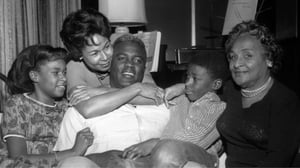
Jackie Robinson's life from his sophomore season playing baseball in 1948 to his death in 1972. Jackie Robinson helped the Dodgers to become perennial contenders. His six World Series appearances, six All-Star Game appearances, an NL MVP, and Brooklyn's only World Champion in 1955 over a ten year career culminated with his induction into the Hall of Fame. After baseball, he began a successful business career as Vice President of a major corporation, Chock Full O'Nuts, co-founded Freedom National Bank and started Jackie Robinson Construction. He wrote a New York Post nationally syndicated column and was an ABC television baseball broadcast analyst, both firsts for a black person. Robinson used his fame to fight for equal rights by highlighting discrimination, raising money and advancing political candidates who shared his vision. As the civil rights movement grew more militant, he used his voice as a calming influence, but was accused of being out of touch and a Uncle Tom. His final years as a family man, personal tragedies and his battle with diabetes are also discussed.