Join or Sign In
Sign in to customize your TV listings
By joining TV Guide, you agree to our Terms of Use and acknowledge the data practices in our Privacy Policy.
Independent Lens Season 8 Episodes
Season 8 Episode Guide
28 Episodes 2005 - 2007
Episode 1
Still Life with Animated Dogs
Tue, Oct 24, 2006
Episode 2
The World According to Sesame Street
Tue, Oct 24, 2006
Episode 3
Muskrat Lovely
Tue, Oct 31, 2006
Episode 4
Paul Conrad: Drawing Fire
Tue, Nov 7, 2006
Episode 5
Democracy on Deadline: The Global Struggle for an Independent Press
Tue, Nov 21, 2006
Episode 6
Two Square Miles
Tue, Nov 28, 200660 mins
With its thriving main street, diverse population and healthy rate of revitalization, Hudson, New York could be seen as a model of small-town America. Depressed and declining towns across the country would welcome any amount of the economic upturn that Hudson has enjoyed in the last decade. But underneath the surface, Hudson is dealing with the same issues that communities of all sizes face: ever-widening income gaps and the loss of a middle class; threats to health and environment by polluting corporations, gentrification and homogenization; and a compromised democratic process. Local business and small farms find it impossible to compete against national chains, while long-standing friction persists along racial and economic lines. Two Square Miles takes a closer look at this small community in a state of flux, a town of 7,500 located 100 miles north of New York City. How do the residents of this town deal with change--and with each other?
Episode 7
A Sad Flower in the Sand
Tue, Dec 12, 2006
Episode 8
Revolucion: Five Visions
Tue, Dec 19, 200660 mins
Episode 9
Paris 1951
Tue, Dec 26, 2006
Episode 10
A Fish Story
Tue, Jan 2, 200754 mins
A Fish Story is a tale of two women who lead their communities in a battle against a coalition of national environmental groups for control of the ocean.
Episode 11
Shadya
Tue, Jan 16, 2007
Episode 12
Beyond the Call
Tue, Jan 23, 200760 mins
Episode 13
Twisted
Tue, Jan 30, 2007
Episode 14
Billy Strayhorn: Lush Life
Tue, Feb 6, 200790 mins
Billy Strayhorn was one of the forces behind the sound of the renowned Duke Ellington Orchestra.
Episode 15
Motherland Afghanistan
Tue, Feb 13, 2007
Medical care for Afghan women. Sedika Mojadidi's camera follows her parents, Qudrat and Nafisa, both physicians, on two visits to their homeland. Her father works in 2003 at Robia Balkhi, a women's hospital in Kabul. Although the US government claims credit for improving life for Afghan women, without supplies and renovations, providing medical care proves impossible. In 2005, they return, first to Kabul: US funds and hard work by the staff have vastly improved Robia Balkhi. Then it's on to Jaghori where the Shuhada Organization runs a hospital and schools that educate girls. We follow female patients in a country where infant mortality is high and many women suffer from fistula

Episode 16
Hip-Hop: Beyond Beats and Rhymes
Tue, Feb 20, 2007
A hip-hop fan addresses the art form's problems with sexism, masculinity, violence, and homophobia.
Episode 17
Can Mr. Smith Get to Washington Anymore?
Tue, Feb 27, 200782 mins
Episode 18
Stolen
Tue, Mar 20, 200790 mins
In March of 1990, two thieves dressed as Boston police officers gained entrance to the Isabella Stewart Gardner museum in Boston Massachusetts and successfully executed the largest art heist in modern history. Among the thirteen priceless works stolen was Vermeer's "The Concert" one of only 35 of the masters surviving works. Not a single one of the works has been recovered. STOLEN is a full exploration of the Gardner theft, and the fascinating, disparate characters involved: from the 19th century Grand dame Isabella Gardner to a private detective obsessed with finding the art to a terrorist organization with a penchant for stealing Vermeers.
Episode 19
Race to Execution
Tue, Mar 27, 200754 mins
Episode 20
China Blue
Tue, Apr 3, 2007
Episode 21
Black Gold
Tue, Apr 10, 2007
Episode 22
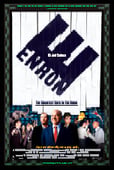
Enron: The Smartest Guys in the Room
109 mins
Based on the best-selling book of the same name by Fortune reporters Bethany McLean and Peter Elkind, a multidimensional study of one of the biggest business scandals in American history. The chronicle takes a look at one of the greatest corporate disasters in history, in which top executives from the 7th largest company in this country walked away with over one billion dollars, leaving investors and employees with nothing. The film features insider accounts and rare corporate audio and video tapes that reveal colossal personal excesses of the Enron hierarchy and the utter moral vacuum that posed as corporate philosophy. The human drama that unfolds within Enron's walls resembles a Greek tragedy and produces a domino effect that could shape the face of our economy and ethical code for years to come.
Episode 23
The Cats of Mirikitani
Tue, May 8, 2007
Episode 24
Sentenced Home
Tue, May 15, 2007
Episode 25
Knocking
Tue, May 22, 2007
Episode 26
The Wild Parrots of Telegraph Hill
Tue, May 29, 2007
Episode 27
La Lupe: Queen of Latin Soul
Tue, Jun 5, 200760 mins
A born rebel and innovator, Lupe Yoli aka La Lupe or La Yiyiyi was renowned for her emotional performances. Her renditions of classics such as "My Way," "Fever" and "Going Out of My Head" were known worldwide. But beyond her musicianship, celebrity and scandal, Lupe Yoli was also a single mother of two, a survivor of domestic abuse, a Santera who later became a Christian Evangelist speaker. Shot in New York City, Miami, La Habana and San Juan, this documentary evokes two groundbreaking cultural periods through rare archival footage -- pre-Revolutionary 1950's La Habana and the burgeoning Latin music scene in New York City in the 1960's and 1970's. The documentary begins with her funeral in 1992, attended by fans, family and the whole of New York's Latino music aristocracy and follows her from poverty to celebrity and back again. La Lupe Queen of Latin Soul tells La Lupe's story through character driven interviews in first person anecdotes, in an oral history much like those found in a folk ballad or a bolero. She was born in a small rural town in Cuba in 1936, one that La Lupe herself loved to describe as "so poor that no one knew it existed until I got famous". Her older sister Norma Yoli describes her as "just another black girl from Santiago", one who loved to imitating the singers she heard on the radio. One of these was Olga Guillot, Cuba's reigning bolero singer - our Latin Frank Sinatra. When the rebellious teenage Lupe wins a radio contest, much like our present day's American Idol, she gets to meet Olga Guillot in La Habana and to sing on the radio. By 1957 La Lupe was the rage in the thriving competitive nightlife in La Habana. Rare archival footage showcases Lupe's peers - Perez Prado, Beni More with Mongo Santamaria, a young Celia Cruz. Helio Orovio, the noted Cuban musicologists describes La Habana in the late 50's as having the most "intense" nightlife in the midst of the onset of Cuba's revolution. Lupe's gay following adores her, and the avant-garde follows. A newspaper headline appears: "La Lupe Divides Cuba in Two". While her inimitable style is described as one befitting the revolutionary times, the headline was a prescient one: like many artists at the time, she leaves Cuba: "there was no room in Cuba for me and the revolution." La Lupe arrives penniless in New York City in 1962. She befriends the world-renowned Afro-Cuban percussionist Mongo Santamaria, and records with him. Mongo proudly recalls how he introduced La Lupe to "an American" jazz audience and how Tito Puente stole La Lupe from his band once she became the "hottest thing". La Lupe and Tito Puente went on to record a mayor hit in 1964, a Latin classic: "Que Te Pedi" (What Did I Ask of You). Fred Weinberg, La Lupe's favorite recording engineer recalls their collaboration and the early recording sessions. "She was like a hurricane coming in" with Tito urging him to just "start recording". For the next four years they recorded classics and toured the Latin music circuit at the time, in the US, Venezuela, Mexico, Puerto Rico, Panama and Spain. Ralph Mercado the Latin music impresario (who was also Tito Puente and Celia Cruz's manager) recounts their falling out with the hit "Oriente" where La Lupe herself sings: "Tito Puente kicked me out". La Lupe had gotten too big and Tito had begun to record with Celia Cruz. Striking out on her own in 1968 La Lupe appears on English language television shows. In a present day interview of Dick Cavett, her appearance on his show is put into context for an audience watching in 1973 - though her performance remains thoroughly contemporary. Johnny Pacheco the composer, arranger and music producer recounts the birth of Fania records and the origins of "salsa", the new Latin music sensation. By 1975 La Lupe's career is on the decline while Fania has a new rising star -- Celia Cruz. By 1985 Lupe Yoli has rebounded from a descent into homelessness. Having taken on the preacher's pulpit she recounts this period in her evangelical testimonials. Ahead of her time and often described as the first performance artist and a long-time gay icon, La Lupe's story is universal in its appeal; with the current boom in Latin pop music, it is also timely in trying to discover who Lupe was. The documentary is also a collective portrait of mid-20th century Latin musical history.
Episode 28
Translate
Tue, Apr 17, 2007
Are you male or female? For members of the transgender community, the answer is often complex. A documentary film about the New England Transgendered Community.