Join or Sign In
Sign in to customize your TV listings
By joining TV Guide, you agree to our Terms of Use and acknowledge the data practices in our Privacy Policy.
How It's Made Season 9 Episodes
Season 9 Episode Guide
13 Episodes 2007 - 2007
Episode 1
Solid Tires/Cheesecake/Canoe Paddles/Globes
22 mins
Today, we discover the making of the solid tyre, which is a special kind of rubber-covering that is designed for use in rough terrains such as construction sites, landfills, and mining operations. In these hazardous environments, any other ordinary and air-filled tyre would easily flatten. Next, we see the various steps in the making of cheesecake, a sweet delicacy that is often related to New York; nevertheless, it is actually of Greek origin, as the Ancient Greeks used to serve it to the athletes of the first Olympic Games in 776 BC. Then, we learn about the fabrication of the paddle--and although no one really knows who invented it or when--undoubtedly, modern laminated paddles made from a blend of hard and soft woods are definitely the evolution of the single-piece paddle. In the end, we follow the steps in the making of a globe, which is the most accurate representation of the earth, depicting the countries in true spatial relation to one another.
Episode 2
Boomerangs/Barbecues/Pinball Machines/Strobe Lights
22 mins
From a plain stick that was thrown during the hunt, to the modern, finely-crafted, and aerodynamic gadget made from laminated strips of wood, the boomerang was an essential tool since the primitive times. Next, the process of fabricating a barbecue--an invention of the native Caribbean who cooked over a pit of charcoals--begins with the bending of a lubricated steel disc that is fed into a press to take its characteristic bowl shape. Following, we learn all about the various intricate steps in the making of the pinball machine, which reigned supreme in a time before the modern video games. In the end, we discover the extensive use of the strobe lights--or lamps--in aircraft wings; in the red-and-blue police car lights; on towers, and on tall buildings to warn low-flying aircraft.
Episode 3
Wooden Bowls/Chainsaws/Stackable Potato Chips/Jet Compressor Blades
Fri, Sep 21, 200722 mins
The handcrafted wooden bowl-making is a lost art. Made from a solid piece of hardwood--usually, beech, maple, walnut or cherry--they start as bowl blanks from a fresh log, and progressively, a unique product is made. Next, the chainsaw which revolutionised the logging industry begins with the making of the plastic housing by melting, which houses a 2-stroke engine. After a test run, the powerful tool is ready for almost any job. Following, the stackable potato chips which have a uniform concave shape that helps to stack them neatly inside their tubular containers, begin with the making of their containers by layering plain brown paper and foil paper glued together. In the end, we follow the precise steps in the making of jet compressor blades, a key component in any jet engine. By rotating inside the jet engine 400 revolutions per second, they can create a small hurricane of more than 600°C, which then combines with fuel to propel the back of the engine.

Episode 4
Steel Wool/Ranges/Carved Candles/Slot Machines
22 mins
In the making of steel wool pads--a process that requires the shaping of a single steel rod inside a 15-foot steel wool die machine--a series of six progressively smaller dies get the rod narrower, as 29 blades shave it in a pyramid configuration for a razor-sharp product. Next, we learn about the construction of the hi-end ranges, a multi-level process which starts with the shaping and bending of a big sheet of galvanised steel inside a press that makes the framework. Then, we discover the fine art of candle carving, an old German craft that is a time-sensitive process which involves the layering of different colours by dipping into baths of hot wax, followed by cool water dips to harden. In the end, we find all about the assembly of the slot machine, which is an 1895 invention of a San Francisco car mechanic. The first slot machine was a heavy cast-iron cabinet with three reels of twenty symbols each, and the enormous 50 cent jackpot.

Episode 5
CCD Semiconductors/Airline Meals/Paper Cups/Trumpets
22 mins
A CCD semiconductor, or image sensor, is a crucial part of the digital camera which converts the captured light into millions of electrical charges, and then, the processor turns them into pictures or movies. Next, as the increased demand for air travel made the airlines turn to pre-made meals, we find out how those elaborate menus that meet specific requirements involve the careful planning of every little detail before they even reach the aircraft. Following, we discover all about the fabrication of the disposable paper cup; a computerised, one-minute process which starts with a roll of paper that has a very thin coating of plastic or wax to prevent any leaks. In the end, we learn all about the evolution of the straight horn to the modern trumpet; a process that began in the 15th century, when the instrument makers learned how to effectively bend the horn in order to produce more notes.

Episode 6
Padlocks/Hair Clippers/Wooden Shoes/Synthetic Leather
22 mins
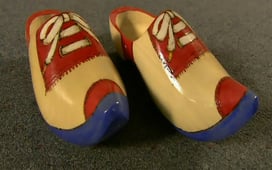
The first padlocks date back to Roman times and were most likely used for the protection of cargo. The process of making a modern padlock begins with the lamination of 24 steel plates, which, when combined, make the lock body. Next, the electric hair clipper is, actually, a 1919 invention. Nowadays, instead of metal, the casing of the modern hair clipper is made of heavy-duty plastic that carries the various parts of the device, such as the blade slide, and its lever. Following, we go back in time when farmers used to chip out holes into wooden blocks to keep their feet dry. Since then, little has changed in the art of wooden shoe-making, as it all starts with a single block of Poplar. Finally, we try to spot the difference between real and synthetic leather, or pleather; a task that is not always easy. The recipe starts by mixing a petroleum-based plasticiser with various additives, such as ultraviolet stabilisers, flame-retardant solutions, powdered vinyl, and specific pigments.
Episode 7
Racing Shells/Stainless Steel Sinks/Leather/Pedal Steel Guitars
22 mins
The high-tech rowboats, or racing shells, use a long and very narrow profile to cut through the waves with minimal resistance. Usually custom-made, they are fabricated under precise specifications, using light materials such as reinforced carbon fibre. Next, the kitchen sink--which was initially made out of a copper/nickel alloy during WWII--has evolved to the form that we know nowadays by using light-weight and heavy-duty stainless steel. Following, we learn about leather production, which dates back to primitive times. Through a series of various processes that involve hair removal, softening, and tanning, this timeless and durable material is ready for use. In the end, we follow the various steps in the making of a pedal steel guitar; an instrument that is played by sliding a steel bar over the strings, while operating a system of pedals and knee levers. This intricate instrument requires a great amount of skill, not only to play it but to make it as well.
Episode 8
Swords/Pontoons/Grandfather Clocks/Fuses
Wed, Oct 10, 200722 mins
The sword helped to shape history through the ages. Nowadays, modern artisans craft historical replicas of high-level detail by placing a high-carbon steel plate in a fixture with computer-guided blades to carve out the basic shape of the sword. Next, the party barge--or floating bridge; or luxury raft; or pontoon--uses custom-built floating chambers made from a special aluminium alloy. Following, we take a look at the assembly line of the grandfather clocks--a device that was invented centuries ago and runs on gravity. Long-case clocks, as they are properly called, use a series of brass weights to turn the hands of the clock. In the end, we visit a fuse factory to learn about its fabrication and to find out that this device that is designed to blow whenever there is a power overload, it is actually a 19th-century invention.

Episode 9
Bumpers/Lighting Gels & Camera Filters/Steam-Powered Models/Candy Canes
21 mins
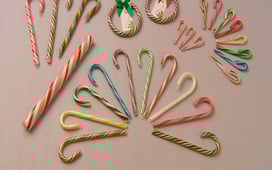
Almost 80% of the car accidents are caused by front or rear collisions. The bumper absorbs the force of the impact to minimise damage and injuries. Its fabrication begins with a 2mm sheet of steel that is fed through a series of 7 to 9 dies, stamping the bumper into the desired shape. Next, the lighting gels and camera filters--important components used in theatre productions and photography--are made of transparent polyester, and the fabrication process begins with a mixture of solvent, dye, and flame-retardant agents. Following, the production of a mini 19th-century locomotive replica starts with the making of the boiler, and then, all the parts of the train are attached to the brass boiler--including the steam pipes, and the crankshaft. Finally, the making of the candy cane begins by cooking a big batch of sugar, water, and corn syrup. Next, after blending a mix of starch and flavouring with the blob of syrup, begins the mechanised process of folding and kneading.
Episode 10
Umbrellas/Outboard Motors/Silver Cutlery/Tape Measures
22 mins
The umbrella is a fashion accessory that originated in ancient China almost 1700 years ago. The fabrication of the meticulously crafted collapsible handmade umbrella begins with the processing of a birch wood shaft. Next, the single-cylinder to eight-cylinder outboard marine motors that run on gas, diesel, or electricity, consist of an engine that is on the top, a gear case below, and a middle section that is in between. As the show continues, we follow the steps in the making of cutlery. The production process begins with the stamping of a thin sheet of metal that makes the basic shape of a fork or a spoon. In the end, the making of the retractable tape measure begins with a three-dimensional computer design, and then, a special machine covers hardened strips of steel with primer and paints them.

Episode 11
Scalpels/Oil Paints/British Police Helmets/Ice Axes
22 mins
The scalpel is the surgeon's quintessential tool. The handles are made from rods of stainless steel, and the sterile, single-use blades are made from either carbon or stainless steel. Next, we learn about oil paints, which date back to ancient times when artists used to mix minerals and other ingredients with wax or oil. Later on, in 1400, the discovery of linseed oil perfected the oil paints, as this element acts as a pigment binder, allowing the blending of colours in layers. As the show continues, we follow the various steps in the fabrication of the characteristic British Police helmet. Its shape derives from a metal mould that gives a sheet of plastic the basic form of the helmet. In the end, we visit an ice-axe factory to watch the production. A heavy press bends an aluminium rod into a basic axe form, and then, two heated dies flatten it in shape.
Episode 12
Bacon/Snowblowers/Luxury Cars
22 mins
Undoubtedly, the bacon rashers--a popular food from the old times when people used to cure and smoke meat for the winter--is one of our favourite side dishes. The making of processed, pre-cooked bacon begins with a batch of pork bellies tossed into a big tumbler to soften. Then, liquid smoke and various flavourings are added until the product is ready to enter a blast freezer. Next, we learn that the first snow blowers came on the market in the 1950s, and, nowadays, modern machines range from models with small, 26cc engines, to large, 50cc ones. The fabrication begins with the forming of the snowplough, or auger, which starts as a pre-formed steel disc. In the end, we visit the factory of a legendary luxury car brand to follow the various steps in its making. It all starts with a hand-welded aluminium body shell that it is both rigid as well as lightweight. Then, the engine and the body become one in a process that is called "the marriage".
Episode 13
Automatic Transmissions/Silver Miniatures/Hot Air Balloon Baskets/Darts
22 mins
The transmission is a complex system of gears and levers that transfer power from the engine to the wheels of the vehicle. The manufacturing begins with the assembly of the aluminium case, which houses three sets of planetary gears. Next, inside a silversmithing workshop, we learn about the making of the perfectly scaled replicas. It all begins with the measuring of the actual item, and then, the workers divide the measurements by twelve, so that the end product will have the same proportions as the original. The production of the French invention, the hot-air balloon, starts with the construction of the stainless-steel tube framing. Afterwards, the weaving of the basket begins. In the end, the modern darts begin as rods of aluminium that make the flight shaft: the piece that the dart's wings attach to. Next, engineered brass rods form the barrel, or main gripping part of the dart, and then, the point, and the polyester flights finish the process.