Join or Sign In
Sign in to customize your TV listings
By joining TV Guide, you agree to our Terms of Use and acknowledge the data practices in our Privacy Policy.
Changing Seas Season 9 Episodes
Season 9 Episode Guide
4 Episodes 2017 - 2017
Episode 1
The Future of Seafood
Wed, Jun 21, 2017
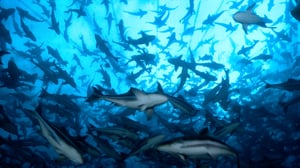
It is estimated there will be two billion more people on the planet by mid-century. To feed this booming world population, more fish will need to be farmed than ever before. Scientists at the University of Miami's Experimental Hatchery are developing new and innovative techniques to help meet future demand. The scientists often collaborate with the private sector, including Open Blue, a company that raises cobia along Panama's Caribbean coast. Open Blue's approach to farming fish in a sustainable way is to move aquaculture operations offshore - where there is plenty of available space and strong currents flush out the pens to avoid polluting sensitive ecosystems.
Episode 2
Toxic Algae: Complex Sources and Solutions
Wed, Jun 21, 2017
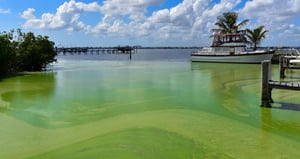
For the past two decades, the residents of Martin county and the surrounding areas have been faced with a silent curse. A guacamole thick mat of blue-green algae periodically grows and clogs the waterways. These toxic algal blooms kill local marine life and even cause short term and long term health effects in humans. Scientists say that the source of these problems is in Lake Okeechobee. "Lake O," as it is known, once South Florida's lifeline for fresh water, is now a dumping ground for pollutants from agriculture, farming, and septic tank effluent. When the lake accumulates enough of these fertilizers, blue-green algae grow, and they are released when water levels are too high. The solution to this problem is complex, but those affected by it are urging experts to find it fast.
Episode 3
The Fate of Carbon
Wed, Jun 28, 2017
For millennia, the exchange of CO2 between the oceans and atmosphere has been in balance. Two distinct processes, known in the scientific community as the solubility pump and the biological pump, transport carbon from surface waters down to the depths, where it can stay for thousands of years before returning to the surface and re-entering the atmosphere as CO2. Now, with more anthropogenic carbon dioxide in the atmosphere, the oceans are taking up more CO2 as well. This additional CO2 is negatively impacting sensitive ecosystems through a process called ocean acidification, and scientists worry how changes to the ocean environment will affect the way carbon is cycled through the seas.

Episode 4
Majestic Mantas
Wed, Jun 28, 2017
The remote Revillagigedo Archipelago off Mexico's Pacific coast is a hotspot for giant mantas that interact with awe-struck scuba divers. Scientists with the Pacific Manta Research Group are studying the local population using photo ID techniques and acoustic tags which track the movements of these mysterious fish. Experts from Pelagios Kakunjá are conducting experiments to see if the filter-feeding rays are impacted negatively by microplastics, tiny pieces of toxic trash that float in the ocean.
