Join or Sign In
Sign in to customize your TV listings
By joining TV Guide, you agree to our Terms of Use and acknowledge the data practices in our Privacy Policy.
Changing Seas Season 6 Episodes
Season 6 Episode Guide
4 Episodes 2014 - 2014
Episode 1
Living Fossils
Wed, Jun 18, 2014
In the deep, dark waters off the coast of Roatan, Honduras, strange flowerlike animals flourish. These sea lilies and feather stars, known as crinoids, have been around in various forms since before the age of dinosaurs. Experts from Nova Southeastern University and the University of Michigan are working together to gather basic information about the life history of crinoids, such as how long they live and how fast they grow. To gain access to the animals, they brave the ocean depths onboard "Idabel", a submersible based in Roatan's West End. Sub builder and pilot Karl Stanley has extensive knowledge of the areas he can access with "Idabel," making it possible for the scientists to return to the same spots year after year to study the animals. This ability to study crinoids over an extended time period will result in new knowledge about these mysterious animals that flourish far removed from our human world.

Episode 2
Biggest Fish in the Sea
Wed, Jun 18, 2014
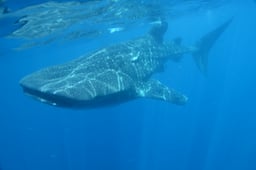
Each summer, the world's largest known aggregation of whale sharks occurs just off the coast of Cancun, Mexico. Hundreds of these gentle giants come to the area to feed on plankton, giving experts the opportunity to learn more about the largest fish in the sea. Despite their enormous size, still relatively little is known about the animals. Scientists from the Georgia Aquarium, together with their partners from Blue Realm, tag the animals to learn more about their movements. The experts also want to protect the animals from ship strikes while they are feeding at the ocean surface, so they have installed a special device that can monitor ship traffic in the area. They plan to correlate that information with data they have collected on the whereabouts of the animals, to make recommendations for safer shipping lanes in the future.
Episode 3
Galápagos: Windows into the Future
Wed, Jun 25, 2014
The unique oceanic conditions of the Galápagos Islands serve as a perfect natural laboratory to study how climate change may impact corals in the future. Naturally high levels of carbon dioxide in the water, as well as unusually warm sea temperatures during El Niño years, provide a glimpse into the conditions expected in other areas as the oceans continue to acidify and coral bleaching events increase. Scientists from various institutions spent a month in the archipelago to conduct research as part of the Khaled bin Sultan Living Oceans Foundation's Global Reef Expedition. Among other things, they are studying how corals, which have experienced severe bleaching events in the past, have recovered in the various pH conditions found around the archipelago. A Co-Production with Khaled bin Sultan Living Oceans Foundation.

Episode 4
Saving Sawfish
Wed, Jun 25, 2014
Strange and prehistoric-looking, smalltooth sawfish were once coveted by anglers as popular trophy fish. But habitat loss and overfishing have greatly reduced the animals' range and landed them on the endangered species list in 2003. Historic records report sightings of the fish as far north as New York and west to the Texas-Mexico border. Today, the animals, which are related to the sharks, skates and rays, are limited to South Florida. Now scientists are conducting research to save the species. Little was known about smalltooth sawfish when they became endangered, so experts are conducting basic research about their life history, as well as tracking their movements using satellite and acoustic tags.
