Join or Sign In
Sign in to customize your TV listings
By joining TV Guide, you agree to our Terms of Use and acknowledge the data practices in our Privacy Policy.
Changing Seas Season 12 Episodes
Season 12 Episode Guide
4 Episodes 2020 - 2020
Episode 1
Florida's Blue Holes: Oases in the Sea
Wed, Jun 24, 2020
Reports of large aggregations of fish in the Gulf of Mexico led divers to discover deep holes opening down into the seafloor. These submerged sinkholes and springs, more commonly called blue holes, attract a diversity of marine life in an otherwise ocean desert. A group of scientists and technical divers collaborate to better understand these ecological oases in the sea. The experts begin by exploring Amberjack Hole - a sinkhole located 20 miles off the coast of Sarasota, Florida, that opens at 115 feet below the surface and extends down to over 350 feet. Do these blue holes connect to mainland Florida? What organisms are found at the bottom of the hole? What effects do these holes have on the surrounding Gulf of Mexico? Join scientists as they search for answers and explore these never before studied environments.

Episode 2
A Decade After Deepwater
Wed, Jun 24, 2020
Ten years after the Deepwater Horizon oil rig disaster, scientists are still studying the devastating impacts on the Gulf of Mexico. The resulting spill became one of the largest environmental catastrophes in American history. Where did the oil go? Have the deep corals recovered from the "dirty blizzard" that fell to the seafloor during the spill? Did widely applied dispersants help or hurt the oil-eating bacteria they are meant to assist? As researchers work to answer these questions and others, they also look ahead to what may happen next, as they use lessons learned to prepare for the next big spill.

Episode 3
Peru's Desert Penguins
Wed, Jul 1, 2020
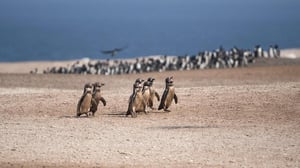
Peru's arid coastline is home to one of the world's great natural spectacles. Where the desert meets the sea, the seabirds reign. It is amidst this explosion of life - these hundreds of thousands of Guanay cormorants, Peruvian pelicans and Peruvian boobies - that another, slightly clumsier, species of bird lives as well. The adorable Humboldt penguin needs the other seabirds' guano to build its nests. Named after the cold current that provides nourishment for this incredibly vibrant ecosystem, these penguins can safely nest and rest inside Peru's national reserve network of 33 islands and peninsulas. Their time spent feeding is a different story. While these flightless birds are highly adapted for life at sea, they compete with the fishery for anchovies, and the penguins can get entangled in fishing nets. Dedicated scientists monitor Peru's penguin populations and study the animals' interactions with fisheries to provide managers with the data needed to better protect the animals in the future.
Episode 4
American Samoa's Resilent Coral Reefs
Wed, Jul 1, 2020
Far out in the South Pacific, there's a tropical island paradise. Known as the "Islands of Sacred Earth," the territory of American Samoa is one of the United States' most remote outposts. Its waters are home to stunningly beautiful coral reefs, including two of the world's oldest and largest coral colonies on record. Many of these sites are protected inside America's only National Marine Sanctuary and National Park south of the equator. Coral reefs around the world are in serious decline, but American Samoa's reefs have so far been relatively resilient in the face of local and global stressors. To better understand and protect the corals, the National Marine Sanctuary of American Samoa's science team is setting up a multi-faceted monitoring program to document the reefs' condition and any changes that might occur over time. Together with their partners from the Coral Reef Advisory Group and the National Park of American Samoa, the scientists are trying to figure out what makes the territory's coral reefs more resilient than others, and how lessons learned locally might help corals that are in decline elsewhere.
