Join or Sign In
Sign in to customize your TV listings
By joining TV Guide, you agree to our Terms of Use and acknowledge the data practices in our Privacy Policy.
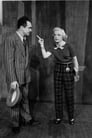
Broadway: The American Musical
This six part documentary miniseries presents the evolution of the Broadway musical from its inception in 1893 to current day 2004. It presents those influential players both on stage and behind the scenes, as well as a variety of influential Broadway shows, a handful which are known to have transformed the musical into what the audience knows it to be today. The Broadway musical was often a reflection of what was happening in the world, but almost as often was meant to be an escape from problems of the world. Specific world events had a profound influence on the overall tone of Broadway shows, some of these events being wars (especially the world wars), Prohibition, the stock market crash, the Great Depression, and 9/11. Broadway musicals were also affected by the onset on various new media, such as talking movies and television. They in turn influenced other popular culture, especially what was known as the popular music of the day, especially up until the 1960s. Broadway musicals ultimately would become global commodities with many shows beginning their life elsewhere besides New York, and with many Broadway shows brought to the world stages through touring companies, regional productions and amateur productions.
Loading. Please wait...
Cast & Crew See All

Season 1 Episode Guide See All
Episode 1
Give My Regards to Broadway
Tue, Oct 19, 200460 mins
At the beginning of the twentieth century, Broadway was dominated by two names: George M. Cohan and Florenz Ziegfeld Jr.. Cohan wrote and starred in his own shows. Ziegfeld pioneered the revue show, most notably The Follies fashioned after the Follies Bergere of Paris. His shows were an amalgam of American life at the time, most notably what was happening in New York. The show also borrowed from musical theater of the period, namely vaudeville and minstrel shows. From these came many of Ziegfeld's biggest acts, such as Fanny Brice and Bert Williams, who broke the color barrier. But what the Ziegfeld Follies did more than anything was glorify the American girl by featuring them in exotic and flamboyant costumes. Two major composers emerged from this era of Broadway: Irving Berlin and Jerome Kern, who were based in an area of New York called Tin Pan Alley, the center of popular music. Kern in particular, with production by Ziegfeld and lyrics by Oscar Hammerstein II, would lead Broadway into a new era with the 1927 stage production of 'Show Boat', the first Broadway story musical. But the advent of talking movies would usher in the new era of musicals to the American public.
Awards
- 2005 - WGA Award (TV) - Documentary - Other Than Current Events - nominated
- 2005 - Primetime Emmy - Outstanding Music Direction - nominated
- 2005 - Primetime Emmy - Outstanding Nonfiction Series - winner
- 2005 - Primetime Emmy - Outstanding Writing for Nonfiction Programming - nominated
You May Also Like See All


Popular Shows See all shows
History of the World: Part II
Band of Brothers

The Crown

The Curse of Oak Island
The Faithful
