Join or Sign In
Sign in to customize your TV listings
By joining TV Guide, you agree to our Terms of Use and acknowledge the data practices in our Privacy Policy.
Young Sherlock Review: An Underwhelming Callback to Guy Ritchie's Sherlock Holmes Movies
Holmes and Moriarty are besties in this playful but shallow Prime Video prequel series

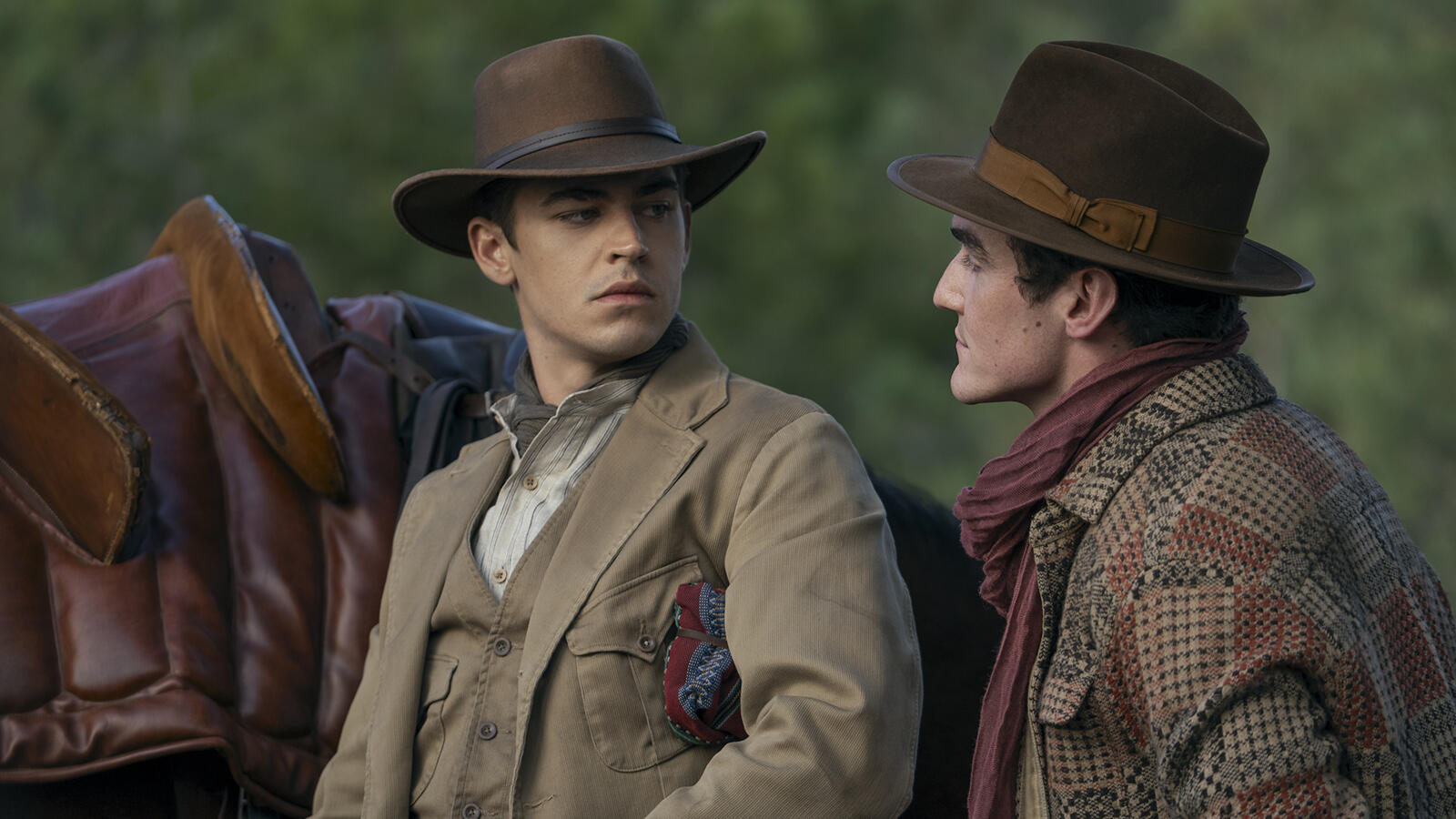
Hero Fiennes Tiffin, Young Sherlock
Daniel Smith/PrimeIt comes as no surprise that within the first 90 seconds of Young Sherlock, we're treated to a bare-knuckle boxing scene. It's one of director Guy Ritchie's signature moves, and although he isn't the main showrunner here, his fingerprints are all over this loose adaptation of Andrew Lane's Young Sherlock Holmes novels.
Calling back to the energetic tone of Ritchie's Sherlock Holmes movies, this series feels somewhat out of date, whether we're talking about its music choices (the theme song is a Kasabian track from 2011) or its attempt to recapture the charm of Robert Downey Jr. and Jude Law. (To be clear, there's no official relation between the two properties.) As you'd expect from a Ritchie project, there are an awful lot of sequences where men in tweed suits banter with each other or get chased through picturesque Victorian streets by buffoonish police officers. Aging into his Jim Broadbent era, Colin Firth plays an imperial profiteer named Sir Bucephalus Hodge, embodying the show's caricature of Victorian England.
ALSO READ: The complete guide to spring TV
Taking place long before Sherlock met Dr. Watson, Young Sherlock features two fittingly posh nepo babies as the Holmes brothers: Hero Fiennes Tiffin (nephew of Ralph and Joseph Fiennes) as 19-year-old Sherlock, and Max Irons (son of Jeremy Irons and Sinéad Cusack) as Mycroft. Like the vast majority of adaptations, it swaps Mycroft's original personality (a brilliant but unambitious loner with obvious autistic traits) for a kind of long-suffering overseer role, attempting to rein in his little brother's chaotic exploits. Rounding out the main cast, we have Irish actor Dónal Finn as Sherlock's gregarious future nemesis James Moriarty, and Zine Tseng (Netflix's 3 Body Problem) as a steely Chinese princess named Gulun Shou'an. They're brought together by a string of murders around Oxford University, but while the mystery heats up in later episodes, Young Sherlock doesn't offer a particularly interesting take on Sherlock Holmes as a character.
Like
- The main mystery delivers some fun twists in later episodes
Dislike
- An unmemorable take on Sherlock Holmes as a character
- Feels like an obvious retread of the Robert Downey Jr. movies
- There's not enough edge to Sherlock and Moriarty's friendship
Created by screenwriters Matthew Parkhill and Peter Harness, Young Sherlock envisions a new origin story for Sherlock and Moriarty, casting them as college-era pals. Plenty of other adaptations have thrived on similarly radical departures from Holmes canon (Sherlock and Elementary being two obvious examples), but Young Sherlock struggles to make its mark as a standalone project.
To my mind, the appeal of the original Holmes canon is twofold, pairing a distinctive hero with a genre-defining form of mystery storytelling. Whichever way you choose to adapt that material, Sherlock himself needs to be a true eccentric, standing out due to his unique intellect and his dislike of societal convention. In adaptations like Sherlock and House, MD, this idea was remixed into the "genius asshole" archetype, depicting Sherlock as arrogant and even cruel. Skewing in the opposite direction, Young Sherlock's protagonist is upbeat and boyish and occasionally naive, making foolhardy choices that follow in the footsteps of Robert Downey Jr.'s Holmes. In the opening scenes, for example, he's in jail for petty theft; his brother Mycroft (kicking off a rather one-note exasperated performance from Max Irons) gets him out using his government connections.
To teach Sherlock a lesson in humility, Mycroft sends him off to Oxford University — not as a student but as a servant, cleaning up after the faculty. In theory, it's a smart opportunity to explore how Sherlock obtained such a broad knowledge of British society, essentially embedding him in the working class. However, the show mostly uses this scenario to position him as an underdog, making him look like an unexpected genius when a "servant" turns out to be literate or able to correct tricky math problems like in Good Will Hunting. Except Sherlock actually comes from landed gentry and went to boarding school, so his underdog status doesn't entirely land.
One of the big challenges when adapting Holmes is how to explore his deductive skills on screen. We want him to unveil clues like a magician. We want to be wowed. Some adaptations opt for visual bells and whistles, while others lean on sheer force of personality from the lead actor: something that isn't really a strength for Hero Fiennes Tiffin.
Young Sherlock goes the "mind palace" route, visualizing Sherlock's memory of crime scenes so he and Moriarty can step inside and inspect them for clues. It works well enough, but there aren't many moments when his deductions feel truly impressive. This is actually more of an ensemble adventure series, with Princess Shou'an as a secondary lead during Sherlock and Moriarty's murder investigation. Later on we delve into the Holmes family's troubled backstory, giving a larger role to Sherlock mentally ill mother (Natascha McElhone) and absent father (Joseph Fiennes), who never recovered from the death of their daughter.
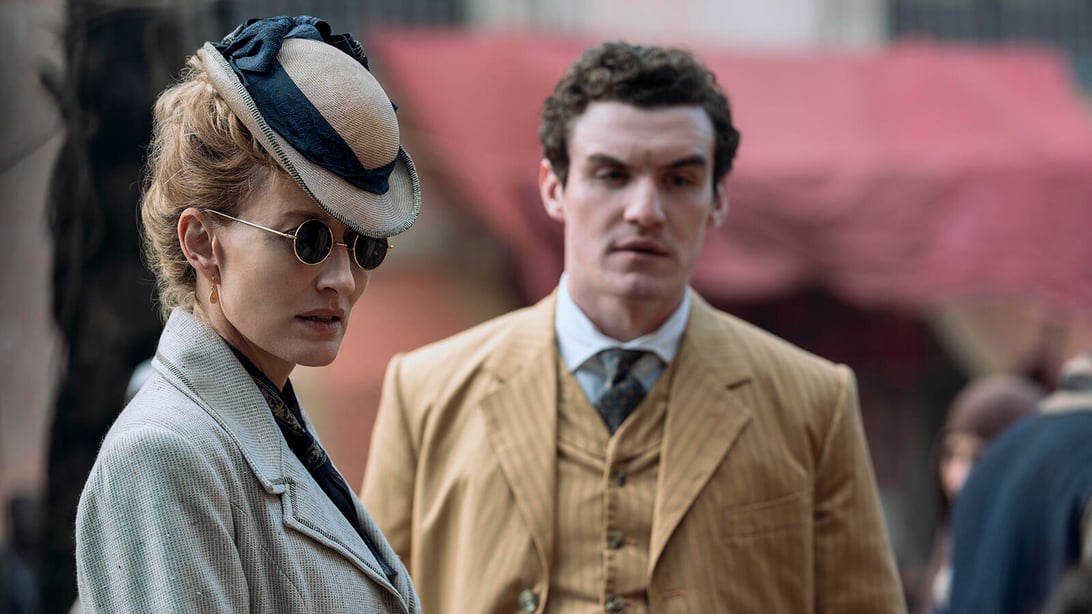
Natascha McElhone and Dónal Finn, Young Sherlock
Daniel Smith/Prime VideoA more specific challenge for Young Sherlock is, of course, the absence of Watson. Sherlock needs to bounce his ideas off someone, and the solution here is to use Moriarty for a different style of odd-couple partnership. Once again, this concept has promise but isn't entirely satisfying in execution, in part because there's too little contrast between the two leads.
Yes, Moriarty is cheeky and flirty and cynical, and more socially adept than Sherlock. He sometimes hints at a troublingly amoral worldview, foreshadowing his destiny as a ruthless crime boss. However, he and Sherlock are intellectual equals who share the investigative workload, hatching outlandish plans together as they repeatedly wind up on the wrong side of the law. They're not all that different, and the assumption that they'll eventually become adversaries represents a classic prequel problem: This period of their life is not as compelling as their iconic future. To borrow a vintage comparison, Young Sherlock lacks the juice of Smallville's Clark Kent and Lex Luthor. Moriarty doesn't feel like Moriarty in any meaningful way, so there's no bite to what should be a psychologically conflicted partnership.
Like Amazon's Lord of the Rings prequel The Rings of Power, the guiding principle behind Young Sherlock is to deliver something similar to a popular property. In tone and aesthetic, it owes a lot to the Guy Ritchie movies — lots of fast-paced fights, chase scenes, and playful bickering; stereotypical Victorian characters with mutton-chop facial hair and exaggerated accents, ready to be outwitted by Sherlock's deductions. But like The Rings of Power, it lacks the star power of its predecessor and often feels like a retread. It's hard to get invested in a show with this little creative personality, resting on the laurels of the Holmes brand instead of establishing a vision of its own.
Premieres: Wednesday, March 4 on Prime Video
Who's in it: Hero Fiennes Tiffin, Dónal Finn, Zine Tseng, Max Irons, Colin Firth, Joseph Fiennes, Natascha McElhone
Who's behind it: Peter Harness (co-creator), Matthew Parkhill (co-creator and showrunner), Guy Ritchie (director and executive producer)
For fans of: Guy Ritchie projects, light action/mystery shows
Episodes watched: 6 of 8