Join or Sign In
Sign in to customize your TV listings
By joining TV Guide, you agree to our Terms of Use and acknowledge the data practices in our Privacy Policy.
Noah Wyle Previews The Pitt Season 2 and Says They Got Too Good at Their Jobs in Season 1
The creators talk about accuracy, AI, and the delicate balancing act that makes the show special
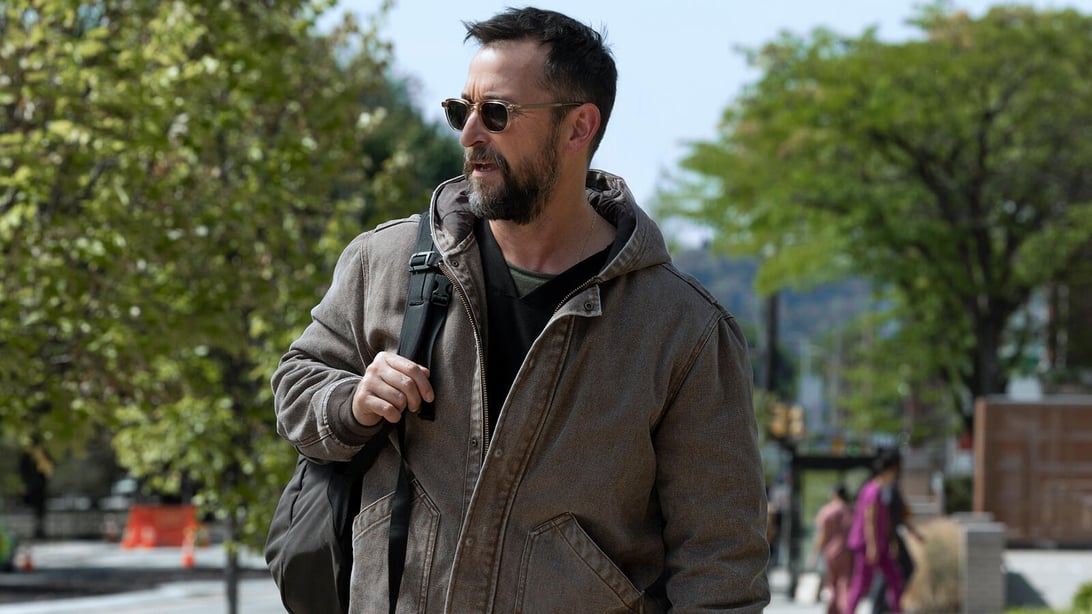
Noah Wyle, The Pitt
Warrick Page/HBO MaxAny wait to be admitted into the emergency room can feel interminable, but for fans of The Pitt — HBO Max's medical drama that resonated sharply with viewers feeling the weight of the nation's current health care woes and garnered armloads of Emmys in its first season – the anticipation for the second season has been almost as fraught as a real-world stint in the waiting room. But finally: The doctors will see you very soon! Wednesday, Jan. 8, to be exact.
At the core of The Pitt is its brain trust, all television veterans and alumni of ER, the show that upended the medical genre three decades ago: creator and executive producer R. Scott Gemmill, executive producer John Wells, and executive producer, writer, and director Noah Wyle, who as an actor also headlines the series as senior attending physician Dr. "Robby" Robinavitch, whose compassion and vigilance with both his patients and his colleagues were resoundingly pushed to the breaking point by the traumatic 15-hour timespan covered in Season 1. The trio recently convened for a press conference to look ahead at the next hectic shift, and look back at lessons from the show's resounding impact.
Wyle was the first to admit that, after setting such a remarkably high bar in the debut season, the pressure was definitely on as Season 2 got underway, just as in any ER. "Of course we felt it. The proverbial sophomore slump is real," the actor reflected. "And when you have something that's as impactful and as successful as our first season was, it's inevitable that you're gonna be combating expectation."
Everything you need for winter TV:
- The winter shows we're looking forward to most
- All the new shows coming this winter
- The complete guide to winter TV 2025-2026
"I will say that John alleviated us from a lot of that pressure early on by saying, 'You don't have to do it bigger, better, faster, stronger. You just have to do it again and remember what you did the first time and stay true to the characters and be honest and go from there,'" Wyle added.
To that end, the show is sticking with its established format of covering a single day shift in Pittsburgh Trauma Medical Center's ER, leaping forward 10 months in time to the Fourth of July: Robby is about to take a much-anticipated sabbatical motorcycling across the country, just as his former protégé Dr. Frank Langdon (Patrick Ball) returns to duty after facing the consequences of abusing prescription drugs and Robby's temporary replacement, Dr. Baran Al-Hashimi (Sepideh Moafi), arrives, raising his hackles with her strict adherence to protocols and enthusiasm for AI-driven innovation.
"We picked 10 months because that's long enough for Langdon to come out of rehab," said Gemmel. "That's part of the fun of the show, is catching up with these people and you only have 15 hours to do it." Gemmill said the show's format and approach didn't need any first aid, even without the chaos and tension of the first season's mass shooting. Instead, July 4 provides its own array of dramas for the medical staff to contend with.
"I don't think we took the show in a different direction: I think basically the show is a different shift in all these doctors and nurses' lives and the lives of their patients," said Gemmill. "I think we just tried to do another good season of stories [to] explore our characters' lives. And I think we didn't want to change it because it seemed to be working — and to be honest, we'd only been in these people's lives for 15 hours, so we still had a lot of story to tell."

Brandon Mendez Homer and Patrick Ball, The Pitt
Warrick Page/HBO MaxWyle explained that early on the writers gathered to decide just which kinds of health issues they wanted to put on the table. "We had a huge dry erase board [and] we just wrote all the things that we never did on ER that could be talked about today. And we were amazed at how fast we filled up that board, whether it was talking about fentanyl or talking about trans rights or talking about gun violence or talking about nursing shortages or boarding crisis or… It went on and on and on, and we thought, 'Oh my goodness, there's a lot here that we could get into that feels extremely relevant.'"
Gemmill added that as the season gets underway "we will sit down, multiple times a day, and talk to healthcare experts in the field in various aspects, whether it's anesthesiology or cardiologists or specialists in mental health therapy, and ask them, 'What's going on in your world? What stories aren't being told? What stories do you think should be told?' That's how we get the nuggets of some of the medical stories that we do," Gemmill said. "Ultimately, the stories are told through our characters and what's going on with them, but yeah, we're trying to keep our fingers on the pulse of what's going on in medicine, as up to date as we can be."
Yet Wells explained that cutting-edge medicine doesn't drive the show — it's the human experience of those who're administering and receiving care. "It's important not to follow the headlines, which is kind of top-down, but to actually hear what the concerns are of the people who do it. Now, the people who do it also read those headlines and sometimes that's also their concerns, but sadly, there's lot of story to talk about in American healthcare."
ALSO READ: The Pitt Season 2 review: TV's best medical drama cares about us more than ever
"It's in a crisis," added Wells. "That crisis is not getting better by pushing eight to 10 million people off of the insurance rolls, which means that they're not gonna be getting the primary care which keeps them from showing up in the emergency room with far more significant problems. So, sadly, there are a lot of stories to tell."
Emergency room use of artificial intelligence is certainly a hot-button topic with direct relevancy on diagnosing and treating patients as quickly and efficiently as possible, but as an emergent technology it comes with new sets of challenges.
"One of the experts we met with was an AI expert and it's incredible," said Wyle with an enthusiasm, even though his onscreen alter ego is more skeptical. "I mean, we are on the cusp of so many amazing breakthroughs because of this computational data programming. Whether it's identifying cancer, disease earlier than ever thought before, or in the way that we talk about it, which is just the use of it in your charting and in your dictation to allow you to be hands-free and to look in the eyes of your patient and not have to type everything into a screen really creates more of a sense of intimacy and a sense of presence in the room."
"And it's pretty accurate," Wyle added. "It's not totally accurate, as we depict, but it's getting closer and closer. The question is whether or not, like most of these technological advancements, it's going to increase efficiency, but will it come at the cost of redundancy? Does this just mean that fewer people will have jobs, and is that really an advancement? If this technology is replacing people, as we see in our own [entertainment] industry, I'm not sure that's a breakthrough."
Wells points to another AI issue the show will lean into: "a suspicion which often happens with new technologies is, with the additional time that the physicians will get back from being able to use this technology, will they be able to use that to spend more time with patients? Or is it simply going to be accelerating how many patients you're supposed to see? Is the expectation that the technology allows you to be a better practitioner or that it actually accelerates how you have to practice? And that's the real fear, I think, of the medical community."
Wyle pointed out that, in terms of the medical practices it depicts, The Pitt faces a unique challenge in the current environment that was never an issue on ER. "We were all really gratified back in the ER days about if we said it on television, you could believe that it was true. That if we said this was a medical fact, you could take that to your doctor and have that verified. And medical shows have played fast and loose with that over the years, and the culture has changed a lot. That relationship between patient and doctor that used to be pretty sacred now has a lot in between it: misinformation and cynicism and distrust and all sorts of things that makes it difficult to have that engaged conversation with your practitioner."

Shabana Azeez, Isa Briones, Gerran Howell, and Noah Wyle, The Pitt
Warrick Page/HBO Max"We, again, try to be so faithful to the medicine and the accuracy that you could take this back to your physician and open up that dialogue again and have it be a way of triangulating your own health journey through something you saw or heard on the show," Wyle explained.
"And it comes from the bottom up," Wells added. "That's what the physicians and the nurses that we talk to all the time tell us. Because we say, 'What is the problem? What are the things that you're most concerned about?' And they said, 'This is what's happening…' And so it allows us to talk about it, because that's actually something that a physician would say to a patient, and it's very realistic to how they actually communicate."
The first season offered a lot of different learning curves for the creators and the cast, but the overwhelmingly positive response from the audience helped refine what directions to follow going forward.
"Once we realized that certain things were working and that was validated by the viewers, it gave us a little confidence to come back and put a little bit more emphasis on certain things and less on others," said Wyle. "It's a really delicate balance between the cases and the characters, and that a lot of people respond to the medicine for sure but a lot of people responded more to the internal journey of our characters. So coming back, it was less about coming up with sexy cases and more about being really faithful to the interior architecture of the characters and where they were and how these cases that they are working on reflects on them even to a greater degree."
One unexpected element came to light during production of the second season: The show often leans heavily into the frenetic, messy pace of real-world ERs, but after the first season the actors had gotten a little too skilled in their medical acumen, and the camera crew was getting too adept at avoiding bumping and knocking into things amid the chaos.
"We're almost too smooth," chuckled Wyle. "That was John's big note to us: 'Things are starting to look too polished, too choreographed – you guys look too efficient, and the composition is too perfect. Don't be so good at your jobs.'"
ALSO READ: Everything to know about The Pitt Season 2
"Our actors, they didn't know what they were doing at the beginning – literally physically didn't know what they were doing," explained Wells. "Then doing it for seven months, you get better at it, but the character is one or two hours farther along in their training, not seven months farther along in their training."
"And our camera crew started to get too good," he added. "Part of the rawness is bumping into things and not knowing exactly where you are and trying to keep up because we're really trying with the camera to say you are someone who's trailing behind these physicians, and so you're gonna be in the way and it's not gonna be a perfect view and you're not gonna see everything all the time. And so, we had to remind ourselves to not get too good at it."
Wyle also admitted that ever since he started playing a doctor of TV, he's had a knowledgeable audience keeping a sharp eye on his medical technique. "I used to joke that at 11:01 my phone would ring back in the ER days: my mother, who was a nurse, would call me and say, 'You never touch your face with bloody gloves, and you never do this, and I have to go to work tomorrow and I'm gonna have to answer that!'"
"Now thanks to the internet, I've got, like, eight million mothers to call me and tell me, 'I think your stethoscope was backwards, jackass,'" he laughed.
Season 2 of The Pitt premieres Thursday, Jan. 8 on HBO Max.