Join or Sign In
Sign in to customize your TV listings
By joining TV Guide, you agree to our Terms of Use and acknowledge the data practices in our Privacy Policy.
Survivor 50 Will Live and Die on the Edit
The CBS reality juggernaut should honor its legacy by keeping the focus on the players
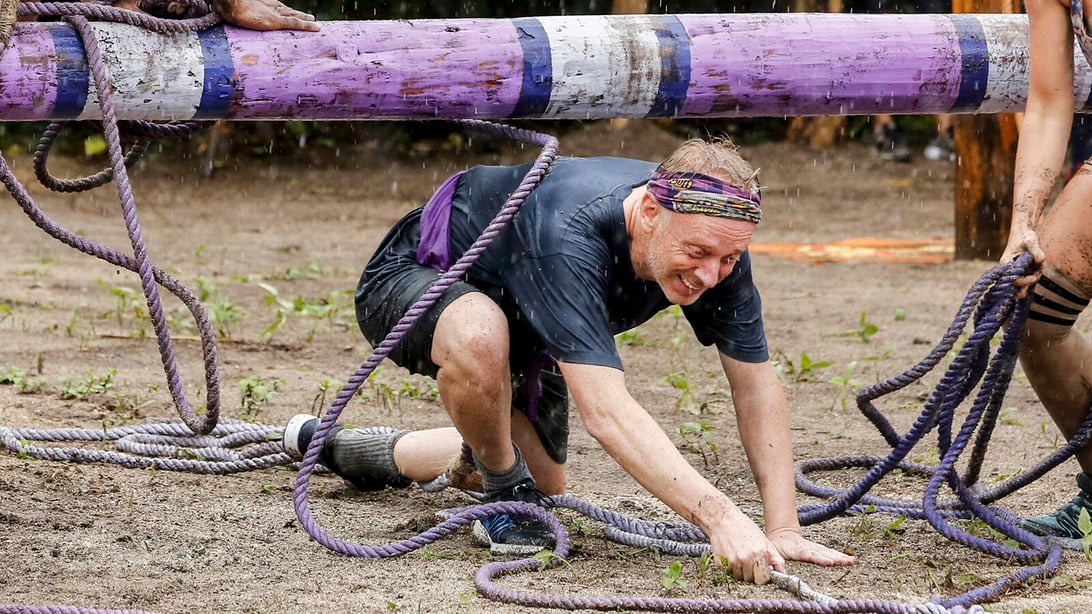
Mike White, Survivor: David vs. Goliath
Robert Voets/CBSIn February, Survivor will premiere its 50th season, featuring the first cast of returning players since the all-winners 40th season. When the 24 castaways were announced last May, fan reaction was mixed — I wrote up my own list of egregious casting snubs, largely focused on the underrepresentation of players from the first 20 seasons (and the overrepresentation of the "New Era" 40s seasons). For some, the concerns were only amplified after watching Season 49 and getting to know Savannah Louie and Rizo Velovic, each of whom will be back for 50. It's hard to swallow that a guy who goes by "RizGod" was chosen over, say, Jerri Manthey or Jonathan Penner.
Of course, if Season 50 doesn't meet fans' expectations, Savannah and Rizo won't be the reason why. They weren't wholly (or even mostly) responsible for Season 49 being an all-time bad season; the problem is larger. In many ways, Season 49 seemed to epitomize a growing trend from the past 10-ish seasons, perhaps dating back to Jesse Tannenbaum taking over as casting director in 2018. Practically anyone can recognize it, even those new to the show. Survivor loves to cast superfans these days — viewers who not only watch the show regularly but 3D print their own challenge replicas and pore over iconic tribal councils the way NFL players study old game footage.
ALSO READ: The complete guide to winter TV
Sometimes watching a die-hard fan play Survivor can be fun — you might feel like you're vicariously experiencing the game. But superfans work best as a side dish (or even garnish!) in a competition reality cast, not the main course. Take John Cochran or Spencer Bledsoe, who made such a mark on their respective seasons because they stuck out like sore thumbs. Seeing too many Survivor nerds on one beach can get grating, especially this deep into the New Era. The stakes feel less palpable, like winning $1 million is no longer the main goal; most of them have already achieved their main goal just by getting cast. That means less drive to win and, separately but not entirely unrelatedly, less friction between the cast members. Everyone is just happy to be there in Fiji, oohing and ahhing at new tribal sets and often giggling as host Jeff Probst snuffs their torches.
The problem is that Probst loves this. In fact, superfans are the ideal cast members for his aim in shifting the show away from its darker eras. In 2024, he infamously expressed his disinterest in casting villains and creating "negativity" in the show — an element he attributed to executive producer Mark Burnett, whose involvement has seemingly been minimal since the aughts. He wants a more wholesome, family-friendly version of Survivor, and we've seen that play out in the New Era — not just through casting, but through the feel of the show. Even as Survivor expanded into 90-minute episodes for Season 45, theoretically allowing room for more "camp life" footage to deepen our understanding of the characters, the edit largely continued to fall back on stale personal-growth narratives and tragic backstories. Most of those sob-story confessionals revolved around either insecurities born from childhood bullying or grief over a dead parent or grandparent. (In Season 49, the pattern reaches almost comical levels.) Unlike the aggression that comes with true villains like Jonny Fairplay or Russell Hantz, these glimpses of loss and aloneness are an acceptable type of negativity, especially because they feed into the narrative that appearing on Survivor will heal you.

Survivor 49
Robert Voets/CBSIn all the chatter about how the players themselves will perform on Season 50, it's easy to underestimate the other factors that go into determining the quality of a season, like the presentation of the narrative itself. Fans can effortlessly concoct nightmare boot-order scenarios — like a Final 3 made up of Rick Devens, Jonathan Young, and Joe Hunter — but it's harder to come to terms with the possibility of Season 50 just being average, weakened by the same core elements of edit and game design that may have frustrated us in other recent seasons.
That slightly sanded-down, family-friendly tone isn't going away, for example. What does that mean for a character like Stephenie LaGrossa Kendrick, who said Bobby Jon Drinkard "gets so gay" back on Season 11 in 2005 and made some horrifying antisemitic remarks about Eliza Orlins just last August? What does a New Era version of Ben "Coach" Wade look like? I doubt some hate crime happened during the filming of the season, but is the edit willing to include conversations about politics? Would the show spotlight microaggressions the way it once spotlit both micro- and macroaggressions, or will it cut around them? Even since Seasons 41 and 42, the number of explicit conversations about race has steeply declined, which led to some significant information gaps in Season 49.
I expect Season 50 to be a sizable improvement on Season 49, to be clear. The sheer sense of history alone will make it feel more consequential. But in my darkest moments slogging through 49, I found myself wondering if the show even knows what its viewers want to see anymore. Why, for example, did we never get a real sense of Savannah and Rizo's personal relationship? They were the main characters of the season, but I never really understood their dynamic in the same way as a classic Survivor duo like J.T. Thomas and Stephen Fishbach, or Parvati Shallow and Amanda Kimmel, or even Yam Yam Arocho and Carolyn Wiger. (Comparing the Tika 3 to the Tres Leches alliance doesn't do the latter any favors.) What about Sage Ahrens-Nichols and Jawan Pitts, who apparently formed a close friendship in addition to their alliance? The show has a habit of foregrounding strategic relationships instead of personal ones, as I discussed during Season 47.

Andrea Boehlke, Cirie Fields, Sarah Lacina, and Troyzan Robertson, Survivor: Game Changers
Jeffrey Neira/CBSSurvivor 50 has a leg up on its predecessors in this regard, because we're entering the season already knowing the players. But now there's a different sort of expositional burden, a responsibility to refamiliarize us with these people and showcase as many delightful new crossover interactions as possible. Is there a scenario where the show would present us with some amazing, fan fiction-level alliance — Cirie Fields and Mike White operating from the shadows together to take out the younger players, let's say — but refrain from showing the basis of their bond or any of their non-game conversations?
Let's take this to its logical conclusion: Is there a scenario where a fan favorite like Cirie or Christian Hubicki wins, but it isn't satisfying? Okay, I probably went too far there. But the handling of the winner edit itself is a huge question mark; Savannah had a massive presence in Season 49 from the very beginning, marking her as the likely winner even without knowledge of her appearance on 50, and then it became a slog to watch everyone talk about taking a shot without ever going for it.
With the 90-minute episodes and a three-hour premiere, Season 50 should have ample screen time available to tell its story. The question is whether the time will be used wisely — whether the edit will lean into gimmicks like MrBeast's cameo and the "Billie Eilish Boomerang Idol" or keep the focus on the players we're here to see.
ALSO READ: The 50 best Survivor players to never win
I do believe in Survivor, as silly as that might sound after the pessimism I just aired. In the lead-up to Season 50, I've been revisiting Borneo and remembering how this all began. Those 16 castaways made up arguably the best newbie cast of all time — comparing them to the 49 cast wouldn't be fair — but they're not the only reason the season is superior. Back then, the show had permission to be slow, to eschew strat chat and linger on the little human moments. As a result, I feel like I know Sonja Christopher better than any other first elimination, and B.B. Andersen better than most second boots, and Ramona Gray better than any fourth boot. They're memorable because the show spent time with them and showed how they function, both as individuals with rich, contradictory histories and as parts of a new whole.
When Survivor began, it was still a game for $1 million — in fact, $1 million meant a lot more than it does now — but it was mainly about a group of very different people from different walks of life, plopped onto an island and forced to create their own society. It might be easy to scoff at the lo-fi aesthetics and elementary gameplay of that first season now, but it felt real, raw, intimate. By watching those 16 set aside their differences to band together and start something new, only to eventually cut one another's throats, we learned something about who they truly were. I hope Season 50 lets us do the same.
Survivor 50 premieres Feb. 25 on CBS.