Join or Sign In
Sign in to customize your TV listings
By joining TV Guide, you agree to our Terms of Use and acknowledge the data practices in our Privacy Policy.
Severance Director Jessica Lee Gagné Wanted to Make Mark Scout Sexy
Gagné spoke to TV Guide about flashing back to Mark's 'whirlwind' romance and making the audience love Gemma


Adam Scott and Dichen Lachman, Severance
Apple TV+[The following contains spoilers for Severance Season 2 Episode 7, "Chikhai Bardo."]
True Severance heads will recognize Jessica Lee Gagné as the show's longtime director of photography. But for the seventh episode of the Apple TV+ drama's second season, the cinematographer also moved into the director's chair for the first time in her career. Written by series creator Dan Erickson and executive producer Mark Friedman, "Chikhai Bardo" is a reset for the story, pulling off the complicated task of delving into the backstory for the entire premise of the series — why Adam Scott's Mark Scout decided to sever himself after the supposed death of his wife, Gemma (Dichen Lachman) — and explaining what has been going on with the very much alive Gemma in the intervening years.
The hour is as much an introduction to Gemma's character as it is a tale of two prisons: present-day Mark, trapped in his own memories as he attempts to reintegrate, and present-day Gemma, whom Lumon is experimenting on while holding her captive on a floor of the office we've never seen before. In a collection of dreamy flashback sequences, Gagné guides us through the Scouts' love story, from their first meeting as a pair of professors donating blood to their fertility struggles to the moment Mark was told of Gemma's alleged death in a car accident. The episode intercuts these moments with cruel glimpses into the many different innies Lumon has split Gemma into: women who were created for the purpose of getting dental surgery, or writing thank you cards after Christmas, or, of course, serving as the severed floor's wellness director, Ms. Casey. When she's allowed back into her own body, Gemma clashes with Robby Benson's sadistic Dr. Mauer, who seems all too gleeful about imprisoning her — but her attempt at escape proves futile, leading her right back to where she began, as is the way these things usually go at Lumon.
ALSO READ: The complete guide to winter TV
"Chikhai Bardo" is alternately romantic and devastating. According to Gagné, pulling it off was a tricky process, one that took until the very end of the shoot. Ahead of the episode's premiere, the director hopped on a Zoom call to tell TV Guide about all that went into this highly personal episode.
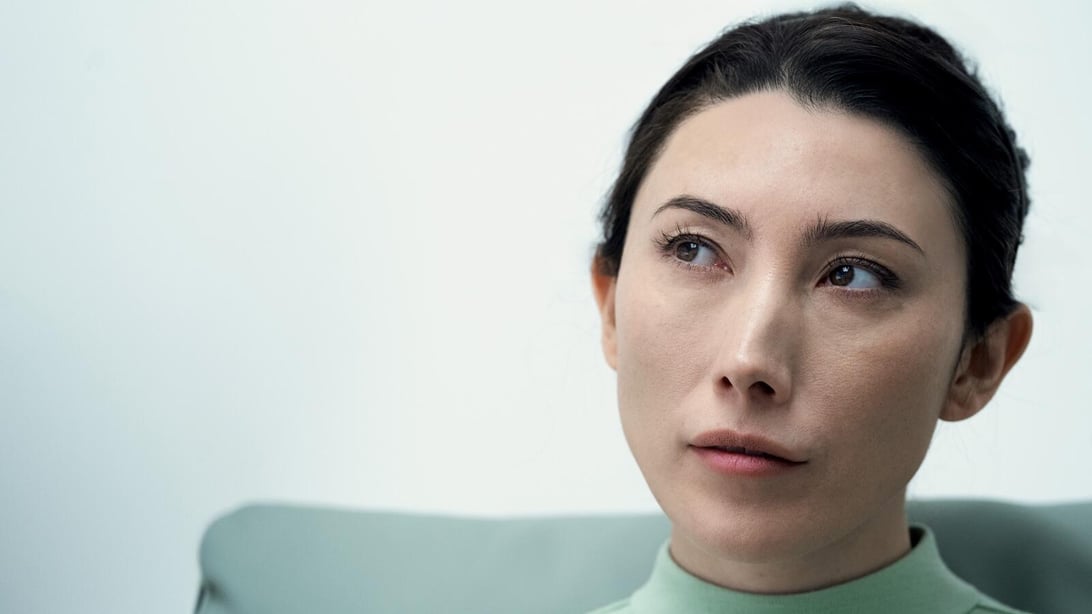
Dichen Lachman, Severance
Apple TV+I read that this is your directorial debut. What made you want to shift into a directing role, and what was it about this episode that called out to you?
Jessica Lee Gagné: I went into it a little backwards. It wasn't my idea to do this. I was hesitating whether or not I wanted to work on Season 2, because for me, what I love is world-building and new aesthetics and new ways of communicating. Every project, what I love the most is just creating that language. A second season of something that I had really dug into already, I was like, "I don't know." And they came at me, and [executive producer] Ben [Stiller] specifically was like, "Well, do you want to direct?" To add to it, to make it a different experience for me. And at first I said no. It took me a while to understand why, but then I realized it was something I wanted to do, but I had blocked it out for a long time. And then when I read the synopsis of 7, something kind of tweaked me inside, and I realized I was supposed to direct this episode. In a way, I think it almost found me, just because the themes in it are something that I've really delved into a lot in my personal journey. It resonated on many, many levels. As a directing opportunity — because it's a new world and a lot of new things — I got to see if I could actually do this or not. Because usually television directors that come in, everything is set and ready for them. They come in and the positions have already been made, you're directing the actors and finding how to shoot it, but this episode had a lot of world-building and a lot of creating, which is what also excited me about it.
I think I changed overall as an artist, in a way. The process of being a cinematographer kept me very surface level with who I am, and then directing — to be able to open the door to that, I had to open myself up to who I am, really, as a person, and feelings that I hadn't wanted to feel before in my life. So I saw it as kind of a healing journey, this whole thing. And to do it in such a supportive way with the cast that I knew, a team that I knew, a project that I knew, writers I knew, and then Ben on top of that, supporting this process for me was what I needed, or else I don't think I would have ever felt safe enough to do it.
You mentioned the world-building that happens in this episode. Among other things, this is the first time we get to see Gemma as Gemma, as an autonomous person rather than a fleeting specter in Mark's memory or as Ms. Casey. It's the introduction of this character. I'm so interested in what went into creating her and the kinds of conversations you were having with Dichen leading into the episode. I loved her so much immediately.
Gagné: Oh, that's good! That's something we wanted, for people to love her, because she's up against Helly, and Helly is this incredible character. And my fear doing this episode was also, "Oh, I don't get the [MDR] quad, the team here that everyone loves so much and roots for." That scared me a little bit as a director, so we really worked hard with Dichen to develop this very nuanced character, and this very nuanced woman who was strong, funny, and had all these beautiful qualities, and was also a really sensitive person. It was interesting, because [Gemma] doesn't have what all the other innies have, in the way that when they go to work they're always in this innie. She goes in and out of it. She's a full prisoner and is aware of it, except when she goes in these rooms, right? Her journey was, except for the rooms, very linear. She could actually kind of track it, or understand it as a human being. And then her relationship with Mark, the interesting thing about is that it's not perfect, and we tried to make it as real as possible, because I feel like that's also what fuels a lot of Mark's guilt, and also will fuel what happens in the rest of the show. It's one episode, and you have to show five years of life, and then you introduce this new floor. We worked a lot with the writer, Mark Friedman, to try and find the core essence of each scene, how we could bring out the humanity in each piece, try to still make some of it light and pleasant and lively, because there's so much weight to it as well, so it was tricky to balance out. In terms of her within these rooms, we got to create all new characters. Those characters are what are feeding Dr. Mauer, and he's enamored by her, but he's responding to her energy in these rooms. And that was interesting, because every room, she had to kind of envision herself only having seen this. This innie had only lived this Christmas card experience.
The dentist.
Gagné: Yeah, the dentist! Can you imagine, your whole life has been that process? There was a lot of trying different things with that. But each room, we tried to give it a little bit of a different tone and a little different backstory. For the Christmas room, for example, we were trying to be in that character of the angry teenager, a little bit. She's a little rebellious. And that's what causes the drift between her and Mauer. [Lachman] deserves so much credit for this episode, because of the nuance that she also had to play with Mauer within the suite, and she's had to almost act as an actor, right? You see her and Dr. Mauer before she hits him with the chair — they're both performing. The way we worked together was just having a lot of conversations about it, and really putting her in the shoes of that character who had lived these kinds of very strange experiences. It was timeline by timeline, and then room by room.
The audience gets less time with Mark and Gemma as a couple than the other couples on the show, and you had to make people care about them and understand what Mark is doing all of this for in such a short amount of time. What was important to you to communicate in their scenes together?
Gagné: The goal of this episode is to understand why Mark severed, and why he decided to let go of that old life of his. It was to give it a lot of nuance, the fact that it's not just that this was a perfect relationship and he lost her. I feel like that would have been easier to grieve, if they were on the same page and everything's perfect, you know? It would have been simpler, and they probably would have had a child, and then he could have had that child, but they never were able to get there, and when he loses her, it's that guilt of realizing, "Did I do enough? I didn't try enough. I can't even face that." That's, anyway, how I interpreted a lot of it. But there was a moment where they weren't sure, at the end — I remember being asked, "Should she kiss him goodbye?" And I was like, "I don't think she should kiss him goodbye. I think they don't get opportunity, right?" The bittersweetness of something that you never get to fully live through. The whole show is seen through his perspective, even if we're following different characters. But the tone, the feel of this show, is due to someone who's chosen not to feel a huge part of the spectrum of life. But then what's really interesting is how it still finds its way back to him. When he decides to say, "OK, I'm gonna do some kind of physical action to meet her [by reintegrating]," then things just start coming out of him, right?
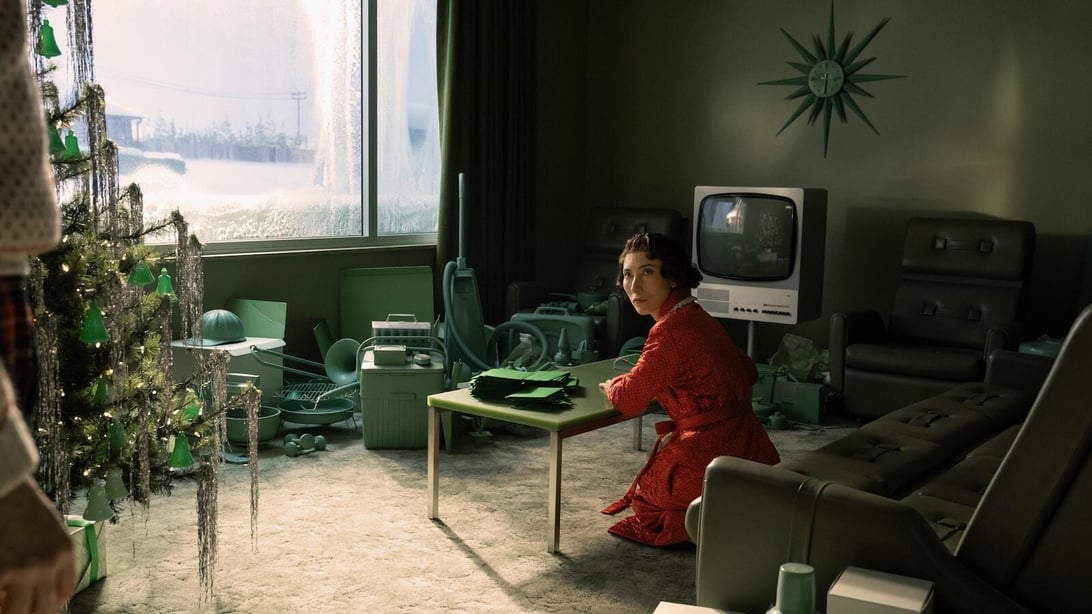
Dichen Lachman, Severance
Apple TV+I'm also curious how you see Gemma in captivity. We get these glimmers of how smart she is, and how hopeful she still is that she'll see Mark again, though she's also pretty dead inside. How did you approach visualizing this prison she's in?
Gagné: Well, her suite was really an interesting set to design. Jeremy Hindle, the production designer, and I worked really, really closely together to make this set. I remember the time we were picking out what the colors and the textures were going to be, and we walked into the set decorating room, and they had all these pieces of carpets and colors and things, and we just picked everything out and we threw it on the table. We wanted to make it feel like an illusion of comfort. Also, you have to think, OK, this person, would she have tried to commit suicide? How did she hold on? Does she go crazy? In terms of understanding that character, Dichen and I talked about what it's like to be a prisoner, like for a lifelong prisoner. You go through different phases, and it basically depends where you are in this cycle in terms of what you're feeling. There are moments of hope, and then there's moments of despair, and there's moments of anger, and you move through those emotions. At the moment in this timeline when we reach her, there is this motivating factor that happens. There's this feeling that Mark is almost reaching out to her. If you analyze the three structures, the three timelines that we have in the episode — there's the flashback timeline, there's Gemma's timeline, and then there's Mark's timeline. None of these timelines match up, but there are these moments where you can feel that they're connecting in some kind of way. At the end, when they're both having this realization of loss at the same time, or grief that they've lost each other again — because that's kind of where she's at in the moment — they connect visually at that point. Sorry, I went off on a tangent.
No, please, keep going.
Gagné: But the set, yeah — the illusion of comfort. We gave her books, and she can draw, and she can have certain things. We'd give her routine things to do. It couldn't be something where she would have to escape her body and her mind. [It had to be] that she could still feel like she was human. That's the one thing that's tricky. Would you believe that she would still have that hope for him? She has her own internal world as well that she's developed.
I spoke to Ben before the season aired, and he talked about how you shot those cold, wintry outdoor Woe's Hollow sequences, which is more in line with how we usually see sunlight on Severance. What was it like to use so much warm light in the Mark and Gemma flashback scenes?
Gagné: There were definitely moments where we wanted to feel the heat of the sun. That's my favorite kind of lighting, when I get to recreate sunlight. I get excited about doing that. So sometimes it's been difficult not having access to those things. For the flashbacks, we were also shooting on film, which was a new thing. That was a decision, so that it would evoke nostalgia without you even putting a finger on it; it's just because film has that feeling to us now, that it is this thing that's stuck in time. So I didn't want to force a look on top of it. Also, it was shot in my house, which is crazy.
No way.
Gagné: Yes. I was living in a house that I rented in Nyack. I lived in that house for all of Season 2, and the production designer and I were talking about what their apartment would be like, and I was just describing what I was seeing in my mind. "I feel like it would have moldings, and be old, and the paint would be chipping, and there'd be books everywhere." And he stops me and says, "You know we're going to have to do this in your house, right? Like, you realize?" And I'm just like, "Oh, crap." I lived on the third floor while they did the construction. It was funny, I'd go down to take the transpo to go to set to shoot Episode 10, and I would walk by — because we shot the flashbacks at the end, end, end of the [season], and we made it a smaller crew. I wanted a different feeling. I wanted it to feel like a different show. And then I'd come down, and I'd be looking into the rooms, and the painters would be there. And it was so fun, because then the production designer and I, and the set dec team, we got to work together every day on it. Usually, you don't get that experience. Usually I'd be shooting with Ben and not be able to work on this stuff, but because it was in my house, I could also shot list, and listen to music, and be in the spaces, and just watch, just move through that stuff.
So when you said it was personal, it literally was happening where you were living.
Gagné: Yeah, I was in! I was very in.
Those flashbacks are the first time it feels like these characters exist in the real world.
Gagné: We wanted it to feel simple and real. I tried to not overlight it. When we could do no lighting, we would do no lighting. It was a very different approach than the rest of the shoot. It was very simple coverage. I would do, sometimes, just one shot on Gemma, one shot on Mark.
I also want to talk about Mark's styling in this episode. I think it was the first thing I noticed: "Oh, wow, Mark looks great."
Gagné: We achieved what we wanted!
It's the first time we see outie Mark not violently depressed.
Gagné: One of the reasons we shot at the end is we wanted to cut his hair. I was like, "Can we please?" And that was such a stretch for production to shoot it at the end. I held on to that. I'm very involved in the scheduling, and every time I felt that was threatened, I was going in and making changes. Because I felt that he has such an iconic look with the hair that we had to break it. And, I mean, his energy was just completely different. [Adam] had so much fun with that teacher look as well. More of a layered thing, more blouses. I wanted him to be sexy.
At the end of the episode, we do finally see Mark back in artificial light when the cops show up to tell him Gemma is dead. How did you think about how that scene would look?
Gagné: It was always very clear. That scene was written that he was in bed with all the books, and he had fallen asleep, and I asked the writer to move it, because this office that I have is next to the solarium where they have the dinner, and there's something that happens. I had a roundabout in my yard — to get to the house, you would have to go around the roundabout. And I remember one day being in that room and seeing how the light moved in that space, because a car will go around and light up the whole space, and I thought it was so beautiful. And I was like, I want to use it in that scene so that the light flashes through inside the room, and that would be his kind of understanding: "Oh, is this Gemma?" And obviously, when he looks, he would see that it's not Gemma's car. But we didn't want to do the flashing [cop car] light thing, because it's not what people do when someone passes. So that kind of piques his curiosity, and then him walking to the door and seeing them taking their hats off and all that is what really gives it away to him.
But I feel like that whole sequence, the lighting was what was natural and right, but because I knew this house so well, I knew how the light interacted. When he walks into the darkness, that obviously has to be something specific, and it was cut together with what Dichen was doing. Mark [Friedman] and I worked together to cut the scenes, because it was not as back and forth [between Mark and Gemma] in the writing — it was, but a little less. And Mark and I worked together, because I knew what the shots were going to be. So for me, when we were shooting it, I could get it in the pieces that we needed. But because Dichen and Adam are so technically amazing as actors, they're able to break things like that, because not every actor can do that. It really depends on their style and how they work. I don't think we could have attempted certain things if I didn't feel confident in what they're able to do. You need to do something so elaborate where you're going, in one shot, from one state of mind to a completely different state of mind. It's a lot to ask from actors.
You brought up the script, specifically how that last scene is written, intercutting Gemma getting brought back to the testing floor as Mark finds out about her death in the flashback. When it comes to very technical scenes like that, how much do you get to stylistically choose, and how much of it relies on the writing?
Gagné: I think with Severance, there's a lot of collaboration with the writers, there's a lot of openness there. Mark Friedman and I had a very good relationship. He was super helpful for me in the process. We worked together, because these transitions, technically, I was the one coming up with them. He was very clear with the feeling that he wanted the episode to have. He was like, "I want this to feel like a whirlwind where you kind of get lost in time and space." We both have these thoughts about how this universe works and what time really is, because I don't really believe in time as what we see it is. I viewed it very totally. And because I was working on the show as a cinematographer, this episode got blessed with the fact that we had a lot of time to work on this, and we worked together to come up with these transitions. And then sometimes, things shifted a little bit, but we really had a clear idea when we went into shooting it of how it was going to be built. Editorially, a couple of things had to shift, but we were able to keep most of the transitions that were built in. Every step of the way was like a new creation.
New episodes of Severance Season 2 premiere Fridays on Apple TV+.