Join or Sign In
Sign in to customize your TV listings
By joining TV Guide, you agree to our Terms of Use and acknowledge the data practices in our Privacy Policy.
Pluribus Review: Rhea Seehorn Is a Gloriously Unlikely Hero in Vince Gilligan's Smart Sci-Fi Drama
The Better Call Saul duo reteam on a thought-provoking Apple TV series


Rhea Seehorn, Pluribus
Apple TV+Vince Gilligan seems wary of world peace. The creator of Breaking Bad and co-creator of Better Call Saul made his directorial debut in 2000 with an X-Files episode about a cynical genie. In the episode, which Gilligan also wrote, the genie grants David Duchovny's Mulder three wishes. When Mulder asks for peace on Earth, everyone else on the planet disappears.
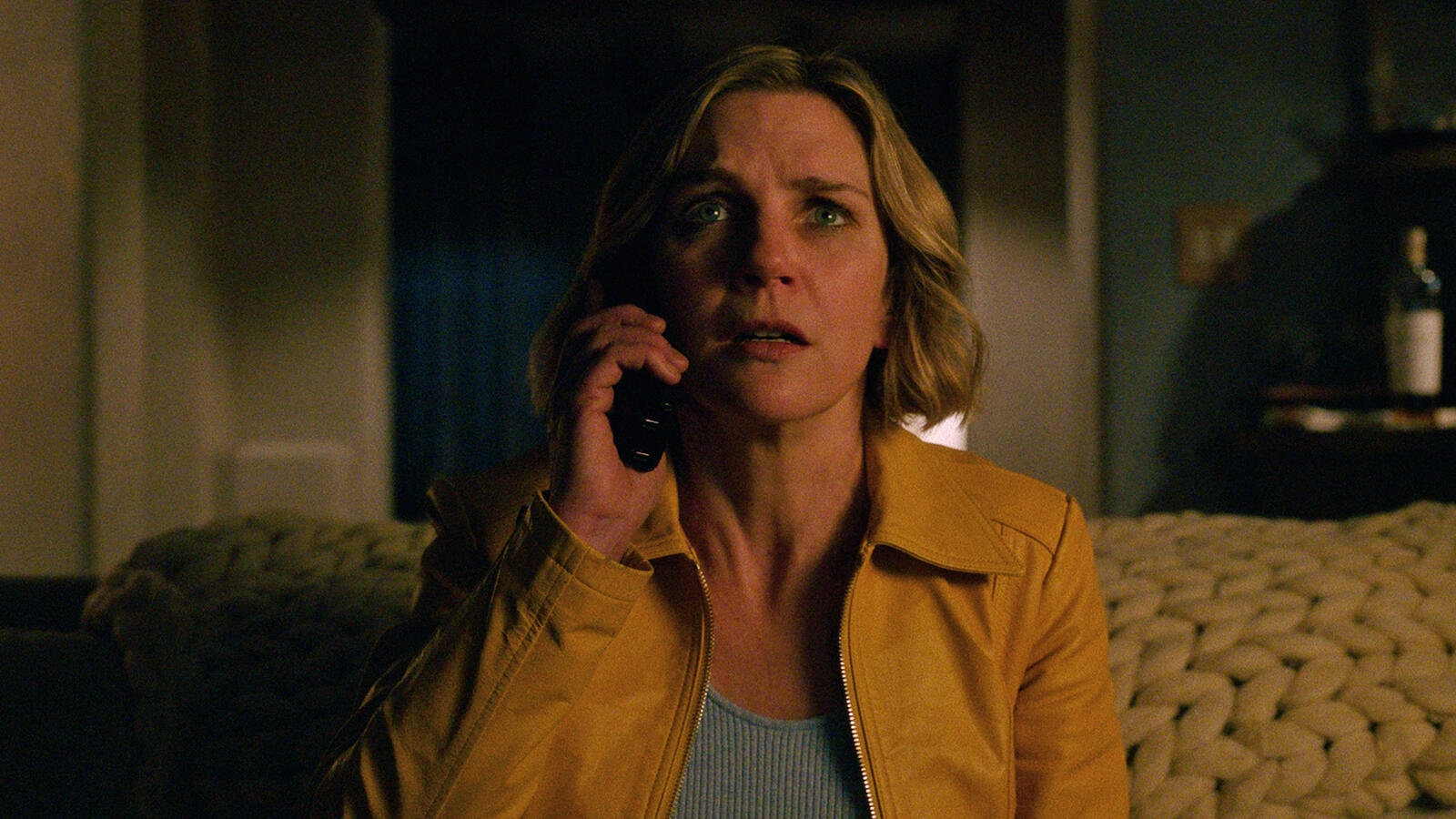
The question of who or what must be sacrificed to achieve peace on Earth is just one of the ideas that animate Pluribus, Gilligan's delightful new Apple TV drama about another character stranded in a world that is suddenly hellishly tranquil. Saul standout Rhea Seehorn stars as Carol Sturka, who is somehow immune to a strange virus that has swept the planet, leaving the population happy and agreeable. If this is peace, Carol doesn't trust it.
Carol's terror in the face of conformity evokes classic sci-fi — Huxley's Brave New World by way of Invasion of the Body Snatchers, with a stop in Gilligan's old X-Files territory. That's especially true in the spectacular series premiere, which spirals disorientingly toward global cataclysm. In the wake of the world's transformation, Pluribus calms down, then mutates again. Early in the season, the series almost feels like a Twilight Zone-style take on The Good Place and other high-concept sitcoms about endless ennui, but as Carol works her way through various coping mechanisms, Pluribus reveals that it can also be a mystery, an elegy, a perilous journey, and a spoof of any movie it wants. (The show is slyly very funny; Carol, a romantasy author, just wrapped up a tour spent bitterly promoting "the fourth book in her Winds of Wycaro trilogy.") The series sometimes sacrifices forward momentum for unpredictability, but the tradeoff is worth it; it's refreshing to find a show in the streaming era that's capable of this kind of elasticity from episode to episode.
Like
- Seehorn is fantastic as a refreshingly difficult hero
- The premise has range
- Thought-provoking scripts avoid getting didactic
Dislike
- Not all secondary characters are granted Carol's nuance
Seehorn carries it brilliantly. Carol has been touted as the hero Gilligan needed to write after spending over a decade inside the minds of the antiheroes of Breaking Bad and Better Call Saul, and she is a hero; she wants to save the world. But there's nothing sentimental about Carol Sturka. The single best thing about Pluribus is how miserable this woman is, which is a testament to both how Carol is written and how she's played. Thematically, embracing her anger and pettiness is the point; this is a show that cherishes the full range of human emotion on principle. Still, a lesser series could have gotten cute with its main character's crankiness in a way that Pluribus never does. Carol's mean streak has sharp edges, and her self-destructiveness takes others down with her. Pluribus approaches its hero just as Breaking Bad and Better Call Saul approached their antiheroes: honestly.
It's an excellent role for anyone and a rare one for a woman. Saul reshaped itself around her magnetism, but Pluribus is built from the beginning to be a proper star vehicle for Rhea Seehorn. She's witty, chaotic, resolute, and heartbreaking. And she's in nearly every scene, many of which find her character alone, or figuratively on her own. Her costars — Karolina Wydra as a representative of the infected Others, Carlos Manuel Vesga as a cautious recluse — are also up to the challenges of the narrative, with Vesga's character emerging as a highlight. Miriam Shor brings warmth as Carol's partner and manager, Samba Schutte is a blast as a man whose life seems suddenly charmed, and unexpected cameos add color. But Pluribus is ultimately in Seehorn's hands, and she nails it.
ALSO READ: Rhea Seehorn is thrilled to finally be able to talk about what happens in Pluribus
Pluribus, Latin for many, is part of the motto on the seal of the United States, e pluribus unum: out of many, one. Like Breaking Bad and Better Call Saul before it, Pluribus is interested in American mythmaking and lawlessness on the frontier. (Also like Gilligan's earlier shows, Pluribus is shot mostly in Albuquerque, though its corner of the desert is more suburban.) It's a story that tests the limits of independence. Carol wants her freedoms, both the essential ones and the ones that are bad for her, and yet her staunch individualism doesn't translate to total self-reliance. When she travels abroad, looking for answers or maybe even a way to set things right, it exposes a few holes in Pluribus' perspective — most of the international characters are frustratingly passive in a way that the series has yet to justify, at least in the seven episodes provided to critics. But when the show zeroes in on Carol, it's vividly aware of the contradictions that shape her. As she holds tight to her own idea of liberty, Pluribus surrounds Carol with the remnants of American iconography, which often plays like a joke but is still tinged with affection.
The show's visual storytelling is lovely. There are long stretches with few words, which can turn on a dime: People solve problems only to create new ones, and the pleasure of isolation curdles until it's maddening. Pluribus moves with its own rhythm, letting its different tones and various big ideas jut into each other. Reconciling all of those ideas into one neat moral would leave nothing for the audience to talk about, and conversation is what Pluribus fears has been lost.
Midway through the season, Carol sits down with one of the Others and discovers that in their bland happiness, they have become incapable of engaging with art. They see it all as "equally wonderful." This is the peace on Earth that Gilligan doesn't trust: the kind that loves nothing enough to cause conflict on its behalf. Meanwhile, Carol finds herself drawn to Georgia O'Keeffe's 1939 painting "Bella Donna," the artist's famous rendering of a highly poisonous flower. Finding beauty in toxicity is apt for Pluribus, a show that asks if the human condition is not only wanting what might kill you but needing it to live.
Premieres: Friday, Nov. 7 on Apple TV with two episodes, followed by a new episode each Friday
Who's in it: Rhea Seehorn, Karolina Wydra, Carlos Manuel Vesga
Who's behind it: Vince Gilligan
For fans of: The Twilight Zone, Better Call Saul
How many episodes we watched: 7 of 9