Join or Sign In
Sign in to customize your TV listings
By joining TV Guide, you agree to our Terms of Use and acknowledge the data practices in our Privacy Policy.
9-1-1: Lone Star's Brian Michael Smith Breaks Down Paul's Romantic Breakthrough Episode
A blast from the past forces Paul to reckon with parts of himself he tried to forget
[Warning: The following contains spoilers from Tuesday's episode of 9-1-1: Lone Star. Read at your own risk!]
Brian Michael Smith, who plays firefighter Paul Strickland on 9-1-1: Lone Star, has come to realize that art can imitate life after all. So, when showrunner Tim Minear called him up at the start of the fourth season to discuss a potential development in Paul's love life, which could then be tied back to his identity as a trans man, Smith recognized an opportunity to imbue the character with another one of his own personal experiences.
"I think something that was really cool was that it felt like this [storyline] was something that came out of my journals or my diaries, because I had a similar experience," Smith told TV Guide. "[Minear and co-showrunner Rashad Raisani] were like, 'We're totally gonna dramatize things, and there's a line between real life and fiction.' So it was nice to take a little bit of what I actually experienced and then see what happens when we dramatize it."
Tuesday's episode of the hit FOX procedural drama finds Paul reconnecting with Asha (Amanda Payton), a former classmate who knew him before his transition. An HR representative from the Professional Standards Division of AFD Internal Affairs, Asha oversaw a case a couple of episodes ago involving a scheming couple that threatened to sue the department for calling the woman "crazy" during a rescue, which ultimately led to the resignation of Paul's best friend, Marjan (Natacha Karam). During the inquiry, Asha quickly recognized Paul's smile and explained that, before she moved to Texas in middle school, they were in the same sixth-grade class in Chicago.
Their immediate chemistry was only a sign of things to come in this week's episode of Lone Star, in which Paul is hesitant to go on a date with Asha, because she is a reminder of the parts of his old self that he decided to overlook after his transition. "Before I transitioned, there were these things, these parts of myself, that were so tied to who everybody thought I should be that I had to close the door on them in order to be who I am," Paul tells his captain, Owen (Rob Lowe), implying that Asha has seen behind some doors that he isn't ready to open up yet.
In a recent Zoom interview, Smith spoke about what parts of this episode resonated with him personally, how Paul's acceptance of his past will open him up to a new kind of relationship with Asha, and the responsibility that he feels to portray a specific Black trans experience on network TV in today's sociopolitical climate.
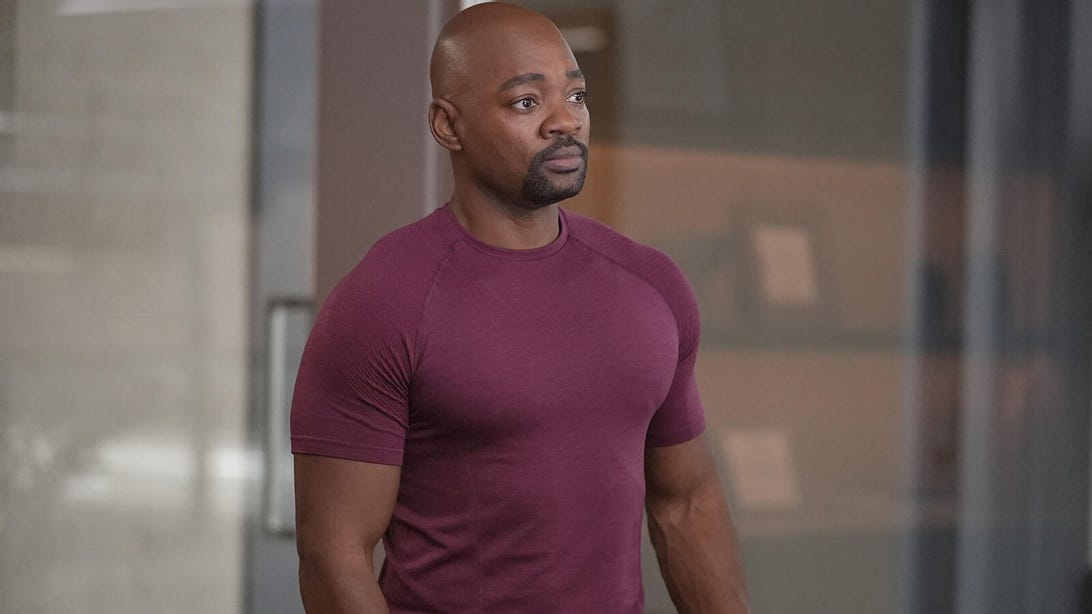
Brian Michael Smith, 9-1-1: Lone Star
FOXHow would you describe Paul's arc in this episode?
Brian Michael Smith: I think when we meet Paul at the beginning of this journey, he's really interested in [dealing with] some unfinished business. I got the feeling that he and Asha, when they were in middle school, probably had feelings for each other but didn't know what to do with them, and then she moved away. When Paul reconnects with Asha, he's enjoying the ride of reconnecting with somebody [where] there's a sense of ease with it, because he already has this familiarity with her, and it feels like more of a connection than he's had with any of the dates that he's had in his adult life.
So he's really enjoying himself and this deep sense of connection, but he's also conflicted because of who [Asha] is in his life in the present. She's kind of the cause of his best friend not being part of his life right now, and he doesn't want to feel like he's betraying Marjan. Even though she's out and she's exploring, she's carrying a lot of pain, and he doesn't want to add to that. So when we first see him, there's that internal conflict just between his feelings for Asha and his feelings for his best friend and protecting her sense of peace, and then it shifts over into his own sort of feeling.
Asha brings up parts of his past that he didn't necessarily heal from; he just figured out how to move forward from [those moments]. So this episode is about him facing elements of his past, holding space for them, and really processing what [happened], because his way of moving forward has been to just block everything out, and [it's like the expression] "the baby goes out with the bath water." It was a survival mechanism that made sense for him at an earlier point in his life. But now, he's feeling like, "I'm ready to deal with that, and I'm ready to grieve for what I lost, which is my connection to my athletic self, and bring some of these things into the future with me. I don't have to leave everything. I can be exactly who I am while embracing the elements of my past that I thought I had to let go of."
How much of this storyline has resonated with you personally, and what kinds of conversations did you have with showrunner Tim Minear about your own experience that might have informed the writing or your acting of Paul's arc in this episode?
Smith: It was a very serendipitous call. Before the season, we talked about the arc and what was gonna happen, so on that call, Tim brought this up: "So I had this idea for Paul. I want to find a way for him to explore love, but it can be this thing where it's someone who knows him from his past—not the more recent past, but early, early on." I was like, "Tim, this is crazy that you're bringing this up, because I've had this experience."
For myself, [as] Brian, being an athlete was a huge part of my childhood and even my adulthood. I went to college on a track and field scholarship, so being able to learn about myself the way that you do when you're an athlete was really core to how I was able to navigate my adult life, especially the challenges that came up through my transition and then navigating being an actor and all of the resistance that comes in that way. I learned so much about how to persevere through athletics, so [I loved] being able to have this parallel explored with Paul. I didn't play basketball, but I did want to see that through.
That's been very symbolic of what the relationship with myself and the writers has been the whole time. When they have ideas, they're like, "This is what we want to explore," and I'm like, "Let me bring in some experience that could go with that," or, "Oh, actually, what about this? Can we do this for Paul?" So it's been really beautiful to see what comes out of that true collaboration, and I feel like what makes it to the screen is a testament to that.
By the end of the episode, Paul plays a pick-up game of basketball with some of his teammates, because basketball is one of the biggest things that he gave up after his transition, and you get the sense that he's had some sort of emotional breakthrough that will allow him to accept the parts of himself that he has denied for a long time. Does embracing parts of who he was before his transition ultimately allow him to feel comfortable enough to pursue a relationship with Asha? Is it really that simple for him?
Smith: It's definitely a step in the right direction. Sometimes, there's nothing to it but to do it, so you do it. But then I feel like it does open the door for him to unpack some things that he hasn't really looked at. I think he can do it now from a place of openness. There was a lot of fear about exploring this relationship with Asha because of what he thought it would mean [for] his relationship with Marjan, but truthfully, deep down, it was more about her bridging the gap between who he is now and who he was.
But what was great about Asha—and I think he's going to realize this—is that she's a person who loves all of who he is, even the parts of himself that he doesn't want to face. She's like, "I have always seen who you are. That's how I was able to recognize you after all these years, and it had nothing to do with the external factors. I know who you are on an essential level." He was carrying a lot of shame, and then he realized that the shame is just getting in the way of what he really wants, and he doesn't need it anymore. So once he sees truly that she sees him and she's just trying to connect with him, but it doesn't erase who he is in the present, he lets go of a lot of shame and is able to be with her.
Speaking of Marjan, there was a lot left unsaid between her and Paul a couple of episodes ago, when she's saying her final goodbyes to the 126 before basically riding off into the sunset indefinitely. What did you want to convey in those moments?
Smith: He was doing for her what Asha was doing for him, [in the sense that] "I may not necessarily agree with this. I may not necessarily understand why you feel like you have to do this. I have my own feelings about it, because you're the person that I turn to in here to navigate the things that are difficult and to get me through these times, and now you're going away." But [he's] recognizing that's something that she needs to do, so I feel like that's what a lot of those unspoken moments were.
We all know who Paul is in relation to the 126, but we hardly see him outside of work without those same members. When we last spoke, you talked about wanting to explore Paul's involvement with a certain part of the community in Austin, but it just feels like the writers haven't had the real estate—between the emergencies and the individual arcs of the characters—to explore things like that yet.
Smith: You hit the nail on the head. [There's] not even much that I need to ask or request. Just as an actor, I do it myself. I imagine what Paul would be doing and how he would spend his time when he's not with the 126 family, and I do think that he would get a little bit involved in different elements of the community. So if the opportunity presents itself where we can actually explore more, I'm like, "Let's have some conversations with the writers and the showrunners." But we have 10 regulars on our show, and we have [42] minutes, so it's like, "How do we balance that out?" I feel like we've done a pretty good job of that. I can say that, speaking just from Paul's point of view, I've gotten to do a lot of exploration of new territory in this season. So, as we move forward, I feel like the door is open to see even more of Paul.
At the start of the episode, Owen talks to Paul about how he's planning T.K. (Ronen Rubinstein) and Carlos' (Rafael L. Silva) wedding, and there's a chance that Owen might go a little overboard. Does Paul or anyone else get caught in the crossfire of this wedding planning?
Smith: I think everybody in the house knows when to step in and when to step back, and we're pretty evasive when we need to be, so... [Laughs.]
What else can you tease about the next few episodes?
Smith: Like always, they're going to be tested in ways that they don't often anticipate, [both] with the emergencies and within the house. Everybody's gonna get challenged in ways we have not yet seen them challenged, which is remarkable given that we're four seasons in. For Paul, I'm really excited about some stuff that's coming down for him because he gets a chance to exercise some of the skills that he enjoys to do, that we haven't seen him exercise in a while.
The trans experience, like any minority experience, is far from monolithic, but what does it mean to you to be able to portray this specific Black trans experience and to have your work resonate with fans in the way that it has throughout these last four seasons?
Smith: That's a great question. [Long pause.] And I'm just taking a pause because it means so much. I think the overarching feeling is an incredible sense of pride that I've been able to have the opportunity to share my experiences in the way that matches my desires for myself and what I feel like is my calling. I've wanted to use my art to reach more people, to challenge people to think, to challenge people to feel. I feel like that's what I've always wanted to do with my heart.
Because the writers on the show are so collaborative, and they're so interested in authenticity, they're willing to lean on me to share the authentic experience and to add that into the stories and to expand on it. My [own] experience is only gonna go so far, so [I'm] like, "Here are ways in which we can expand on this [even further] to reach more people and to deepen people's compassion and understanding for Paul," which I hope [in turn] deepens people's compassion and understanding for people who are of the trans experience, or people who are just of a different experience, period. I've been able to do that in a way that has felt right for me, and that has been reflected in some of the feedback that I've had from people who have watched the show.
I don't necessarily feel hopeful in this moment, but I'm hoping that [characters like Paul] can have more of an impact, because right now there are over 300 pieces of [anti-trans and anti-LGBTQ+] legislation that are being passed through state legislatures in this country that are stripping away people's ability to be who they are, that are taking away the rights of trans people to access medical care. So I want to be hopeful that seeing this kind of representation will help foster more compassion to stop that, but it's also really disappointing to see how far we have to go in that realm.
9-1-1: Lone Star airs Tuesdays at 8/7c on FOX. Episodes are available to stream the next day on FOX Now or Hulu.