

Narrowing down the best TV performances of the year is historically tough, and 2025 was no exception. A single performance can elevate a series from good to great, especially in a show's first season. In 2024, we stuck to performances not yet celebrated on previous years' rankings, and while we maintained that standard again this year — you won't see The Righteous Gemstones' Edi Patterson or Tim Baltz here, for example — the most difficult part of this list was picking out just a single performance from each included show.
While longtime favorites like Hacks' Hannah Einbinder and Peacemaker's John Cena did series-best work that made their inclusions here a no-brainer, new ensemble shows like Task and Alien: Earth made our jobs harder. Across all three of our lists, the honorable mentions section is the most crowded for best performances, which is a good reminder that TV audiences were spoiled in 2025. That alone is worth celebrating.
These are TV Guide's picks for the 10 best TV performances of 2025.
Honorable mentions: Sterling K. Brown, Paradise; Owen Cooper, Adolescence; Josh Holloway, Duster; Amita Rao, Adults; Tim Robinson, The Chair Company; Will Sharpe, Too Much
For more, check out our lists of the 10 best shows and the 10 best episodes of the year.

10. John Cena, Peacemaker
Peacemaker's often frustrating second season didn't quite live up to Season 1's scrappy charm, but a star turn from John Cena left an indelible impression. In Season 1, Cena's Chris Smith was defined by his vulgarity and blind patriotism, which gave the comedically gifted Cena plenty of space to let loose, usually in the most James Gunn of ways. But Season 2 allowed him to dig deeper as Chris reckoned with the realization that he saved the world and it changed almost nothing about his life. It didn't earn him the respect of his fellow superheroes, or take away his guilt, or cancel out his past actions. The fact that he tries to scrub away who he is entirely after finding a door to another reality where his father and brother are both alive (and, crucially, genuinely love him) is the kind of character turn that could feel hokey in the hands of a lesser performer, but Cena handles it with an ideal balance of wryness and vulnerability. Physically, Chris isn't a small man, but there's a childishness to his willful denial that Cena manages to shrink himself down to express, especially when he gets to experience what it would have been like to be part of a happy family. That he even manages to look like a little boy in the season's penultimate episode, when Chris delivers a frenzied speech in which he finally takes responsibility for the damage he's done, is the ultimate flex of Cena's range. -Allison Picurro

9. Babou Ceesay, Alien: Earth
There's a lot going on in Noah Hawley's Alien: Earth — corporate sabotage, alien species run amok, heavy-handed Peter Pan metaphors — but the one consistently interesting thread in the show is the battle for security officer Kumi Morrow's soul. And in the being of Babou Ceesay, we see it's a war that's already been lost. Morrow is a cyborg, a human with a cybernetically enhanced arm, but rather than sit in the space between man and machine, Ceesay plays Morrow as "more than human," as he told IndieWire. It's that feeling of superiority behind Ceesay's performance that made Morrow a fan favorite, even though Morrow routinely manipulates or dispenses of innocent humans who might interfere with his objective to bring back these harvested aliens to his employers at Weyland-Yutani. Armed with Ceesay's steely gaze, Morrow seems less devoted to profit and more enthralled by purpose, filling the void that consumed him after his daughter's death, and his unstoppable determination to complete his mission comes through Ceesay's performance like a spaceship hurtling toward Earth. -Tim Surette

8. Hannah Einbinder, Hacks
Hannah Einbinder hurling a branzino at a window is good TV. Einbinder gave us the best freak-out of the year on Hacks, throwing herself into beleaguered head writer Ava's long-overdue meltdown with total abandon. But even while screeching about the absurdity of her job ("I have been subsidizing lobster rolls for Mrs. Table?"), she also locked in on the heartbreak behind Ava's fury. That one scene sums up Einbinder's Emmy-winning performance: It isn't just that she's so good at both comedy and drama but that she's great at letting comedy and drama bleed into each other. Season 4 pushes Ava's work marriage with Deborah (Jean Smart) to extremes, and Einbinder understands that the genuine care between the two women only magnifies how pathetic Ava's life can be. She's always fun as the sad clown in the room (just watch her try to run the wrong way up an escalator). At the same time, she's never sounded more like this show's voice of reason. -Kelly Connolly

7. Zahn McClarnon, Dark Winds
Zahn McClarnon's Joe Leaphorn is always getting beaten up. In every season of Dark Winds, he spends at least one episode stumbling through the desert, bloodied and limping and sometimes possibly concussed. McClarnon makes you really believe his pain. He's got a knack for conveying deep anguish; put Joe in extreme danger and let him fight his way through it, and you've got a hero. Season 3 doesn't exactly break the mold — the single best TV episode of the year finds Joe once again stuck in the desert, battling to survive. But this time, as Joe struggles to reckon with the vigilante justice he exacted at the end of Season 2, his physical torment has nothing on his crisis of conscience. The usually solid Joe cracks slowly until he finally hits his breaking point during that one long desert night, and McClarnon plays it all with delicate, devastating vulnerability. When Joe emerges from his journey, his slate isn't wiped clean; he's ready to live with what he's done, but the weight of his guilt stays with him. Dark Winds can trust McClarnon to carry it. -Kelly Connolly

6. Tom Pelphrey, Task
I hate calling an actor's performance "soulful," but there's no way around it: Tom Pelphrey infused Task's Robbie Prendergrast with more soul than we've seen on the small screen in a long time. Bringing Robbie to life believably was no easy (ugh) task; he's simultaneously a man to admire for his dedication to his family and a man to be feared because of criminal extracurriculars, which include a string of violent home robberies, at least one of which results in two murders. Pelphrey's face is buried underneath a massive Delco beard he grew for the role, but his eyes peek out with enough intensity to convey the tempest within, whether he's staring down the barrel of a gun or taking in the natural serenity of Pennsylvania, acknowledging the beauty of his place in it as both predator and prey. In a cast that delivered arguably the best collective performance of the year — Mark Ruffalo, Emilia Jones, Alison Oliver, and Jamie McShane were all worthy of making this list — it was Pelphrey's delicate balancing act that stood out, selling Task as a show not about cops and robbers, but about the good within all of us. -Tim Surette

5. Michelle Williams and Jenny Slate, Dying for Sex
Nikki Boyer isn't the same without Molly Kochan, and Molly Kochan isn't the same without Nikki Boyer. They are the two best friends at the center of FX's Dying for Sex, inspired by the real-life podcast documenting Molly's sexual escapades after being diagnosed with terminal cancer. For that reason, recognizing Michelle Williams' performance as Molly without recognizing Jenny Slate's as Nikki — or the other way around — would defy the spirit of the dramedy. The first episode sets up the unmistakable bond between the two: Molly learns that her breast cancer has metastasized and decides to leave her husband, Steve (Jay Duplass), and spend her remaining time with Nikki. "I want to die with you," Molly says. She also wants to finally explore her long-ignored kinks and fantasies, and Nikki encourages her to embrace her search for pleasure. While Molly's reality is marked by constraints — from the physical limits of her body to the taboos surrounding her desires and fetishes — Williams makes her an embodiment of freedom. And while Slate's Nikki is burdened by the responsibilities of being Molly's primary caretaker, she is simultaneously relieved by watching her best friend become her truest, most authentic self. It's no easy feat to deliver comedic performances against the backdrop of cancer and death, but Williams and Slate make it look effortless and show that laughing with your platonic soulmate is the best form of healing. -Kat Moon

4. Ethan Hawke, The Lowdown
The Lowdown is the second TV show to cast Ethan Hawke as a well-meaning madman who cares profoundly about making the world better but just happens to be so annoying that people kind of tune him out. This is the type of guy Hawke could play over and over without ever making it seem like he's repeating himself, and all of his singular magnetism is in Lee Raybon, The Lowdown's eccentric "truthstorian"/rare bookstore owner/amateur detective. Hawke moves through the series with the mania of a Road Runner cartoon, an animated cloud of dust constantly kicking up behind him as he tirelessly investigates the mysterious suicide of the black-sheep brother of a powerful local family, obstinately burrowing deeper into the case even as it becomes abundantly clear that he should give up. The trail of enemies both minor and legitimately frightening that he leaves in his path is of no concern to Lee, and neither are the regular beatings he receives from the very many people he pisses off. But for everyone who can't stand him, there's a vibrancy to Lee that endears him to people; he's a perennial optimist who has seen so much rot and still finds beauty in the world. It doesn't hurt that Hawke manages to make black eyes and bloody noses look incredibly cool. -Allison Picurro

3. Tramell Tillman, Severance
Tramell Tillman's performance as Severance's Mr. Milchick is a masterclass in restraint. In the second season of Dan Erickson's Apple TV series, the even-keeled manager of Lumon Industries' Severed Floor continues to hold his cards close to his chest. But through the slightest of movements in Tillman's face — for example, a hint of a scowl or a trace of a grin — audiences begin to glimpse Milchick's mixed feelings toward his employer. Take the moment when he is presented a set of "inclusively re-canonicalized" paintings that depict Lumon's founder, Kier Eagan, as Black. The briefest furrowing of his brows and pursing of his lips suggests that gratitude, which Milchick expresses, can't be further from what he actually feels. Or consider the scene in which security chief Mr. Drummond (Ólafur Darri Ólafsson) instructs Milchick to apologize for using "a needlessly complex word." As Milchick repeatedly says he's sorry, the pained blinks between each breath signal his simmering frustration, which boils over when the character utters the unforgettable line, "Devour feculence." But while Tillman is an expert at subtlety in quieter moments, he's a one-of-a-kind performer because of his ability to emote just as strikingly in loud, maximalist sequences. No scene captures this more clearly than the Choreography and Merriment Department's performance in the Season 2 finale. When Milchick breaks into dance, here's a man who's very much in control — despite the Macrodata Refinement team and his superiors chipping away at his authority at every turn. -Kat Moon

2. Rhea Seehorn, Pluribus
Pluribus can communicate a plot turn with a look in Rhea Seehorn's eyes. In its first season, the distinctive sci-fi series has kept a tight focus on Seehorn's Carol Sturka, whose isolation is so complete that she's even cut off from the 12 other people who survived the apocalypse with their individuality intact. Rejected for her refusal to go with the flow, Carol is left on her own to scheme and to grieve. For long sequences, Pluribus is not just a one-woman show but a nearly wordless one, a job Seehorn is uniquely qualified to take on. She's proven herself to be artful with her silence. Like Better Call Saul, her previous collaboration with creator Vince Gilligan, Pluribus revels in Seehorn's rich interiority; she translates the heart of the show to the audience without robbing it of its thought-provoking ambiguity. All this before we even get to Carol herself, a marvel of a character whose spikiness and loneliness Seehorn plays with striking honesty. She's bitter, she's funny, and she makes you want to follow Pluribus to the ends of the Earth. -Kelly Connolly
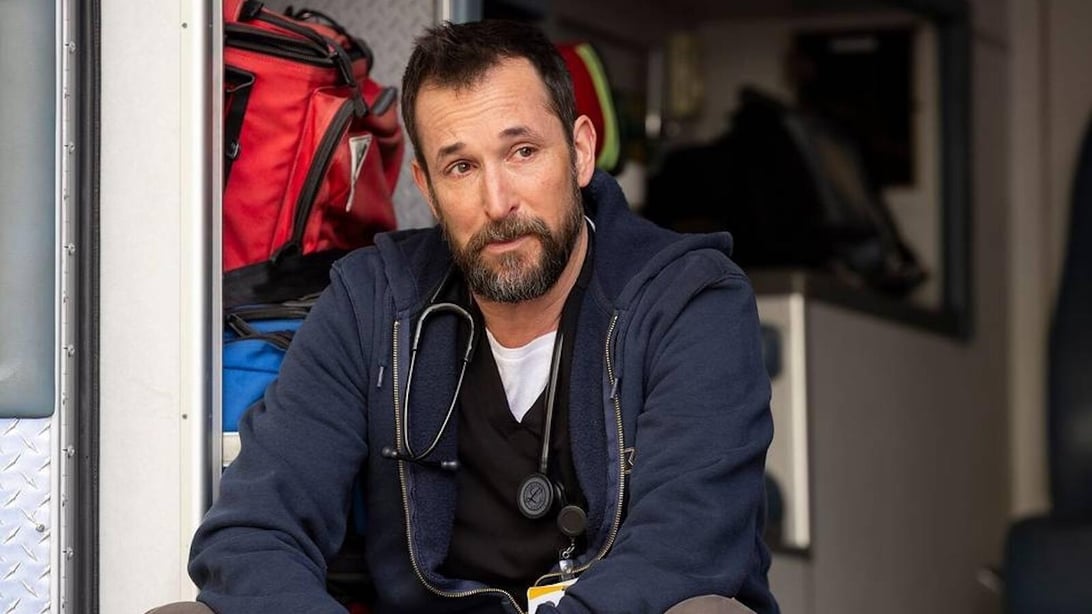
1. Noah Wyle, The Pitt
Noah Wyle is so good at playing a doctor on TV that they let him do it twice. It was 2025's most poetic casting story, with Wyle experiencing a well-deserved career resurgence (and winning an Emmy) after reteaming with ER producers R. Scott Gemmill and John Wells on The Pitt. But John Carter is a far cry from Dr. Michael "Robby" Robinavitch, and not just because Wyle has more responsibility on his shoulders this time around. The Pitt boasts a talented ensemble, but the success of the HBO Max medical drama lives and dies on his performance as Robby, who is, to put it lightly, having a very bad day. The series follows him through all 15 punishing hours of his shift; in one episode, Robby's main objective is to find enough free time to pee, which the endlessly enthralling Wyle somehow turns into a mini hero's journey. As the cool-headed anchor for the audience, Robby approaches the many pains of working in medicine in 2025 — overcrowding, limited resources, angry patients, the knowledge that tragedy can strike at any minute — with a sharp eye and dry wit. The exhaustion is evident in his face and voice, especially as the episodes tick frenetically on, but the option to stop never crosses his mind. (He just cares too much.) There's a spark of unpredictable rage in him too, just barely simmering under the surface and boiling over at inopportune times. This is a man who's seen it all, which is what makes his inevitable late-season breakdown so wrenching to watch. A dynamic but unshowy performer, every choice Wyle makes on this show is fascinating, turning Robby into one of the year's most lived-in new characters. It's enough to make me believe that Wyle could probably actually save my life if it ever came down to it. -Allison Picurro
Find more of the best TV of 2025 with our lists of the year's 10 best shows and the year's 10 best episodes.